UPDATED: Horsham’s new political geography

(See Comments section for updated information.)

Wednesday, January 25 the Horsham Republican Committee held its monthly organizational meeting.  It was one of the more interesting sessions we’ve had in quite a while for the issues discussed, developments in the local political geography, and for the chance to meet Joe Rooney, who is seeking GOP endorsement to challenge Congressional Representative Allyson Schwartz (D) in Pennsylvania’s 13th Congressional District.

One geographical development is the division of Horsham – almost precisely in half – between the 13th and 7th Congressional Districts.  Horsham will now be represented by two Congressional Representatives – Schwartz (D-13) and Patrick Meehan (R-7), which is not necessarily a bad thing for the Township when you consider that Horsham is largely ignored by Ms. Schwartz, whose power base is Northeast Philadelphia and the Democratic edges of eastern Montgomery County. 

Another interesting, less positive development was the sudden rejection by the Pennsylvania Supreme Court (PSC) of a negotiated plan to redraw State House and Senate districts in response to the 2010 census.  The move appeared both unexpected and unprecedented.  The redistricting plan had just been adopted December 11 by a bipartisan Legislative Reapportionment Commission (LRC).  There was however opposition from minority Democrats who feel that Republicans had unnecessarily carved up townships and communities in an attempt to preserve political advantages. 

Of course this is the common refrain made by the minority whenever the majority party flexes its political power in the reapportionment process that follows every 10-year census.  It matters not whether it’s Democrats or Republicans doing the carving; the other side is rarely happy with the results. 

The problem is that this is the time of year when supporters of incumbents and challengers alike troll voting districts for nominating signatures required in order to be listed on primary ballots.  To add a bit of extra urgency to the matter, the primary is only 3 months away (April 24).  It’s a bit difficult to mine nominating signatures when you can’t be totally certain where district lines will end up being drawn.  Signatures of voters not registered in a candidate’s district-of-interest are worthless. 

The move by the PSC caught many by surprise since:

a) the Court usually endorses the product of similar bipartisan LRCs, 

b) PSC Chief Justice Ronald D. Castille – Philadelphia’s former Republican District Attorney – joined the Court’s minority Democrats to quash the redistricting plan, and

c) no formal majority ruling as to why the plan was found “unconstitutional” was handed down.  That the written opinion is yet to come is a bit dysfunctional given the primary election time constraints;  the minority judicial opinion was provided, though just a few sentences long.

Redistricting is not an easy exercise, even if one were able to put aside partisan political objectives.  As explained by Todd Stevens (PA 151st Legislative District Representative) last night, there is generally a 4000-person wiggle factor when trying to match state legislative districting to 10-year census figures.  For national Congressional Districts the process is more difficult since district size must match EXACTLY the prescribed representative-to-constituent ratio determined by a rather convoluted formula I can not profess to understand.  (If you would like to see an example of “gerrymander“, simply check out the new lines of the redistricted PA 13th Congressional District, whose northwestern edge meanders for miles and miles – and almost house to house – from Montgomeryville-Lansdale to King of Prussia-Conshohocken!)

In any case the issue of Pennsylvania state legislative redistricting must be resolved quickly to offer any chance that upcoming primary and general elections will adhere to 2010 census-driven representation requirements.

The good news for Horsham is that it will retain a single State Representative in Mr. Stevens, who is a township native and resident.  By comparison, Upper Dublin in the last two iterations of reapportionment has been carved up between four state representative districts.

Another interesting discussion on the environmental and economic ramifications of natural gas fracking in the Marcellus Shale was also led by State Rep Stevens.  After listening to the sometimes edgy discussion, I concluded I do not know nearly enough about the subject to discuss it intelligently.  You can count on this being the subject of a future post, once I get around to some meaningful research.  

The highlight of the night however was meeting Joe Rooney, who is the lone candidate seeking the GOP nomination to challenge Allyson Schwartz in the PA 13th.  But since this post is already quite long enough and a bit mind-numbing, I will leave my impressions of Mr. Rooney for another post.  Keep an eye out here for that sometime next week.

In the meantime, check out Mr. Rooney’s website (linked above) and consider donating what you can should you agree with his politics.  His biggest obstacle to giving Allyson Schwartz a suitable challenge this November is financial.
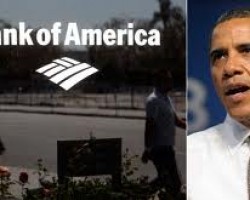
A 1% President?

Democratic Party officials announced recently that President Obama will accept his party’s nomination on the last night of their national convention at Bank of America Stadium.

It’s an odd choice, given the recent spate of Occupy Wall Street events originating from the most liberal wings of the Democratic Party.  The visuals will not be very comforting to those who believe that the richest 1% of the country set the rules that elevates, protects and perpetuates their wealth, while at the same time oppresses the remaining 99%.

The re-election imagery for OWS’s Presumptive Hero could be a Recipe for Disaster …

  • Standing in front of a Bank of America backdrop, which BofA paid $100 million just for 20 years worth of naming rights …
  • In the Home of the Carolina Panthers and their 1% athletes …
  • Who are owned by Jerry Richardson, former CEO of Flagstar, whose net worth is estimated at $500 million …
  • In front of Democrat contributors willing to pay up to $1.5 million for the full-blown Premiere Events Package.
  • Serve over 8.5% Unemployment and the “disappearing middle class”

Hmmmmm …

Well, the good news is that it will be a heck of a lot warmer for the good Occupy Wall Street people in Charlotte in early September than it was on Wall Street this past November.  That’s assuming of course that they even bother to show up to drag this particular demographic of the 1% out into the glaring media light.

I’m not holding my breath … 

If you too want the Superbox Treatment”, consider your options:

Suzi Emmerling, a spokeswoman for the Charlotte Host Committee, confirmed a Bloomberg report that those deals — presented to Washington lobbyists last month — include an escalating menu of packages starting with the $1 million “presidential” level. Those who buy in will receive a “premier uptown hotel room,” a “platinum events package and “concierge services.” Another $500,000 “Gold Rush” level includes hotel room, credentials and a “premiere events package.”

Myself?  I’ll be home watching the Democratic National Convention on TV with my 99% compadres, all the while marveling at how the Democratic 1% get to live it so large!

Franklin and Winston

Franklin and Winston: An Intimate Portrait of an Epic Friendship by Jon Meacham, an accomplished author, media executive and social/political commentator, is a great read on the close, personal relationship of the primary protagonists – Franklin Delano Roosevelt and Winston Churchill – behind the Western Hemisphere’s defeat of German fascism and Japanese hegemony during World War II. 

I became a fan of Meacham’s approach to historical figures and concepts through my weekday habit of catching segments of MSNBC’s Morning Joe while getting dressed for work.  Meacham has always struck me as a down-to-earth commentator on political and social issues.  He won the Pulitzer Prize for his treatment of Andrew Jackson in American Lion (not reviewed here); and his book on religion’s influence on the American experiment in American Gospel: God, the Founding Fathers and the Making of a Nation is an excellent guide to discussions on the spiritual foundation of American governance.  

Meacham’s approach in Franklin and Winston is similar to the other works mentioned above.  He takes an overview approach to the subjects, and provides plenty of source notes and references for the serious scholar who wishes to dig deeper.  It is this approach that makes his books enjoyable reads regardless of your reasons for picking up a Meacham historical study.

In Franklin and Winston Meacham focuses on the personalities of FDR and Churchill, including their family lives and how their personal backgrounds, ambitions and political situations played into the Allied war effort and the friendship that developed between the two during the war. 

Both men were the products of rich American mothers; Churchill’s mother marrying Lord Randolph Churchill, Member of Parliament, Chancellor of the Exchequer, and Leader of the House of Commons (1886).  Their parental relationships – or lack thereof – influenced both men in their very public lives.

Churchill’s parents were almost entirely absent; his father did not like him; and his upbringing and education was left to his nanny and the prescribed boarding schools for England’s power elite.  As a result, Churchill was driven to be the center of attention.  He was vigorous in all things he did, but was also impulsive and stubborn.  Churchill needed to be liked by those he highly regarded.  This would become a continuing theme in the Roosevelt-Churchill relationship, as Churchill found himself constantly chasing the more aloof, confident Roosevelt. 

FDR’s upbringing was quite the opposite.  He was doted on constantly by his mother.  Very little is mentioned of his father.  His mother’s coddling became even more prevalent when Roosevelt was diagnosed with polio in 1921 at the age of 39.  What FDR found at home as a child and even as an adult was everything Churchill’s early home life lacked.  As a result FDR did not feel compelled to seek anyone’s approval, even Churchill’s.  FDR greatly admired Churchill’s strength and leadership however, especially his skills at oratory during the dark days of 1940-41 (Battle of Britain). 

The friendship that these men forged in the year-and-a-half leading up to America’s entering the war and throughout the conflict resulted in a vision and strategy that freed Europe from the Nazis and chased the Japanese back to their home islands.  In this regard, Churchill did not have much choice but to follow the lead of Roosevelt on most matters of strategy.  Britain desperately needed the resources and manpower of the United States for their ultimate survival.  Only the thinnest of margins kept the Germans from attempting a cross-Channel invasion in 1940-41. 

Roosevelt – on the other hand – had to deal with an American electorate that for the most part wanted nothing to do with another war in Europe.  Yet he understood that the United States had to eventually enter the war or Europe would be lost to fascism.  He characterized his plight as ” … no leader should get too far ahead of his followers.”  FDR’s political strength permitted him to push such programs as Lend-Lease, which allowed for the sale of supplies and munitions to England (and eventually to all Allies) on a cash-and-carry basis.  Earlier under the Destroyers for Bases Agreement Roosevelt was able to send 50 aging destroyers to England for basing rights in the Caribbean.  Britain’s loss of those bases – though painful – provided FDR with necessary political cover, allowing the country to fulfill Roosevelt’s vision as “the arsenal of democracy”.

Despite Churchill’s standing as #2 in his relationship to FDR and to a greater extent England’s relationship to the U.S., he was a loyal and sensitive confidante to Roosevelt.  He protected FDR’s image in light of his crippling disease when the two met for the first time as world leaders at sea aboard the U.S.S. Augusta.  And he admired Roosevelt’s ability to transcend his disability and to accept the dependence on others that it required.  The description of the two leaders enjoying the view atop La Saardia in Marrakech in January 1943 is one of a caring Churchill overseeing the spiritual well-being of a cherished friend.

Like all friends, they also had their disagreements and slights that resulted in hurt feelings.  Churchill was upset when Roosevelt neglected to acknowledge Churchill’s cable of congratulations following FDR’s successful election in 1940.  And Roosevelt was miffed when Churchill sought a meeting of minds with Wendell Wilkie, FDR’s opponent in the 1944 election.  To make matter worse, Churchill ends up with Roosevelt on the phone due to a miscommunication and fails to recognize Roosevelt’s rather unique voice when the call goes through to the wrong man.  As the war winds down, Roosevelt realizes that stability in the post-war world requires greater interaction between the U.S. and Soviets as opposed to the British; and Churchill is – for a time – left out in the cold.

At the core of what would normally be an arm’s-length diplomatic relationship, the two most important men at such a critical juncture of history shared much.  Both had children serving in theatres of war.  Something not seen much these days aside from Britain’s royal family.  They leaned on each other at times of darkness, be it Dunkirk or Pearl Harbor.  They not only cooperated strategically and politically during the most trying of times, but genuinely liked each other and were lifted in spirit whenever they had the chance to get together.

And at times like those, what else are friends for?

Citizen U.S.A.

I did ABSOLUTELY NOTHING on Monday, December 26.  Well, almost nothing …  I had to do some post-Christmas clean-up, since we host a house full of relatives for Christmas dinner every year.  So the Day After Christmas is reserved for Decompression and Recovery.

The one thing I’m glad I did was catch an HBO documentary called Citizen U.S.A.: A 50 State Road Trip, where director Alexandra Pelosi travels to naturalization ceremonies in all 50 states; meeting brand new American citizens to learn why they chose America as their new home.  I found it inspiring and thought-provoking.

Two experiences I have had with younger, liberal family members made the story Pelosi tells all the more poignant.

Documented and legal vs. Undocumented and running scared 

One young relative not only constantly shines the light on the dangerous sub-culture of illegal aliens (The PC term is now apparently “undocumented workers“.) … pouring across the southern U.S. border, he has actually spent time in that hostile environment working with charitable organizations trying to help these “undocumented workers” survive the physical ordeal of crossing the desert border region.  It’s an admirable humanitarian effort, providing they aren’t directly abetting illegal entry. 

We have gotten into some spirited internet discussions about the subject of illegal/undocumented aliens/immigrants/workers.  My central point in these discussions comes down to what barriers prevent these illegal border crossers from going through the process of becoming legally announced, recognized and controlled immigrants?  How difficult it is really to apply and obtain legal work permits, then enter the country and work here legally?  

From my research, it appears that the only practical barrier undocumented immigrants face to become documented laborers is the bureaucratic wait to receive work visas from the U.S. Government.  But a New York Times report found that H2-A visa for agricultural workers, one of the few unlimited visa categories, can be obtained on the same day.

The HBO documentary – on the other hand – showed thousands of legally documented immigrants, who not only came here to attend schools and/or to work, but who have flourished to the point where they persistently and successfully sought to become fully naturalized U.S. citizens.  They did not have to live a life under the radar, isolated from helpful human services; constantly on the move; always looking over their shoulder due to the fear of being caught and sent home.  No hiding, no running.

How can the undocumented worker lifestyle be any freer, safer or more productive for the individual when they determine it necessary to leave their home and sneak into the U.S. for work, better wages and services that would improve their family’s quality-of-life? 

Legal entry is obviously the safer, cleaner choice for the immigrant, even with the bureaucratic hoops which – according to the above NY Times link – is not an unreasonable barrier to LEGAL entry.  So for me, it is hard to argue with the premise that illegals would rather enjoy the improved lifestyle and new opportunities without having to contribute a fair share towards the human services (schools, hospitals, etc.) they and their families enjoy while here.

The part that doesn’t make sense is having to SURVIVE the ordeal of a border crossing so dangerous that charitable organizations are compelled to be there to provide survival assistance.

I am hardly one who fails to recognize the value that foreign migrant workers contribute to the U.S. economy.  Their labor is indispensable to many areas of our agricultural industry.  So I’m waiting – even hoping – for someone to disprove this negative view of a generally hard-working, productive people, who – on the surface at least – appear to be only interested in improving their lot in life.  These are givens.

(As an interesting aside, in six months during 2006 Mexico deported over 100,000 illegal immigrants.  It is illegal for foreign nationals to be in Mexico – including Americans – without proper documentation.  Mexican immigration law allows authorities to arbitrarily check immigration papers and to racially profile groups determined more likely to be in Mexico illegally.)

America:  An Ideal not a guarantee

In the middle of watching the HBO presentation, I caught my eldest son snickering at one newly naturalized citizen’s proclamation that in America you can become successful, accomplish anything, and realize a better quality-of-life. 

I’m willing to bet this is a fairly common reaction in some people.  Those who have come to believe that corporatism and the financial system keeps the lower and middle classes hopelessly bogged down; those who think that social inheritance and political opportunism will always trump hard work and creativity; the cynical who look at the faults one can inevitably find in a society as large and complex as ours and conclude the deck is fixed against all but the properly connected.

I prefer to look at it another way.

Living in America is an Ideal, not a guarantee.  It is a Promise that Hard Work and Creativity will be rewarded.  It’s not a guarantee that you will be made rich and amazingly successful or even that all your Hard Work and Creativity will free you of financial pressures or eliminate all social disadvantages.   

The Ideal is an objective for which we should reach up and out.  The Ideal may very well be unattainable, which any true Ideal worth working towards should be.      

America is still an Experiment just as the Founding Fathers saw it 235 years ago.  America is imperfect.  There are flaws in every segment of the Political, Economic, and Social orders.  Solutions to these problems, whether these challenges develop over decades or pop up suddenly like cracks on a windshield, are tweaks in the Experiment that in reality are experiments on the Experiment.  And sometimes the Solutions end up causing more problems elsewhere.   

As in any experiment, when the variables – like economic stability or political efficacy – get out of whack the results suffer.  Sometimes the confluence of problems and events within The Experiment develops into a perfect storm that threatens much of what has been accomplished.  The storms can hold us back; and sometimes they can ruin the Individual.  But part of the Promise is that the Foundation will always be there for You, a Foundation that can protect you and help you to recover.    

The Promise isn’t that You will be carried forever.  The Experiment has developed mechanisms that allow You to be carried when You cannot carry yourself.  Yet even these support structures were never guaranteed to be there always or to carry into perpetuity those who fall on hard times, especially when they have the basic capabilities to work for themselves.  Certainly the Promise was never intended to be a substitute for Hard Work.    

In the end, You get out of the Experiment what you put into it.  And if You wait only for what America will give you, you only cheat yourself, and the Promise will turn into nothing more than that … a promise.        

As I viewed Citizen U.S.A. I heard people who spoke of their love for America – their new home.  They understood the distinction between the Promise of America vs. America as a guarantee.  Some spoke of how much is taken for granted by birthright Americans … how many things we accept as givens, such basic concepts as physical safety, freedom of speech and religion, freedom from overt government harassment, even the simple conveniences of running water and electricity at the flip of a switch.  Things that many of these newly naturalized Americans saw as Miracles of Democracy, because in so many other parts of the world even these simple expectations regularly go unfulfilled.                               

Who would be better suited to fix Montgomery County’s budget mess?

It’s quite astounding, this plunge at sub-sonic speed that Montgomery County (PA) governance has taken since the November election. 

In a matter of weeks we faced a Commissioner’s arrest on perjury charges and a budget crises that finally bobbed to the surface like a bloated dead body.  But this happened only AFTER the election, despite MONTHS of reassurances from Commissioners Joe Hoeffel and Jim Matthews that all was well; that there was nothing to the rumors “floating around” concerning a sizable budget shortfall; and that all the hand-wringing was the work of political malcontents and other nefarious sources looking to make political hay at the expense of an unusual, personality-fueled “bipartisan” managing majority.

Oops …

That’s a $44 million “oops” for the FY2012 budget year.  An “oops” that would have resulted in a 29% property tax increase if alleged perjurer, Jim Matthews has his “no cuts, just raise taxes” way.  

Most maddening – to me anyway – is that it was a deliberate “oops” that callously may have affected an election, where voters – unaware of how bad the budget picture really looked – were denied the opportunity to evaluate the bona fides of the four candidates in the light of the true budget situation.  (e.g. Would one vote for candidates who promise “no tax increase” with such a bleak budget picture where significant service cuts were the only other solution?)  

Instead we witnessed an election campaign where one set of candidates (Democrats Josh Shapiro and Leslie Richards) were able to take the “see no evil, raise no taxes” Tea Party approach to courting voters, while the other team (Republicans Jenny Brown and Bruce Castor) had to renounce their party’s proclivity to abhor any mention of raising taxes simply because they had insider suspicions – due to Castor’s presence on the County Commissioners Board – as to the real nature of the County’s budget morass. 

As taxpayers you should be enraged that such an opportunity was denied you by two politicians simply looking to throw an election away from Bruce Castor.  At least give Brown and Castor credit for refusing to make a promise they felt they probably could not keep.   

My intended point to this blog post was to call for the current Commissioners Board to punt the 2012 budget issue to the new Shapiro-Richards-Castor Board to be seated in January.  I felt  – especially given the alleged behavior of Jim Matthews in his personal use of campaign contributions, the violations of County guidelines for awarding millions in contracts, and the level of incompetence and cronyism in hiring County managers – that the only way to address the issue cleanly was to wait for the new Board to be seated by perhaps passing a continuing resolution of some sort to keep the County running until the new team could evaluate the budget.

Unfortunately, that desire has been OBE (overtaken by events) today.

In a decision passed down by the County’s solicitor’s office, the Commissioners were advised that the incoming Board cannot re-open the budget after Jamuary 1.  In fact, they will be limited to either spending any surplus or transferring funding from one department to another to meet any shortfalls.

This is not a particularly promising outlook for 2012, especially if an unforeseen crises or unanticipated costs arise during the fiscal year.  One important function that a budget reserve serves is to maintain a debt-to-cash ratio that keeps the County’s Moody’s bond rating at its current Aaa rating.  The loss of that rating could potentially prevent the County from borrowing funds at the best possible rate of interest.   

So hang on for a possibly bumpy ride in FY2012!

Hoeffel and Castor are working together (Hard to believe, I know.) to develop a budget that looks to include both reductions in spending and at least a 14% tax increase.  (In an aside, Jim Matthews likened the possibility of raised taxes as the end of a “tax holiday” for Montgomery County homeowners.  Real nice for a guy who used – allegedly – campaign donations for personal autos, personal expenses and country club memberships!  Now THAT’S a holiday!) 

This also means that we have to wait another year to see whether the Shapiro-Richards team can stick to their Tea Party-like “No new taxes” promise in FY2013 and beyond, and make their zero-based budgeting strategy work.

Frankly, that does not look promising!

Santa Claus crucified

(I strongly recommend NOT OPENING the link that’s included below in the presence of any young children who may still be innocent enough to get a kick out of Santa. – Cranky Man)

A brouhaha erupted in Loudon County, Virginia this week over the content of a holiday display allowed to appear on the courthouse lawn.  As has been happening all over the country for years, various groups protest the mixing of religion and government by targeting the long-standing practice of religious Christmas displays appearing on public lands.

The situation in Loudon County, how it developed; the way it was handled; and the end result, renders the issue interesting on several levels.

Loudon’s solution to the challenge to what should be displayed on the courthouse lawn was an attempt to please everyone by trying to avoid the only sensible decision.  The Loudon County board decided instead to allow anyone who applied and received approval of their holiday display to show it on the courthouse lawn.  (Only 9 display spots were available.) 

As a result displays designed by atheist groups, artists and everyday citizens were included along with a traditional nativity scene and Christmas tree.  The result – I would think – they should have seen coming from a mile away.  This year the displays included one by the Church of the Flying Spaghetti Monster, two that promoted atheism and even one celebrating The Constitution.  Last year, there was even a vulgar version of the Twelve days of Christmas

But the one that caused the big stink this year was Santa on a cross (Please check over your shoulder for little Cindy Lou Who before you click!), featuring a skeleton dressed as Santa Claus hung on a cross.  The display – intended to comment on the over-commercialization of Christmas – was promptly vandalized by a woman in the middle of the afternoon in front of news cameras that had come out to report on the controversy.  

What was mind-blowing to me was the reaction of County officials who were shocked when the Santa on a cross display appeared.  Yet the display had been fully explained and described when the application was submitted for approval! 

Who’s been reviewing these applications?!?  The Grinch?

In any case, I believe the situation and the way it was handled should be provided as case study material for municipal leaders everywhere as the way NOT to handle such situations.

It is regrettable that Christmas traditions our generation – and those before it – enjoyed every December are being pushed off the public square due to Political Correctness and the resulting legal appeasals.  But this country is not the same – in cultural demographics and level of diversity – as it was 40-50 years ago, when we were kids and our parents continued the traditions of their generation.  Whether you view that as a good thing or a not-so-good thing, you can’t argue with the fact that it’s simply different now.

My own personal view is that trying to walk that fine line between religion and government only gets more and more perilous the farther you try to toe it, as the Loudon County example illustrates. 

As a born and bred Christian, who admittedly struggles with the concept of Church, I enjoy the meaning, the fellowship and all the trappings of a Christian Christmas.  And though I appreciate the often misunderstood concept of God as integral to the founding  principles of this country, I accept the reality that the judicial concept of separation of church and state (found neither in The Constitution or the Bill of Rights) renders the public display of religious symbols on publicly-owned lands an unwinnable position from which to preserve certain Christmas traditions.  That might be a source of constant irritation at this time of year; but there is no chance of ever going back to those “good old days”.

What would have been the better solution for Loudon?  To allow everyone to speak their mind on whatever level they relate – or react – to Christmas …  all the good, the bad, the preposterous, the blasphemous?  Or would the better solution have been to simply not allow any displays on the courthouse lawn aside from the safe and innocuous “Happy Holidays” sign, as offensive as that might be to their Christian sensibilities?

I would have bitten the bullet and opted for the latter in the belief that it would be better to keep what’s precious at this time of the year safe from the disenchanted, the uber politically-correct, and the wackos.  If Christmas and all those images and icons we associate with it face the risk of corruption and defilement in the public square just because it’s “public”, is it really worth leaving it in the square? 

There are more than enough privately-controlled spaces for us to display our Christian Christmas spirit, on church and private property where we have singular control over what we believe is important to honor with displays.  There’s no need for us to expose our beliefs to what amounts to government-approved public comment and – at times – ridicule all for the sake of making a point.       

Some of the other possibilities are subject for some interesting discussions.

  • Interesting that it would have been “scandalous” to place a cross of any kind on public property, yet it was approved for the crucifixion of Santa Claus.
  • If you cherish the right to free speech, would you be able to stomach the kind of messages that might result from a decision to allow everyone the opportunity to express their Christmas views no matter how offensive or provocative?
  • Was the woman who ripped down the Santa on a cross display a hero, a censor or a criminal?  Was she simply exercising HER right to express herself?
  • What would happen if someone wanted to display a scene disparaging or criticizing the beliefs or concepts of HanukkahKwanzaa or the Muslim equivalent of Christmas, Eid Al-Fitr?
  • How far do you think local officials should go to preserve public displays of Christmas themes? 

Merry Christmas!

You can read it in the Sunday papers …

Many Sunday mornings I slog through the newspaper with eyes barely opened, going through the motions almost with a sense of duty to keep up with what’s going on in the world.  Other days I seem to find a number of interesting columns, opinions or features that seem to beg for comment or discussion. 

All of these stories were carried in the December 4 edition of The Philadelphia Inquirer.

.

Should fidelity matter?  Karen Heller of The Philadelphia Inquirer is one columnist I always read, regardless of my opposition to most of her political views.  Despite our differences, she sometimes hits a chord that deserves consideration.  This Sunday her column on Should fidelity matter?, has an interesting angle on national candidates who cheat on their wives.  It’s a timely topic, given the recent travails of Herman Cain and the history of Newt Gingrich.

Heller’s central theme is that adultery should not in itself eliminate a candidate from receiving your vote.  She couches her view with recognition that politicians have huge egos, tend to maintain a casual relationship with the truth, experience spouse-free campaign trips and plenty of fawning women.  Certainly there have been a number of presidents – some lauded for their service – who have had “zipper problems”.  And for sure, there have been some pretty bad presidents who have never strayed from their spouses.   

So should fidelity be THE determining factor?  Heller states, “Politicians don’t need to act better, only to be wiser and lead.”  Her point-of-view is interesting, especially when it comes to primary politics.  Too many potential candidates get jettisoned way too early in the process for a host of reasons, wife-cheating being just one of the many. 

I have always had a problem with good candidates – particularly for President – that get eliminated from serious consideration because they don’t meet the dreaded “litmus tests” often applied by the extremes on either side of the political spectrum.  Regardless of whether the litmus test is voting for the Iraq War, support for the NRA, believing in a woman’s right to choose, or taxing millionaires, no national candidate is likely to satisfy every voter’s position on every issue.  Discarding a candidate because they are “Conservative, but not conservative enough” or “Liberal but not liberal enough” is counterproductive – in my opinion – to finding the best candidate across all issues.       

But character issues are a different story altogether.  If a politician is a liar or a cheat, it says something about their basic human makeup.  It points to a lack of strength, an inability to live up to one’s commitments.  It flags a weakness that can be exploited by people and entities looking for backdoor access to policy decisions or to funding streams.  If a politician cannot keep the simplest, most fundamental promise to a spouse, what does it say about their ability to lead, their fortitude on policy positions that might not be politically expedient, or their ability to resist temptations that could be personally profitable? 

One reason I was so hard on Bill Clinton during the Monica Lewinsky affair was the knowledge that had I acted as he did in my federal workplace, I would have been fired.  As Chief Executive, the President sets an example – if not the standard – for behavior by all those serving under their leadership.  “Do as I say, not as I do.” is not an effective leadership style.   

Some candidates have overcome this flaw to become effective leaders.  Some have even been elected despite knowledge of their peccadilloes along the campaign trail.  But on the whole, you cannot disregard the issue of infidelity as it relates to one’s character.

Should fidelity be the only issue?  No.  But it’s one of the big ones.

.

Women drivers  It’s official.  The problems encountered with driving – (almost) all of them – are caused by women.  This is a theme many male drivers in this country have held for decades.  Now the Saudis have confirmed that yet another problem with driving can be eliminated entirely by removing the fairer sex from the equation.

A high-level advisory group in Saudi Arabia claims that allowing women to drive could encourage premarital sex!  The report from a well-known academic was submitted to the  – all-male of course – Shura Council which advises the Saudi monarchy stating that to allow women to drive will threaten the country’s traditions of virgin brides.  The claim is that allowing females to drive will allow greater mixing of the genders and could therefore promote sex.

As any red-blooded American male from my generation can attest, driving most definitely allows greater mixing of the sexes; and a nice car certainly facilitates if not “promotes” sex.  But frankly, my experience was that although I could definitely “mix” more readily with the object(s) of my desire if I drove, no car – no matter how nice – promoted much more than the mixing.  Maybe it was me … 

Unfortunately for this well-known Saudi academic and his ground-breaking premise, there was never any shortage of premarital misbehavior when I first started driving and just about ALL the drivers back then were MALE!

.

Gary Johnson’s presidential campaign pushes on! 

“Who?”, you ask. 

Gary Johnson, former governor of New Mexico, is running for president … not that anyone would notice.  Seems Johnson is one of the minor candidates viewing the GOP presidential sweepstakes from the outside, looking in.  Johnson is a libertarian candidate with a true libertarian’s view on issues like drug decriminalization, taxes and federal spending.

Seems though that Johnson just can’t seem to break through to play with the big boys because his polling numbers (3%) do not warrant attention from voters or the media.  He is one of a number of candidates that get few if any invites to the GOP primary debates.

Although I have no predictions as to the long-term viability of Johnson’s campaign or those other minor candidates seeking attention, the way the Republican Party – with the help of a more-than-willing media – is going through top runners, one would think having as many candidates as possible involved in the process at this point would be a good thing.  If for no other reason, perhaps having additional – even desperate – candidates in the field might force the major candidates to defend questionable policies and decisions or to consider unconventional solutions to our problems.

.

Sagamore Hill  They are preparing to restore President Teddy Roosevelt‘s mansion at Sagamore Hill in Oyster Bay, NY.  I have always been a fan of Teddy, and would love to tour his Sagamore Hill home someday.  The story covers the challenges of removing, cataloguing and storing the thousands of artifacts, books and furniture contained in the house.  Suffice it to say, no one from PETA will ever enjoy many of the exhibits found from Teddy’s life as a progressive and a hunter.

.

From Pearl Harbor to Japan the hard way  Last but certainly not least, we have the story of World War II veteran Salvino Paul Tobia.  It’s an amazing tale of a U.S. sailor whose WWII experience began as he worked in a hangar at Pearl Harbor on December 7, 1941.  He survived that fateful day, then as a crewman on a PBY (flying boat) he narrowly escaped being shot down over the island of Tulagi in the Pacific after landing to evacuate wounded Marines.  But on September 11, 1942 his PBY is crippled by Japanese Zeros as they prepared to attack an enemy destroyer.  He ends up captured, working at a steel mill in the north of Japan replacing wheel bearings on ore cars; eats mountain grasses to survive; and is shelled by the Sixth Fleet while in captivity on the Japanese coast.

It’s a remarkable story that every American should read (if not this story than as many as you can of the thousands of other stories out there) to gain for the first time or to add to your appreciation for the sacrifices made for us by a soon to be gone generation.

Mr. Tobia passed away in October 2000.

Montgomery County Commissioner Jim Matthews arrested! (Updated)

UPDATE:  New information in extracted from the 69-page indictment of former MontCo Commission Chairman Jim Matthews.  Apparently the problems at County go much further than Matthews’ alleged perjury. 

County Solicitor – and former Matthews campaign chairman – Barry Miller was fired on the basis of the grand jury findings.  According to the report, Miller directed award for health insurance services be awarded to CBIZ, an Ohio firm that donated thousands of dollars to Matthews’ 2007 campaign.

In addition, human resources director, Eleanor Schneider and Tom Snyder, a department head for outside services were cited as being “not qualified” or willfully blind and incompetent.  Schneider was Matthews’ personal secretary with no human resources experience before being appointed HR director.  Snyder could not answer grand jury questions about conflicts of interests on contracts his department managed.

.  

UPDATE:  Most recent coverage from yesterday’s arrest: http://www.philly.com/philly/news/politics/suburban_pa/20111207_PERJURY_CHARGES_FOR_MONTCO_POL.html

Although perjury is the only charged leveled at Matthews, there was evidence of significant malfeasance, including the use of $100,000 for personal expenses.

UPDATE:  Charges involve perjury during a grand jury investigation into campaign contributions and contracts related in some way to a Matthews family business, Certified Abstract, which was reportedly directed for use by county employees for all farmland preservation open space sales.

*  *  *  *  *  *  *  *  *

I don’t usually post “breaking news” events, but I’ll gladly make an exception in this case!

Jim Matthews, brother of MSNBC’s Chris Matthews and outgoing Montgomery County (PA) Commissioner was arrested on charges emanating from a grand jury indictment.

No additional information available as of this minute.  MontCo DA Risa Ventri-Fermin to hold 10:30 am news conference.

Some controversy was raised earlier this year about allegations that Matthews and Commission member Joe Hoeffel were violating Sunshine Law restrictions by holding private breakfast meetings outside of public scrutiny.  It’s difficult to imagine that Sunshine Law violations are the extent here, but that’s just speculation based on the fact that there is no indication that Hoeffel is included.

Matthews was persona non grata to many MontCo Republicans for ignoring the wishes of voters who elected him and fellow Republican Bruce Matthews to the Commission in 2007.  Matthews cut a deal to align himself with Hoeffel, a Democrat, due to personal animosity he held against Bruce Castor.  

More details here when known.

RUMOR:  Charges are perjury

UPDATE: The trashing of Cheltenham Avenue by Shapiro-Richards campaign

Drove my son home from Temple University again this weekend, and noticed that Cheltenham Avenue is STILL a disgrace from all the Shapiro-Richards signs that still exist – in varying forms – all along the avenue. Many are waving away on one post. Many are down flat and littering the street and sidewalks.  Even the ones that are still standing just make Cheltenham Avenue look trashier than usual for a major urban roadway.

Perhaps Josh and Leslie can organize the labor forces that put those signs out to go back out and collect them all.

But I’m not holding my breath!

A heaping bag of Disappointment

Watching what unfolded last night for the Montgomery County (PA) GOP was akin to suffering through a replay of Monday night’s woeful performance by the Philadelphia Eagles against those Chicago Bears.  Just like those inconsistent Birds, the impression I have is one of a team that was thoroughly outplayed by an opponent that simply “wanted it” much, much more.

Not that it was entirely a lost night.  Rumor had it (unconfirmed) that both Hatboro and Plymouth Meeting councils were won back by Republican leadership.  Our local Horsham Township Council candidates, Greg Nesbitt and Mark McCouch handily won their matchup as rightfully expected.  Eileen Behr, a superb candidate for MontCo Sheriff, and Stewart Greenleaf, Jr. – for Controller – were successful in their bids.  But aside from these and Nancy Becker’s victory for Recorder of Deeds, the overall contest – much like the Eagles-Bears game – was not nearly as close a performance as the final score might lead one to believe.  

Many good GOP candidates went down with the ship.   

Now, I have no claim to any formal political training, inside Montgomery County Republican Committee or Brown-Castor strategizing, or even a smidgen of political play-making capability.  In continuing with the Eagles analogy, I’m either the center spending half the game looking upside down with his head between his legs, or I’m the rookie guard – a la Danny Watkins – too caught up just trying to get the rudimentary footwork down to fully appreciate the more complicated levels of high stakes political gamesmanship.  I just know I’m laying here flat on my back with a bunch of cleat marks up the front of my jersey wondering what-the-sack happened to the game plan!

So take these personal impressions with that perspective in mind …

1.  Although I travel regularly through limited areas of eastern Montgomery County, there were certain locales – specifically Huntingdon Valley, Rockledge, and Abington – where little evidence in the way of Brown-Castor presence could be found.  Every day for the past two months commuting back and forth from work, I saw a plethora a Shapiro-Richards signage in these areas.  The Brown-Castor presence didn’t just fall short; it was completely absent aside from sporadic household displays.  In fact, of the several attempts of my own to populate Abington with GOP signage, some were met with REMOVAL of the signs from public grounds.  So despite my belief that the powers-to-be had a handle on this important election, I had a gnawing feeling in my gut that things were amiss!  

One of my posts from several weeks ago, dealt with the offensive sight of hundreds of Shapiro-Richards signs quite literally LITTERING huge stretches of Cheltenham Avenue and Rt. 422.  It was obviously an organized bit of intense labor.  And although I harbor no desire to see ANY campaign trashing neighborhoods and highways in this manner, one has to wonder where the GOP response was?  (Caveat: I have not been on either road since making that post, so maybe there was a response.) 

2.  Shapiro-Richards played the negative and dirty games better.  From their TV ad portraying Brown-Castor as The Bickersons (The Negative) to drawing the downright hypocritical connect-the-dots picture of Jenny Brown as a Tea Party candidate (The Dirty since Josh Shapiro also met with and could therefore be portrayed as Tea Party-sympathetic.), the Democrats had no problem wading into the muck that played to those tired of Commissioners’ bickering and to their anti-Tea Party core.  (I won’t even go into the fact that Shapiro-Richards won on what was a very Tea Party-like platform of limited spending and no tax increases.  Oops .. maybe I will mention it.)  I saw little pushback – aside from Castor’s complaining of the Tea Party hypocrisy – from the Republican side. 

So why was so little made out of Richards’ Whitemarsh stewardship of an 8-fold increase in township debt (from $1.8 to $15 million)?!?  Could more have been made of the contradiction between the fiscal promises made by the Democrats as opposed to their actual records on the same subjects??  (The numbers to watch here are $435 million, the current MontCo debt hole.  With Richards record of debt accumulation, I predict this hole will grow to $3.5 million by Fiscal Year 2015!)

3.  Much theorizing went into the role of “Obama Democrats” in their county registration advantage.  Theories suggesting that those Democrats were only motivated by President Obama’s historic run to The White House … that many of them would not return in force for a relatively lower-key local race.  Low turnout – it was suggested – would be a boon for Republican hopefuls.  We certainly had low turnout in my township (roughly 28-30%).  Heck, my polling place didn’t even have a Democrat committee presence until dinner time!  Obviously, the Democrats out-performed Republicans in getting out their voters in Democrat-heavy areas.  The GOP? Not so much.

That’s enough Wednesday-morning quarterbacking for me.  When you lose, it’s either a failure in strategy/leadership or one of performance.  So the questions beg …

  • Was it long-simmering Castor-itis come home to roost?
  • Was the Republican electorate too complacent, disinterested, unmotivated?
  • Was the overall economic-political disgust a factor in keeping Republicans and like-minded independents home?
  • What can be done to counter the increase in Democrat registrations fleeing Philadelphia?
  • Why was there so little evidence of GOP feet-on-the-ground in locales I travelled through near the city?
  • To what extent are these problems rooted in the GOP Leadership in those communities and – perhaps – the County as well?   

Forgive me, Father, for I have sinned …  Had an adverse reaction Monday to “Stop the Tea Party. Stop Jenny Brown” lawn signs I saw that morning while driving to work.  The reaction centered around the hypocrisy of a Shapiro campaign making hay from a meeting that duplicated HIS OWN inclination to drink the TEA!  Amazingly the signs had disappeared by the time I had driven pass them on the way home that night. 

I just really hate losing … especially when I know I’m right.