Rick Santorum, Values over Politics

I have always admired Rick Santorum as a politician.  You know what he believes; what he values; and more importantly where he will stand next week, next month, next year.  He can not sneak up on anyone.  His positions are well-known; and he sticks to what he believes regardless of how unpopular those views and values are with certain segments of the electorate.

From a political point-of-view, Rick Santorum is a breath of fresh air. 

That is why this moderate Pennsylvania Republican has always found Santorum to be a sound choice among state and national politicians.  Santorum’s stance on social issues – whether you agree or vehemently disagree  – are honest to a fault; based on a foundation of personal belief; and never affected by the expediencies of political popularity. 

This is important because I have become disgusted with the nature of National Politics and National Politicians on BOTH sides of the aisle.  The vitriol, the skullduggery, the deliberate efforts to undermine progress on the National Agenda has exceeded my patience.  It has gotten to the point that I prefer to limit my political interests and activities to local issues and offices. 

So when it comes to politics on the National Level, I’ll take predictable, principled, and reliable over swaying with the breeze of Public Opinion.  The Best Man should win over The Best Politician every time!

You do not see this principled approach from Mitt Romney, who is universally recognized as a politician that moves effortlessly from one position to another depending on how the political winds blow.  

You will not see President Obama taking politically unpopular positions on issues such as gay marriage – despite his steep Liberal Inclinations – or the sacrifices needed to save Social Security and the National Budget in a re-election year.  Remember the Simpson-Bowles Deficit Commission???  President Obama wishes you wouldn’t. 

Many fear Rick Santorum for the personal values he holds and the potential for how those values would play out in the realm of social issues.  This anxiety is not new.  Every conservative candidate for President has been feared by their liberal counterparts for their stance on social issues.  In Santorum’s case, the reaction is more visceral because he will not abandon those positions when campaigning.  He did it in his unsuccessful bid to win re-election to The Senate in 2006; and he is doing it now as well.  

But Fear of Santorum is misplaced based on what I would refer to as The Oval Office Effect.

  • The Presidency changes you.  Just ask President Obama.  Examine what happened to his pledges to end the wars in Iraq and Afghanistan as soon as he entered The Office, or how quickly his promise to empty Guantanamo Bay of terrorists in order to try them on U.S. soil went by the wayside.  Then ask yourself, what did he learn in the intervening months of transition that undoubtably changed his “hard and fast” campaign positions?   
  • When one ascends to 1600 Pennsylvania Avenue, layers and layers of National Responsibility are revealed and the weight of those charges is enough to make any President mindful of ALL the People he is bound to protect and serve.
  • John F. Kennedy‘s candidacy in 1960 faced some of the same fears of Religious Influence.  Many in the country feared his ties to the Vatican – solely because he was an active, practicing Catholic – as an open door for The Pope to influence U.S. policy and international relations.  Those fears were never realized.
  • A President is a National Leader, yet he controls only one-third of the Government’s check-and-balance structure.  All Presidents enter The Office with their own sets of values, priorities, and bases of power … be they Liberal or Conservative, religious or secular, progressive or populist.  The effects these positions have on public policy are limited through parlays with the House and Senate, as well as the challenge of running the gauntlet of Judicial Review.        
  • Mid-term elections in the House of Representatives offer the possibility of drastically changing political coalitions.  The threat that an entire National Agenda can be waylaid by such shifts in the political orientation of Congress tends to reign in the more controversial tendencies of any President.

None of this would reflect a change in Santorum’s long-held values.  But it does speak to the practical political reality of affecting sweeping changes to social policy based on those values.  

This rationalization will mean nothing to those on the opposite end of the Political Spectrum from Rick Santorum.  But for those who are more moderate in their politics and in their views on social issues, it is important to consider the political realities of National Leadership and to resist the temptation to toss aside such a principled politician as Rick Santorum simply because his position on social issues is seen as controversial or unpopular.
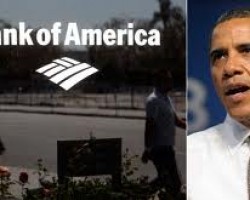
A 1% President?

Democratic Party officials announced recently that President Obama will accept his party’s nomination on the last night of their national convention at Bank of America Stadium.

It’s an odd choice, given the recent spate of Occupy Wall Street events originating from the most liberal wings of the Democratic Party.  The visuals will not be very comforting to those who believe that the richest 1% of the country set the rules that elevates, protects and perpetuates their wealth, while at the same time oppresses the remaining 99%.

The re-election imagery for OWS’s Presumptive Hero could be a Recipe for Disaster …

  • Standing in front of a Bank of America backdrop, which BofA paid $100 million just for 20 years worth of naming rights …
  • In the Home of the Carolina Panthers and their 1% athletes …
  • Who are owned by Jerry Richardson, former CEO of Flagstar, whose net worth is estimated at $500 million …
  • In front of Democrat contributors willing to pay up to $1.5 million for the full-blown Premiere Events Package.
  • Serve over 8.5% Unemployment and the “disappearing middle class”

Hmmmmm …

Well, the good news is that it will be a heck of a lot warmer for the good Occupy Wall Street people in Charlotte in early September than it was on Wall Street this past November.  That’s assuming of course that they even bother to show up to drag this particular demographic of the 1% out into the glaring media light.

I’m not holding my breath … 

If you too want the Superbox Treatment”, consider your options:

Suzi Emmerling, a spokeswoman for the Charlotte Host Committee, confirmed a Bloomberg report that those deals — presented to Washington lobbyists last month — include an escalating menu of packages starting with the $1 million “presidential” level. Those who buy in will receive a “premier uptown hotel room,” a “platinum events package and “concierge services.” Another $500,000 “Gold Rush” level includes hotel room, credentials and a “premiere events package.”

Myself?  I’ll be home watching the Democratic National Convention on TV with my 99% compadres, all the while marveling at how the Democratic 1% get to live it so large!

Citizen U.S.A.

I did ABSOLUTELY NOTHING on Monday, December 26.  Well, almost nothing …  I had to do some post-Christmas clean-up, since we host a house full of relatives for Christmas dinner every year.  So the Day After Christmas is reserved for Decompression and Recovery.

The one thing I’m glad I did was catch an HBO documentary called Citizen U.S.A.: A 50 State Road Trip, where director Alexandra Pelosi travels to naturalization ceremonies in all 50 states; meeting brand new American citizens to learn why they chose America as their new home.  I found it inspiring and thought-provoking.

Two experiences I have had with younger, liberal family members made the story Pelosi tells all the more poignant.

Documented and legal vs. Undocumented and running scared 

One young relative not only constantly shines the light on the dangerous sub-culture of illegal aliens (The PC term is now apparently “undocumented workers“.) … pouring across the southern U.S. border, he has actually spent time in that hostile environment working with charitable organizations trying to help these “undocumented workers” survive the physical ordeal of crossing the desert border region.  It’s an admirable humanitarian effort, providing they aren’t directly abetting illegal entry. 

We have gotten into some spirited internet discussions about the subject of illegal/undocumented aliens/immigrants/workers.  My central point in these discussions comes down to what barriers prevent these illegal border crossers from going through the process of becoming legally announced, recognized and controlled immigrants?  How difficult it is really to apply and obtain legal work permits, then enter the country and work here legally?  

From my research, it appears that the only practical barrier undocumented immigrants face to become documented laborers is the bureaucratic wait to receive work visas from the U.S. Government.  But a New York Times report found that H2-A visa for agricultural workers, one of the few unlimited visa categories, can be obtained on the same day.

The HBO documentary – on the other hand – showed thousands of legally documented immigrants, who not only came here to attend schools and/or to work, but who have flourished to the point where they persistently and successfully sought to become fully naturalized U.S. citizens.  They did not have to live a life under the radar, isolated from helpful human services; constantly on the move; always looking over their shoulder due to the fear of being caught and sent home.  No hiding, no running.

How can the undocumented worker lifestyle be any freer, safer or more productive for the individual when they determine it necessary to leave their home and sneak into the U.S. for work, better wages and services that would improve their family’s quality-of-life? 

Legal entry is obviously the safer, cleaner choice for the immigrant, even with the bureaucratic hoops which – according to the above NY Times link – is not an unreasonable barrier to LEGAL entry.  So for me, it is hard to argue with the premise that illegals would rather enjoy the improved lifestyle and new opportunities without having to contribute a fair share towards the human services (schools, hospitals, etc.) they and their families enjoy while here.

The part that doesn’t make sense is having to SURVIVE the ordeal of a border crossing so dangerous that charitable organizations are compelled to be there to provide survival assistance.

I am hardly one who fails to recognize the value that foreign migrant workers contribute to the U.S. economy.  Their labor is indispensable to many areas of our agricultural industry.  So I’m waiting – even hoping – for someone to disprove this negative view of a generally hard-working, productive people, who – on the surface at least – appear to be only interested in improving their lot in life.  These are givens.

(As an interesting aside, in six months during 2006 Mexico deported over 100,000 illegal immigrants.  It is illegal for foreign nationals to be in Mexico – including Americans – without proper documentation.  Mexican immigration law allows authorities to arbitrarily check immigration papers and to racially profile groups determined more likely to be in Mexico illegally.)

America:  An Ideal not a guarantee

In the middle of watching the HBO presentation, I caught my eldest son snickering at one newly naturalized citizen’s proclamation that in America you can become successful, accomplish anything, and realize a better quality-of-life. 

I’m willing to bet this is a fairly common reaction in some people.  Those who have come to believe that corporatism and the financial system keeps the lower and middle classes hopelessly bogged down; those who think that social inheritance and political opportunism will always trump hard work and creativity; the cynical who look at the faults one can inevitably find in a society as large and complex as ours and conclude the deck is fixed against all but the properly connected.

I prefer to look at it another way.

Living in America is an Ideal, not a guarantee.  It is a Promise that Hard Work and Creativity will be rewarded.  It’s not a guarantee that you will be made rich and amazingly successful or even that all your Hard Work and Creativity will free you of financial pressures or eliminate all social disadvantages.   

The Ideal is an objective for which we should reach up and out.  The Ideal may very well be unattainable, which any true Ideal worth working towards should be.      

America is still an Experiment just as the Founding Fathers saw it 235 years ago.  America is imperfect.  There are flaws in every segment of the Political, Economic, and Social orders.  Solutions to these problems, whether these challenges develop over decades or pop up suddenly like cracks on a windshield, are tweaks in the Experiment that in reality are experiments on the Experiment.  And sometimes the Solutions end up causing more problems elsewhere.   

As in any experiment, when the variables – like economic stability or political efficacy – get out of whack the results suffer.  Sometimes the confluence of problems and events within The Experiment develops into a perfect storm that threatens much of what has been accomplished.  The storms can hold us back; and sometimes they can ruin the Individual.  But part of the Promise is that the Foundation will always be there for You, a Foundation that can protect you and help you to recover.    

The Promise isn’t that You will be carried forever.  The Experiment has developed mechanisms that allow You to be carried when You cannot carry yourself.  Yet even these support structures were never guaranteed to be there always or to carry into perpetuity those who fall on hard times, especially when they have the basic capabilities to work for themselves.  Certainly the Promise was never intended to be a substitute for Hard Work.    

In the end, You get out of the Experiment what you put into it.  And if You wait only for what America will give you, you only cheat yourself, and the Promise will turn into nothing more than that … a promise.        

As I viewed Citizen U.S.A. I heard people who spoke of their love for America – their new home.  They understood the distinction between the Promise of America vs. America as a guarantee.  Some spoke of how much is taken for granted by birthright Americans … how many things we accept as givens, such basic concepts as physical safety, freedom of speech and religion, freedom from overt government harassment, even the simple conveniences of running water and electricity at the flip of a switch.  Things that many of these newly naturalized Americans saw as Miracles of Democracy, because in so many other parts of the world even these simple expectations regularly go unfulfilled.                               

A heaping bag of Disappointment

Watching what unfolded last night for the Montgomery County (PA) GOP was akin to suffering through a replay of Monday night’s woeful performance by the Philadelphia Eagles against those Chicago Bears.  Just like those inconsistent Birds, the impression I have is one of a team that was thoroughly outplayed by an opponent that simply “wanted it” much, much more.

Not that it was entirely a lost night.  Rumor had it (unconfirmed) that both Hatboro and Plymouth Meeting councils were won back by Republican leadership.  Our local Horsham Township Council candidates, Greg Nesbitt and Mark McCouch handily won their matchup as rightfully expected.  Eileen Behr, a superb candidate for MontCo Sheriff, and Stewart Greenleaf, Jr. – for Controller – were successful in their bids.  But aside from these and Nancy Becker’s victory for Recorder of Deeds, the overall contest – much like the Eagles-Bears game – was not nearly as close a performance as the final score might lead one to believe.  

Many good GOP candidates went down with the ship.   

Now, I have no claim to any formal political training, inside Montgomery County Republican Committee or Brown-Castor strategizing, or even a smidgen of political play-making capability.  In continuing with the Eagles analogy, I’m either the center spending half the game looking upside down with his head between his legs, or I’m the rookie guard – a la Danny Watkins – too caught up just trying to get the rudimentary footwork down to fully appreciate the more complicated levels of high stakes political gamesmanship.  I just know I’m laying here flat on my back with a bunch of cleat marks up the front of my jersey wondering what-the-sack happened to the game plan!

So take these personal impressions with that perspective in mind …

1.  Although I travel regularly through limited areas of eastern Montgomery County, there were certain locales – specifically Huntingdon Valley, Rockledge, and Abington – where little evidence in the way of Brown-Castor presence could be found.  Every day for the past two months commuting back and forth from work, I saw a plethora a Shapiro-Richards signage in these areas.  The Brown-Castor presence didn’t just fall short; it was completely absent aside from sporadic household displays.  In fact, of the several attempts of my own to populate Abington with GOP signage, some were met with REMOVAL of the signs from public grounds.  So despite my belief that the powers-to-be had a handle on this important election, I had a gnawing feeling in my gut that things were amiss!  

One of my posts from several weeks ago, dealt with the offensive sight of hundreds of Shapiro-Richards signs quite literally LITTERING huge stretches of Cheltenham Avenue and Rt. 422.  It was obviously an organized bit of intense labor.  And although I harbor no desire to see ANY campaign trashing neighborhoods and highways in this manner, one has to wonder where the GOP response was?  (Caveat: I have not been on either road since making that post, so maybe there was a response.) 

2.  Shapiro-Richards played the negative and dirty games better.  From their TV ad portraying Brown-Castor as The Bickersons (The Negative) to drawing the downright hypocritical connect-the-dots picture of Jenny Brown as a Tea Party candidate (The Dirty since Josh Shapiro also met with and could therefore be portrayed as Tea Party-sympathetic.), the Democrats had no problem wading into the muck that played to those tired of Commissioners’ bickering and to their anti-Tea Party core.  (I won’t even go into the fact that Shapiro-Richards won on what was a very Tea Party-like platform of limited spending and no tax increases.  Oops .. maybe I will mention it.)  I saw little pushback – aside from Castor’s complaining of the Tea Party hypocrisy – from the Republican side. 

So why was so little made out of Richards’ Whitemarsh stewardship of an 8-fold increase in township debt (from $1.8 to $15 million)?!?  Could more have been made of the contradiction between the fiscal promises made by the Democrats as opposed to their actual records on the same subjects??  (The numbers to watch here are $435 million, the current MontCo debt hole.  With Richards record of debt accumulation, I predict this hole will grow to $3.5 million by Fiscal Year 2015!)

3.  Much theorizing went into the role of “Obama Democrats” in their county registration advantage.  Theories suggesting that those Democrats were only motivated by President Obama’s historic run to The White House … that many of them would not return in force for a relatively lower-key local race.  Low turnout – it was suggested – would be a boon for Republican hopefuls.  We certainly had low turnout in my township (roughly 28-30%).  Heck, my polling place didn’t even have a Democrat committee presence until dinner time!  Obviously, the Democrats out-performed Republicans in getting out their voters in Democrat-heavy areas.  The GOP? Not so much.

That’s enough Wednesday-morning quarterbacking for me.  When you lose, it’s either a failure in strategy/leadership or one of performance.  So the questions beg …

  • Was it long-simmering Castor-itis come home to roost?
  • Was the Republican electorate too complacent, disinterested, unmotivated?
  • Was the overall economic-political disgust a factor in keeping Republicans and like-minded independents home?
  • What can be done to counter the increase in Democrat registrations fleeing Philadelphia?
  • Why was there so little evidence of GOP feet-on-the-ground in locales I travelled through near the city?
  • To what extent are these problems rooted in the GOP Leadership in those communities and – perhaps – the County as well?   

Forgive me, Father, for I have sinned …  Had an adverse reaction Monday to “Stop the Tea Party. Stop Jenny Brown” lawn signs I saw that morning while driving to work.  The reaction centered around the hypocrisy of a Shapiro campaign making hay from a meeting that duplicated HIS OWN inclination to drink the TEA!  Amazingly the signs had disappeared by the time I had driven pass them on the way home that night. 

I just really hate losing … especially when I know I’m right.

Book Review: American Gospel by Jon Meacham

When I saw Jon Meacham‘s book, American Gospel: God, the Founding Fathers, and the Making of a Nation,  I put it on my reading list.  I was looking for a book that would provide a layman’s perspective of how the relationship between God and government developed in this country.  Having read Meacham’s work on Andrew Jackson (American Lion: Andrew Jackson in the White House), I was hoping it would be another concise and enjoyable read. 

Meacham  is executive editor and executive vice president at Random House,  former editor of Newsweek and a Pulitzer Prize winning author.  I’m most familiar with Meacham as a guest political commentator on MSNBC’s Morning Joe (weekdays, 6-9 am), a show I usually watch while getting ready for work in the morning. 

Meacham starts off by highlighting the theme that’s consistently drawn upon throughout the book, the difference between Public religion and Private religion as the Founding Fathers had envisioned.  The concept of Public religion recognizes faith in God (in all forms in which He exists and is worshipped) as a unifying influence, one that unites “the virtue of the populace”.  In this regard, the concept and belief in God takes on whatever religious form is meaningful to an individual, be they Christian, Jew, Hindu, Buddhist, Muslim, etc. 

Private religion seems a concept that is self-explanatory.  That all people have the right to worship – or not worship – God in whatever manner they choose.  This was the antithesis of the religious atmosphere in Europe which led to the founding and colonization of America, which Meacham covers in the first chapter, God and Mammon.  The American experiment provided that no individual would be prevented from worshiping God – if so inclined – in whatever form they should choose, a direct result of what drove the early pilgrims to hazard the perilous Atlantic crossing.

From the beginning, the thinkers among the Founders recognized the importance of religion.  Although they were almost all Christian, almost all Protestant (Several deists, such as Ben Franklin and Thomas Jefferson, were also prominent players.), they recognized the importance of religious tolerance.  Yet they also appreciated the threat to religion that government could pose should the two become too close and become intertwined.  These principles hold true regardless of who you worship or how you worship them. 

(This is why I find The Founding period in our country’s history so fascinating!  The timelessness of The Founders wisdom and foresight is amazing.  The Founders were far from perfect.  Their failure to resolve issues such as slavery and women’s rights – among others – would complicate the road ahead; but the foundation and framework were sound and have survived multiple tests throughout our history. Despite their shortcomings, The Founders were incredibly prescient.)       

Meacham’s greatest accomplishment here is his discussion of the concept most commonly referred to as The Wall between church and state.  A common theme throughout the book, Meacham subscribes to the concept that The Wall was intended more to protect religion from the state as opposed to the other way around.  This is why he finds no contradiction in expressions of God in the public sphere, including mentions of God on our money or in the Pledge of Allegiance.   

As he explores the role of Public religion in America, Meacham takes us through many of the nation’s struggles and accomplishments where Public religion served to unite the country behind the causes that defined the nation, such as the fight for Liberty; the struggle to end slavery and Jim Crow laws; the Great Depression, and the defeat of both Nazi and Communist suppressions in Europe.  In these instances as well as others, Meacham illustrates how American Presidents, political and social leaders invoked the concept of God and the values that flowed from that belief as a compelling, uniting influence for the country.

The book reads much shorter than it looks, running only 250 pages in narrative length.  The rest of the book is a compendium of extensive source notes and bibliography, references to historical letters and documents, even excerpts of presidential inauguration speeches where religious themes were integral. 

Meacham’s effort here is not intended to be taken as an in-depth, historical essay.  He attempts only to provide a historical perspective to the questions “What part did religion play in the founding of the American experiment?” and “How has religion affected the moral development and success of the country?”  Regardless of where you stand on – or know of – the relationship of religion to the American experiment and American governance, you will enjoy Meacham’s perspective on how that relationship came to be.

I pledge not to pledge!

Other than The Pledge of Allegiance, I know of no pledges worth taking.

For the life of me, I fail to understand the phenomena of committing to pledges as the latest iteration of the dreaded political litmus test.  Few of the Republican Presidential hopefuls show the backbone or willingness to be a LEADER!  It has gotten to the point where I am forced to agree with a Liberal scribe, such as Karen Heller of The Philadelphia Inquirer, whose Wednesday column reflects my own growing frustration with spine-ophobia.

It is time to begin looking with jaundiced eye at any candidate who feels compelled to kowtow to every political group looking to push a narrow, unyielding agenda.  The trend is growing beyond the point of disturbing.  Is winning in the Iowa caucuses really worth losing any claim to being a strong, independent leader?!?

Don’t get me wrong.  I agree with the underlying premise of some of the more popular pledges.  Others however, like Rick Santorum’s public pledge to remain faithful to one’s wife, are simply silly and capricious.  If we honestly admit to NEEDING such a pledge, then the problem is magnitudes larger than the objectives of all pledges combined.  In reality what we are saying is, “We no longer TRUST you, Mr./Mrs. OfficeSeeker, to use your judgement and do the right thing!”  And that to me, says much more about the shallowness of our expectations than it does the worthiness of any candidate.

And what might we expect in the way of governance from candidates who so willingly allow narrow political agendas to bind their feet so tightly as to make compromise impossible?  Currently over half of the entire House of Representatives has signed Grover Norquist‘s call for no tax increases. 

At this particular time, how does that further the interests of The Country?  Does anyone really believe that with skyrocketing national debt and the sacrifices being made on Main Streets throughout The Country, that taxes on the richest cannot ever be raised? 

The concept of republican government requires compromise.  Without it no progress can be made towards the true goals and interests of the country.  There are plenty of areas on both sides where compromise can and should be made.  But binding one’s feet only guarantees nothing can be done.      

At least ONE candidate has refused to prostrate himself before the pledge seekers.  Jon Huntsman, the former Ambassador to China, has steadfastly refused to take any pledges other than The Pledge of Allegiance and his marital pledge to his wife.  Interesting that he didn’t seem to need anyone to force him to sign for the latter!

That’s a breath of fresh air!

Review: “Decision Points” by George W. Bush

At times I have been accused of being an apologist for former President George W. Bush.  Rightfully so, I must add.  That’s why I have been looking forward to reading Bush43‘s memoir, Decision Points

The book starts out with a frank, introspective look at Bush’s struggle to overcome his problem with alcohol.  Most telling was his failure at Laura Bush’s urging to remember a day when he had not had a drink.  Unable to do so, he begins to realize that he just might have a problem.  From my perspective, it was a surprising way for an ex-President to kick off his memoir.  But it conveyed the obvious importance that struggle was to his future success.  It also helps to understand his reliance on Laura’s strength and wisdom.  They were married just three months after they met!

Of course the linchpin event of George Bush’s presidency was the attack of September 11, 2001.  Through all the smoke, fire and loss of life from that day comes the one pledge that overshadowed the rest of his presidency.

Yet after 9/11, I felt my responsibility was clear. For as long as I held office, I could never forget what happened to America that day. I would pour my heart and soul into protecting the country, whatever it took. (page 151)

This is the prism through which one must view his subsequent decisions and actions, both here and abroad.  Afghanistan was a no-brainer; but going into Iraq was a dicier decision that resulted in a major distraction from the Afghan operation.  

However a decade after Operation Desert Storm, the Saddam Hussein situation required a solution.  The international community, the U.N., and the Clinton Administration had been convinced that Hussein had WMDs; and the reliance on no-fly zones was not the solution to Hussein’s cruelty, oppression, and perceived threat to the region.  That no WMDs were found does not diminish the validity of these widely held beliefs.

President Bush’s 9/11 pledge also explains the decisions to house captured terrorists at Guantanamo Bay, The Patriot Act, creation of the Department of Homeland Security, and the development of the Bush Doctrine and the Freedom Agenda.  And no matter where you stood on the pro-con scale as the Bush Administration enacted these measures, they are still in place two years after President Barack Obama entered The Oval Office!

The book’s tone is straight-forward and conversational.  My impression was that the book read much the way his speeches and national addresses sounded (minus the ill-timed gaffes).  Those who regarded President Bush as a fumbler and stumbler would be impressed by GWB’s efficient style.  I found the book to be an easy and enjoyable read.

The common thread throughout the book is how Bush43 approached the problems and decisions he faced.  Oft times criticized for not being naturally inquisitive, he relied heavily on experts and leaders in applicable fields of research and study – both from within his administration and in industry and academia – when facing complex issues and problems.  And when it came to making a decision, GWB viewed all situations through his strongly held core values.  Although he was not pretentious in his religious beliefs, his beliefs were the foundation of those values.

And yet President Bush was capable of making sound value-based decisions that were not restrained by the desire to pander to his political base.  An example was his decision on stem cell research.  Despite the fervent wishes of the religious right, GWB was adamant in his commitment to seek out all sides of the controversy.  His final decision was based on several factors: stem cell research offered the potential for monumental breakthroughs in medical research; research was already progressing on several dozen stem cell lines (per the National Institute of Health), and the number of lines in development were plentiful for current and future medical research.  His decision to allow federal funding for existing stem cell lines, while affirming the dignity of human life and preventing the use of federal funds for future stem cell harvesting was a practical and compassionate solution to a difficult problem.

If the measure of a good compromise is the reality that neither side is entirely satisfied with the solution, then George Bush certainly hit the mark with stem cell research.  A good leader can never be burdened with the concept that he must please everyone all the time.

Several other aspects of the book were very interesting; some surprised me:

  • As Governor of Texas, GWB was renown for his ability to work across the aisle.  Something that was essential as a Republican Governor with a State House and Senate headed by seasoned and well-respected Democrats.  In fact, Bush and Lt. Governor Bob Lubbock – a Democrat – respected each other to the point where Lubbock not only endorsed Bush for his second term as Texas Governor, he predicted that Bush would be the next President of the United States!
  • Laura Bush was a real cutie when she landed GWB!  (See third page of the first photo section.)
  • The Bush Administration committed $15 billion over 5 years to fight the spread of AIDS in Africa.  After a 2003 visit to AIDS-ravaged Uganda, Bush was inspired to push the country to do more in fighting the disease.  He envisioned the President’s Emergency Plan for AIDS Relief (PEPFAR) as a medical version of The Marshall Plan.  In addition to testing, counseling and treating tens of millions for AIDS, there was also considerable commitment to eradicate malaria.
  • During the 2008 presidential campaign and the banking crises that resulted in the Toxic Asset Recovery Program (TARP), Republican candidate for president, Arizona Senator John McCain insisted that The White House host an emergency meeting of both candidates, the leadership of both parties in the House and Senate, and the Bush Administration.  Expecting McCain, who instigated the meeting, to address the issues and how Congress could support TARP, the President was astounded at McCain’s silence in contrast to Barack Obama’s succinct analysis of the program.

In my opinion, anyone interested in politics and government whether a supporter or critic of President George W. Bush would enjoy reading a Commander-in-Chief’s view of his eight years in The Oval Office. 

DISCUSSION TOPICThe Bush Doctrine included the concept that America’s interests would be maximized by promoting freedom and democracy wherever possible.  It supported fledgling democracies in the Ukraine, Georgia, Lebanon and the Palestinian Territories as well as Iraq and Afghanistan.  And it lent encouragement and support for dissidents and reformers in places like Syria, Iran, North Korea, and Venezuela.

“America’s vital interests and our deepest beliefs are now one.”

Given the uprisings in Egypt, Yemen, Bahrain, Libya, etc., can the argument be made that the Bush strategy of supporting democratic reforms in that region has been much more successful than illustrated by the novice democracies in Iraq and Afghanistan?

Democracy overseas, Security at home: Bush43 legacies?

Several interesting developments over the past few weeks deserve closer inspection from the perspective of George W. Bush’s presidency.  I have often been accused of being a “Bush defender/apologist”, which I proudly was most notably on national security.  I always felt the Bush presidency was suddenly and unavoidably shaped on 9/11.  Any President, after having that happen on his watch, would be hawkishly driven on matters of National Security … At least they should be.  Yet the battering Bush43 took in his efforts to protect the country from further attacks was withering.  So it’s interesting – to say the least – to assimilate the following events.  

1. Barack O’Bush? 

McClatchy Newspapers revealed this weekend that the Justice Department asserted that the FBI can obtain international phone records WITHOUT any legal process or court oversight

Sorry … Left out one small detail of that opening paragraph.

It was “The Obama administration’s Justice Department …”.

Just didn’t want you to confuse it with the Bush administration’s Justice Department!  Frankly,  it’s very hard to tell the difference between the two in this area.

Do you remember the promise to shut Guantanamo down?  How about the rage and hysteria after 9/11 over those provisions in the Terrorist Surveillance Program and The Patriot Act that were going to eliminate all vestiges of Liberty?  Remember the angst over wiretapping?  Internet and e-mail tracking and monitoring?  All supposedly reporting directly to Darth Cheney? 

Do you remember those promises of openness and transparency made by President Obama as he transitioned to The White House?

 The prison at Guantanamo Bay remains open to this day, after President Obama signed the 2011 Defense Authorization Bill that effectively prevents the transfer of Guantanamo prisoners to the mainland or to foreign countries.  President Obama leads one to believe that he was forced to accept those provisions in order to get the authorization bill through Congress.  But he did so with barely a whimper – in December – when his lame duck congressional majority was still intact. 

Now we learn that the Obama Justice Department has asserted the legal opinion that the FBI can obtain international phone records on a voluntary basis from providers without legal process or a qualifying emergency.  That in itself is extremely insightful.  Has President Obama been convinced that the terrorist threat is so active, so dangerous, and so near that these measures are indeed necessary to protect the country?  In other words, has President Obama discovered that President George W. Bush was right in his domestic approach to the War on Terror?!? 

And that isn’t even the most interesting part!

How did McClatchy Newspapers find out?  By chance – perhaps inadvertently – through a response the Justice Department provided the news organization on an open-records request.  There was no administration press release, no announcement, no openness, no transparency.

Gosh, you might think The Evil Empire was still residing in The West Wing!

2. The march of democracy?   

Add another Middle East authoritarian regime to the scrap heap of history, as the regime of Hosni Mubarak was forced to the ground by the clamoring of everyday Egyptians.  There are a number of causes for the demise of Mubarak.  The Egyptian economy was a mess.  Unemployment was high.  Too many people – especially young people – were left idle for too long.

They clamor for regime change.   But chances are they will not willingly fall in behind another strongman, and certainly not accept a military government  in the longterm.  The native populations are also restless in Tunisia, Yemen, Algeria, even Iran.  Can Iranians – again the young and the restless – bring down that government or even that theocracy?!?

Remember the criticism of President George W. Bush over his penchant for exporting democracy?  (Note specific references in the article to Egypt.)  Do you remember those claims that exporting democracy would not work in many areas of the world, especially the Middle East? 

The theme – beginning to grow in places – is an analysis of what effect Bush Doctrine experiments in Iraq and Afghanistan have had on the people in those countries currently in the midst of upheaval.  Certainly we are hearing Democracy mentioned more often in places where it has been nothing more than a definition in the dictionary.

Even President Obama said, ”The Egyptian people have made it clear that nothing less than genuine democracy will carry the day, the moral force of nonviolence … that bent the arc of history toward justice once more.”

Of course there is no guarantee that these shaky countries will turn to or allow democratic solutions.  There is no guarantee that if they do, we won’t end up with regimes that are worse for their citizenry or that are threatening to U.S. interests.  But the thought that democracy is the first possible solution emerging from the smoky haze in such places as Tahrir Square has to put a smile on the face of the most blatant Bush defender.   

Perhaps a Bush43 legacy is just beginning to bud!