A Tuesday like No Other

Last year, the ten-year anniversary of the 9/11 attacks didn’t seem to elicit much of a reaction in me.  I wrote one blog post that dealt with the physical, personal, and economic toll of America’s response to the attacks via the War on Terror … the war in Afghanistan, the number of wounded and killed American soldiers, the casualties suffered by the Afghan people, etc.  But the decade commemoration itself was not as noteworthy for me, troubling though that may be to some people.

I think it was the higher level of attention the ten-year mark received from the media, the Government, the City of New York and all those smaller communities that the tragedy touched that might have muted my own personal reaction.  These were people who were more directly and personally affected that rightfully deserved and received the attention of a country still mourning in many ways that tragic September day.

So I was a bit surprised to feel a bit more connected to this year’s anniversary – the 11th.  Not uneasy exactly … pensive might be the better word.  Why was a bit of a mystery to me.

Then I realized that this year’s anniversary would fall on a Tuesday.  And that’s when it clicked.  Due to that quirky 11-year Roman calendar cycle, September 11 this year would fall on the very day of the week it occurred in September 2001.  Tuesday … a bright, clear sunny day … cloudless sky, Indian summer temps … a Tuesday in Manhattan.

I was at work that day.  Had just gotten to my desk at the Naval Inventory Control Point (now NAVSUP Weapon Systems Support)  at 8:30 that morning, and almost immediately heard about a private plane that had crashed into The World Trade Center in New York City.  I remember thinking what stupid pilot could crash into such a huge building on a cloudless, crystal clear day.  When I found one of the randomly placed TV monitors located throughout the work spaces, I was struck by the size of the hole punctured in the side of the North Tower, almost like an aluminum can pierced by a bullet.  The hole didn’t look right.  It was too big for a private plane.  So when I heard it was a larger airliner, I wasn’t surprised … just more confused by the apparent ineptitude required to cause such a tragedy.

Then I saw the second plane hit, and the horror took on a totally different meaning.

I won’t bore you with my reactions to all the horrors that unfolded that day or the painful images we were to view over the following days and weeks.  What I will share were two reactions that for some reason have stayed with me through this decade-plus-one since that Tuesday in September.

The first was related to a local event that occurred just the weekend before … the semi-regular airshow at the now shuttered JRB Willow Grove had just concluded the Sunday before the attacks.  I can remember thinking that many of those pilots and ground troops that showed off their skills for the tax-paying public over those three days would soon be heading into harm’s way, actual combat, and the very real possibility of not coming home.

My second reaction was that Tuesday evening, taking a walk with the dog, and looking up into what’s normally a very active Northeastern sky.  I was struck by the absolute absence of any moving lights in that dark, star-filled sky … no air traffic at all … The realization that “they” could hit us here and could disrupt our normal everyday lives.  The thought gave me an empty, chilled feeling.

I just know if Tuesday morning opens with clear blue skies and Indian summer temperatures that empty chill will be back cold and hard in the pit of my stomach.

When the crazies kill, why sanction the legal and responsible?

Here we go again …

Another crazy gets hold of an arsenal of weapons; breaks almost every law in the books; and shoots scores of innocents.  And the result is predictable … a groundswell of opinion that never wavers … PASS LAWS TO RESTRICT GUN OWNERSHIP!

The problem with that sentiment is that third word … “LAWS”.  Because “laws” only apply to those inclined to obey them in the first place!  

It’s one thing if our elected leaders had the backbone to take on such an unpopular position (unpopular that is to most people who do not live in large, liberal-run cities) and accept the political consequences.  But that’s rarely ever the case, when politics and power are of greater value.  And that’s exactly the sentiment that was expressed by Democrat stalwart Senator (CA) Dianne Feinstein, who stated, although a sane discussion on gun control and a ban on military-type assault rifles was important, an election year was not the time to address it. 

Huh?!?  Wouldn’t that be the PERFECT time to address the issue?!?

Apparently the Democrats see a discussion of gun control to be a political loser in a year when President Obama is fighting for re-election in what is expected to be a close election.  For these Democrats, the subject of limiting gun violence by restricting access to guns for everyone is trumped by White House aspirations.  It says much about where the issue really sits with the political animals of the Democratic Party.  So, if they refuse to have this discussion now, why should they be taken seriously when they finally get around to it? 

In that same vein, we are still waiting for The President to get around to his 2008 campaign promises on gun control.  Instead, President Obama has signed bills allowing guns in national parks and even on Amtrak!   He has steadfastly refused to seek reinstatement of the Assault Weapons Ban.  And maybe that’s the real reason Democrats – like Senator Feinstein – do not wish to bring it up now!

But in truth, even if we did have this conversation today, it would accomplish NOTHING for keeping guns of all shapes, sizes, and magazine capacities from the criminals and the crazies. 

If it were that easy, we wouldn’t have had Aurora … or Columbine … or Howard Unruh … or the University of Texas clock tower … or Virginia Tech …

That’s the REAL problem … the criminals and the crazies.  You have no right to ask law-biding citizens to give up access to responsible gun ownership if you have no prospects for denying similar weapons to the criminals and the crazies.  And it’s mind-boggling that anyone would propose such a ban in an age where our own Federal Government openly distributed guns to the most dangerous criminals currently on the continent.  They must solve the problem of keeping automatic assault weapons from the drug runners, the gangs, and criminally insane before asking John Q. Citizen to even consider doing the same.   

I ain’t holding my breath on the former, but fully expect continued efforts to do the latter.

For another reason entirely, I laugh when gun opponents run up the flag of the Founding Fathers to claim that they had no intention for gun ownership to exist outside what was needed for the purposes of organized state militias.  That may well have been their original intent, just like it was to restrict the voting rights of women or to count African slaves as 3/5 of a person.  In reality, the concept of militia had little-to-nothing to do historically with the development of a gun culture in the United States.

Every household in 18th century America REQUIRED the possession of a firearm.  This was not a legal requirement; it was a requirement for survival.  For if you lived anywhere other than the relative safety of early American cities, a gun was as important as food in surviving the dangers and hostilities of the unsettled frontier. 

Whether it was dealing with the growing hostility of a native population or using the point-of-a-gun to discourage foreign intervention and push American civilization West across the North American continent, the National Government fostered the concept of private gun ownership – far removed from the concept of militia service – among its citizens.  Huge tracts of territory were settled and controlled; colonial forces from Spain, Britain, and France were pushed out; and the Wild West was colonized, then civilized with the help of armed citizens that NEVER once stepped foot into a militia formation.

It renders the concept of “militia” a convenient interpretation of a badly worded phrase in the Bill of Rights.  So for better or worse – depending on your point-of-view – America grew and flourished as the result of a gun culture that was accepted by a Government led directly by those same Founding Fathers.  The same ones who supposedly never intended private gun ownership outside of a quasi-military apparatus. 

The irony seems lost on those who want to blame the carnage on law-biding citizens and their long-held rights.

Understanding China – John Bryan Starr

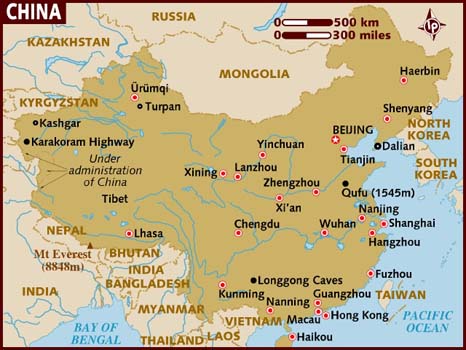
China has become one of the most important influences on U.S. foreign policy in the years since the United Soviet Socialist Republic (USSR) dissolved into a smaller version of itself (Russia) and a collectively less prominent scattering of nation states.  The Peoples Republic of China has impressively grown beyond being Southeast Asia’s powerbroker of the 1970s and ’80s to be recognized as an international force in the world’s economy, as well as a major industrial contributor to the planet’s environmental problems.

It slowly dawned on many Americans that China was emerging as the United States chief international rival.  But the relationship between the two major superpowers developed a unique twist that was never an issue in the U.S. competition with the U.S.S.R.  China became a significant holder of American international financial debt, a situation created in part by our own credit card addict’s view of financial (mis)management, aggravated by a growing U.S.-China trade imbalance.

For these reasons I became very interested in former Ambassador to China, John Huntsman’s unsuccessful run at the Republican Presidential nomination.  Suddenly, here was someone who understood the intricacies of our relationship with the Chinese.  But I also came to realize my own “China problem”.  I knew very, very little about the Peoples Republic of China. 

This glaring blind spot led me to John Bryan Starr‘s Understanding China, an expanded 2010 study of a nation so few of us know much about, let alone understand.  This is Starr’s third revision of his original book, published in 1997.

Starr is a former U.S. Navy officer and current political science lecturer at Yale University.  Before Yale he taught Chinese politics at UC-Berkeley.  He has served as Executive Director of the Yale-China Association and as President of the China Institute in New York City.

The Great Wall

I found Understanding China to be a well-organized and enlightening look into a region of the world I have admittedly ignored over the years, at least since those heady days of fifth-grade geography and 10th grade world science.  Starr’s approach begins with a discussion of 12 critical issues facing China as it moved from being the brunt of jokes about cheap toys and flimsy consumer products to a regional military power and international economic force. 

The 12 issues range from those that most affect the Chinese people (e.g. housing and feeding a growing population, restrictions in the free flow of information) to the issues that challenge the country of China as it emerges as a developing economic power (e.g. environmental degradation, finding sufficient sources of energy, relationships with Taiwan, Hong Kong, and the United States).  This outline sets in the reader’s mind the questions that will be addressed throughout the book and serves as a useful guide for framing Starr’s discussion.

It proves difficult for me to do such in-depth studies justice in a blog post.  So many of my readers have short attention spans and prefer lawn care tips over international political science.  With those restrictions in mind, I’ll limit my discussion here to those aspects of China I found new and most interesting.  A serious study such as Understanding China is a useful tool for gaining an overview on a broad spectrum of issues; the reader can then decide which specific areas might require more in-depth research. 

Points of interest I was surprised to learn:

  • China experiences approximately 120,000 very public protests every year.  Quite the surprising statistic for such an authoritarian and – in the case of the 1989 Tiananmen uprising – downright brutal government.
  • China is just a tad larger than the United States (3.7 million square miles vs. 3.6 million).  But 75% of its population lives on just 15% of the land mass; two-thirds of which is covered by mountains akin to the U.S. Rockies.  China’s arable land for farming is limited to just 10% of the total.
  • The 2008 global financial meltdown had a relatively limited effect on the Chinese economy.  The reason was the authoritarian government’s capability to quickly and effectively inject new capital into the domestic economy.  So there does seem to be at least one advantage to not having to kowtow to a democratically elected legislature … quick action in a crises!
  • Foreign investment, channeled primarily through the Special Administrative Regions (Hong Kong, Macao), tops $1.6 trillion a year; consisting of 60,000 joint ventures; and accounting for half of all Chinese exports.
  • China’s People’s Liberation Army receives an official annual budget of only $70 billion; but experts estimate that it’s truly 3-4 times that large.  In addition, the PLA self-finances in part through the manufacture and international sale of military weapons and equipment.  And until recently ordered to divest,  military-owned and operated facilities also produced consumer goods for domestic sale that accounted for 20% of the domestic consumer market. 
  • In 2004 Morgan Stanley estimated that high quality, less expensive Chinese products saved the U.S. consumer an astounding $100 billion!    

There were several topics in which I was keenly interested, given China’s expanding global presence and impact.

Interests of local authorities and economies vs. objectives of the national government …

Despite China’s authoritarian communist rule, the countryside is relatively free of control by the central government.  Local authorities are delegated much latitude on a broad spectrum of administrative and operational issues.  This arrangement serves to contradict certain objectives like reducing pollution and feeding an expanding population. 

The crux of the problem is that local authorities at regional and village levels are incentivized (or penalized) based on production outputs and cost efficiencies, along with ensuring compliance by its citizens with social programs (e.g. one-child birth policy).  Often the extent of local compensations, power, and access to corruptive practices causes local interests to run counter to national policy.  Local leaders will overlook environmental threats, sacrifice arable land – which are already scarce in relation to farming needs – for modern industrial facilities, and coerce social compliance with the one-child policy simply as a cost reduction measure.

Mao Zedong

The environment was just one sacrificial lamb in Mao Zedong’s vision of the Chinese nation.  He portrayed Nature as an enemy to be overcome in the struggle for a powerful, independent China.  Water and energy were provided free of charge, which ensured no one questioned the economies of conservation or the use of alternate energies. China is the largest user of coal, the second largest of oil (with 60% coming from the Middle East), and home to 16 of the 20 most polluted cities on the planet. 

China’s refusal to commit to most international environmental restrictions is based on its claim as a developing industrialized power (i.e. not yet fully developed).  The claim has some merit since all developing nations, including the U.S., have histories as a major polluters as they grew into advanced industrial powers.  This standoff does not bode well for international efforts to reduce the global effects of man-made pollution.

The family responsibility system …

The Chinese are well-known for the strength of their family system; and this is illustrated nowhere better than the reliance on the family responsibility system as a glue that holds Chinese rural society together.  Due to China’s sparse infrastructure outside its urban concentrations, huge swaths of rural land especially in the north and west have limited accessibility, little in the way of government and social support structures (hospitals, schools, roads, communication, etc.), and less government control.  As a result, a loose federation of local authorities coupled with a strong family agrarian culture are left to their own devices for sustenance, industry, and social support.

The family structure is most important here.  The family system is responsible for seeing the individual through life from birth to death.  With national priorities focused on feeding the much larger urban populations, the family structure is crucial to the success of rural farms which are owned and operated primarily by family units.  Farming and limited rural industrial capacity is owned, managed, and staffed almost entirely within the family system.  For this reason the limits of the one-child policy are largely ignored in rural areas since the larger the family, the greater the output; the greater the output, the more healthy and wealthy the family.  These families find the penalties for multiple births and additional children over one-child to be well worth the investment, even a matter of pride. 

In addition, older Chinese in rural areas do not benefit from the pensions city dwellers can accumulate.  So younger generations see providing for their elderly parents and grandparents to be part of their family duty. 

One interesting spinoff from this significant urban-rural divide is that rural Chinese do not identify with the problems and shortcomings faced by those Chinese in the big cities.  As a result, rural Chinese felt little compulsion to become involved in the Tiananmen Square uprisings of 1989, which were initially caused by protests over poor education and living conditions at Chinese universities, located in its major urban centers like Beijing.      

Remaking the Chinese economy …

This post is already way too long for some of my attention-span-challenged fans, but Starr’s biggest contribution to my understanding of China’s present day status was his explanation of the remaking of the Chinese economy.  For decades China was the land of cheap toys and poorly made consumer products.  Now it’s known for cheaper priced consumer products and top-line brand-name clothing and electronics.

China’s status as The Land of American Outsourcing hits a sensitive nerve with work-a-day Americans, particularly those without good jobs and especially those who have lost jobs to cheaper overseas labor.  It’s an issue that will plague Chinese-American relations for years to come until some form of equilibrium is reached.  One cold, hard reality is that the outsource destinations did nothing other than take advantage of the high cost structure in this country, much of it the result of the high level of Government regulation and the expenses of a union-committed labor force.

China’s big chance to remake its often ridiculed economy came with the cessation of Hong Kong by Great Britain.  This handover opened the door for China’s own brand of “capitalism with Chinese characteristics”.  Hong Kong, which had long existed as a conduit for financial activity, opened the floodgates for a dramatic expansion of foreign investment. 
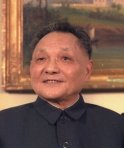
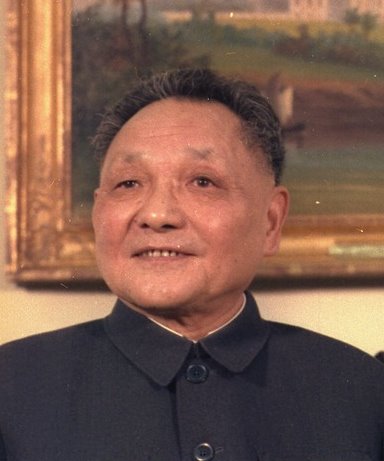
Deng Xiaoping

It was Deng Xiaoping who set the stage by initiating a number of reforms that eased the transition for China’s economy.  Deng’s reforms included moving industrial development from central government planing to market-driven decisions, and shrinking the state-owned industrial sector in favor of an expanded private sector.  These decisions accomplished more for China’s economy than any other outside development.  

From the socialist/communist point-of-view however, China also moved from an economy among the most equal in income distribution to one that is now one of the most unequal in terms of the differences between rich Chinese and poor Chinese.  This just goes to prove that trying to force a philosophy of income equality for all does absolutely nothing for the long-term financial and economic health of a developing country.

And that’s it, a rather long-winded but inadequate attempt to portray John Bryan Starr’s look inside the Chinese behemoth.  I certainly have skipped and skimmed a large part of Starr’s treatment.  For a real appreciation of China’s story from the age of dynasties to land of Wal*Mart you really need to pick up Understanding China.
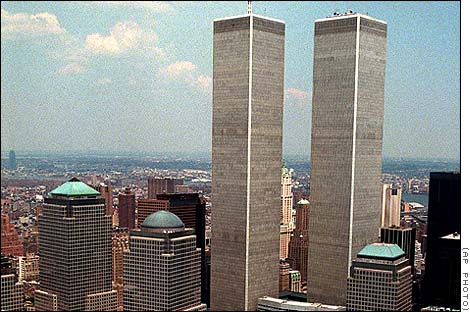
As you enjoy your 4th of July holiday …

… Remember the sacrifices paid to keep this country, its citizens, its future citizens, its traditions free from tyranny and oppression.

Of course the reason we will all be enjoying the Jersey shore, our National Parks, picnics, fireworks and apple pie is the anniversary of another year of The Grand Experiment, where a collection of 13 former British colonies took the first step towards forming a government “… by the people , for the people…”.

“The preservation of the sacred fire of liberty . . is finally staked, on the experiment entrusted to the hands of the American People.”  – George Washington

Thirteen years before Washington spoke those words in his first inaugural speech, fifty-six brave men put their names to a document – The Declaration of Independence – that gave birth to a new country at the risk of their own lives and the success of a rebellion against a powerful European ruler.  In 1776, these men dared Great Britain to defy their pledge to pursue life, liberty and happiness.

And on that very same date – exactly 50 years later – in 1826 both John Adams and Thomas Jefferson, the second and third elected Presidents to serve and protect this Grand Experiment succumbed to age and died within hours of each other.  In 1831 James Monroe, the 5th U.S. President also passed away.

Today, July 3 marks the anniversary of the high-water mark of the Southern Confederacy’s failed efforts to secede from the Union and enslave African people on plantations and in commerce throughout the South.  On this day in 1863, General James Longstreet’s corps, under the command of General Robert E. Lee and led into battle by General George Pickett reached the zenith of the Confederacy’s attack on Northern soil on the final day of the Battle of Gettysburg.  At a place known as The Angle Pickett’s Charge marked the ebb of the South’s attempt to force an end to The Civil War by threatening Northern cities and eventually the capital, Washington, D.C..

During the charge approximately 4000 Americans were killed or wounded.  The Battle of Gettysburg claimed roughly 35,000 killed and wounded.

The following day, the 87th anniversary of the signing of The Declaration of Independence, the Confederate garrison at Vicksburg, Mississippi under the command of Lt. General John C. Pemberton surrendered to General Ulysses S. Grant’s Army of Tennessee after a six-week siege of the city.  3200 Americans were killed or wounded during the siege.

The one-two punch of Gettysburg and Vicksburg formed a recognizable turning point in the American Civil War as Northern industrial might and an overwhelming population advantage formed an insurmountable barrier to future attempts by the South to force a political capitulation from the North.  And although the war dragged on for almost two more years, the South never really threatened the North again.

And finally on July 4, 1944 ….

Private First Class William K. Nakamura distinguished himself by extraordinary heroism in action on 4 July 1944, near Castellina, Italy. During a fierce firefight, Private First Class Nakamura’s platoon became pinned down by enemy machine gun fire from a concealed position. On his own initiative, Private First Class Nakamura crawled 20 yards toward the hostile nest with fire from the enemy machine gun barely missing him. Reaching a point 15 yards from the position, he quickly raised himself to a kneeling position and threw four hand grenades, killing or wounding at least three of the enemy soldiers. The enemy weapon silenced, Private First Class Nakamura crawled back to his platoon, which was able to continue its advance as a result of his courageous action.

Later, his company was ordered to withdraw from the crest of a hill so that a mortar barrage could be placed on the ridge. On his own initiative, Private First Class Nakamura remained in position to cover his comrades’ withdrawal. While moving toward the safety of a wooded draw, his platoon became pinned down by deadly machine gun fire. Crawling to a point from which he could fire on the enemy position, Private First Class Nakamura quickly and accurately fired his weapon to pin down the enemy machine gunners. His platoon was then able to withdraw to safety without further casualties. Private First Class Nakamura was killed during this heroic stand. Private First Class Nakamura’s extraordinary heroism and devotion to duty are in keeping with the highest traditions of military service and reflect great credit on him, his unit, and the United States Army.

Private First Class Nakamura was posthumously awarded the Congressional Medal of Honor.

And so, as you enjoy your holiday, your friends, your family … REMEMBER what it has meant to those who have sacrificed for all of us!

70 years ago this week: Battle of Midway Island (June 4-7, 1942)

(Today our Navy command observed the 70th anniversary of the Battle of Midway as in commemoration of the recent Memorial Day holiday.  This was a different take on Memorial Day observations as it took a look at a specific, historical battle.) 

Japanese Admiral Isoroku Yamamoto

As was mentioned in my previous Memorial Day post, the Japanese fleet set off for Midway Island on May 27, 1942.  Their intent was draw U.S. Navy carrier forces into a trap by attacking Midway Island, one of the few military installations U.S. forces occupied west of Pearl Harbor and the Hawaiian Islands.  Once U.S. carriers responded to the Midway attack by seeking out Japanese carrier force, the hammer of Japanese battleship forces would then attack and destroy the U.S. carrier fleet.  All the U.S. battleships assigned to the Pacific theatre had been destroyed or damaged just six months prior to the Battle of Midway when the Japanese attacked Pearl Harbor.

Several factors contributed to the eventual U.S. victory at Midway.

  • U.S. cryptologists had successfully figured out the Japanese code used for its operational forces.  The Japanese had been delayed in fielding their own more advanced code in the weeks leading up to Midway.  As a result, Allied forces in the Pacific were able to read Japanese message traffic, and knew both where and when – within a day or two – the Imperial Forces were expected to hit Midway Island.
  • Aircraft carrier U.S.S. Yorktown (CV-5), heavily damaged and thought by the Japanese to have been sunk during the Battle of the Coral Sea (May 7-8), limped back to Pearl Harbor on May 27 and was turned around in sufficient fighting condition in just 3 days!  Yorktown was able to sail as the core of Task Force 17 on May 30.
  • On 29 May, seaplane tender (destroyer) USS Thornton (AVD-11) arrived at French Frigate Shoals to relieve light minelayer USS Preble (DM-20) on patrol station there. The presence of U.S. ships at French Frigate Shoals prevented the Japanese from refueling flying boats to reconnoiter Pearl Harbor.  As a result, the Japanese had no intelligence on the departure and makeup of Task Forces 16 (U.S.S. Enterprise and U.S.S. Hornet) and 17 (U.S.S. Yorktown). 
  • Radio silence insisted upon by Japanese Admiral Isoruku Yamamoto prevented what sporadic information Japanese intelligence could discern about Task Force departures from Pearl Harbor from reaching Vice Admiral Nagumo Chuichi‘s Carrier Strike Force.

Overview of the fighting during the Battle of Midway, as taken from the Naval History and Heritage Command, Battle of Midway link:  

U.S. Admiral Chester W. Nimitz

Just after midnight on 4 June, Admiral Chester W. Nimitz, based on patrol plane reports, advised Task Forces 16 and 17 of the course and speed of the Japanese “main body,” also noting their distance of 574 miles from Midway. Shortly after dawn, a patrol plane spotted two Japanese carriers and their escorts, reporting “Many planes heading Midway from 320 degrees distant 150 miles!”

The first attack on 4 June, however, took place when the four night-flying PBYs attacked the Japanese transports northwest of Midway with one PBY torpedoing fleet tanker Akebono Maru. Later that morning, at roughly 0630, Aichi D3A (“Val”) carrier bombers and Nakajima B5N (“Kate”) torpedo planes, supported by numerous fighters (“Zekes”), bombed Midway Island installations. Although defending U.S. Marine Corps Brewster F2A (“Buffalo”) and Grumman F4F (“Wildcat”) fighters suffered disastrous losses, losing 17 of 26 aloft, the Japanese only inflicted slight damage to the facilities on Midway. Motor Torpedo Boat PT-25 was also damaged by strafing in Midway lagoon.

Over the next two hours, Japanese “Zekes” on Combat Air Patrol (CAP) and antiaircraft fire from the Japanese fleet annihilated the repeated attacks by the American aircraft from Marine Corps Douglas SBD (“Dauntless”) and Vought SB2U (“Vindicator”) scout bombers from VMSB-241, Navy Grumman TBF (“Avenger”) torpedo bombers from VT-8 detachment, and U. S. Army Air Force torpedo-carrying Martin B-26 (“Marauder”) bombers sent out to attack the Japanese carriers. Army Air Force “Flying Fortresses” likewise bombed the Japanese carrier force without success, although without losses to themselves.

Between 0930 and 1030, Douglas TBD (“Devastator”) torpedo bombers from VT 3, VT-6, and VT-8 on the three American carriers attacked the Japanese carriers. Although nearly wiped out by the defending Japanese fighters and antiaircraft fire, they drew off enemy fighters, leaving the skies open for dive bombers from U.S.S. Enterprise and U.S.S. Yorktown. VB-6 and VS-6 “Dauntlesses” from Enterprise bombed and fatally damaged carriers Kaga and Akagi, while VB-3 “Dauntlesses” from Yorktown bombed and wrecked carrier Soryu. American submarine Nautilus (SS-168) then fired torpedoes at the burning Kaga but her torpedoes did not explode.

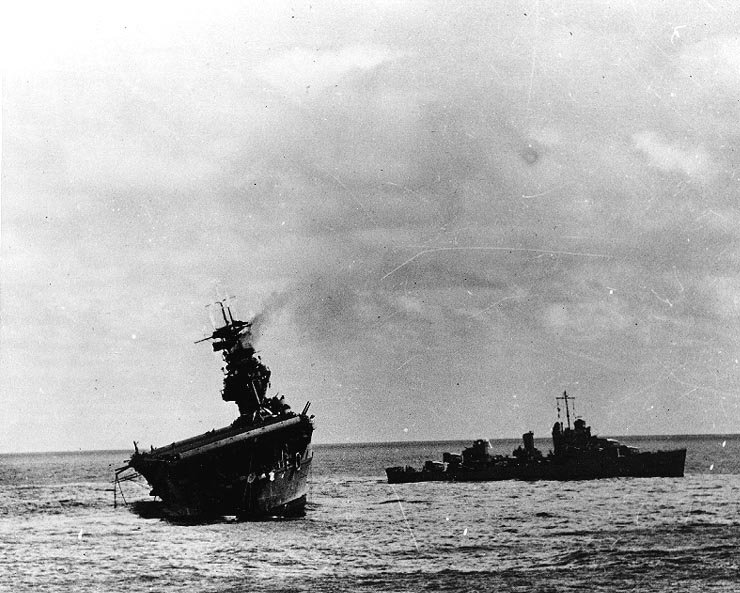
USS Yorktown – June 4, 1942

At 1100, the one Japanese carrier that escaped destruction that morning, Hiryu, launched “Val” dive bombers that temporarily disabled Yorktown around noon. Three and a half hours later, Hiryu’s “Kate” torpedo planes struck a second blow, forcing Yorktown’s abandonment. In return, “Dauntlesses” from Enterprise mortally damaged Hiryu in a strike around 1700 that afternoon. The destruction of the Carrier Strike Force compelled Admiral Yamamoto to abandon his Midway invasion plans, and the Japanese Fleet began to retire westward.

On 5 June, TF 16 under command of Rear Admiral Spruance pursued the Japanese fleet westward, while work continued to salvage the damaged Yorktown. Both Akagi and Hiryu, damaged the previous day, were scuttled by Japanese destroyers early on the 5th.

The last air attacks of the battle took place on 6 June when dive bombers from Enterprise and Hornet bombed and sank heavy cruiser Mikuma, and damaged destroyers Asashio and Arashio,as well as the cruiser Mogami. At Admiral Spruance’s expressed orders, issued because of the destruction of three torpedo squadrons on 4 June, “Devastators” from VT-6 that accompanied the strike did not attack because of the threat to them from surface antiaircraft fire. After recovering these planes, TF 16 turned eastward and broke off contact with the enemy. COMINT intercepts over the following two days documented the withdrawal of Japanese forces toward Saipan and the Home Islands.

Meanwhile, on the 6th, Japanese submarine I-168 interrupted the U.S. salvage operations, torpedoing Yorktown and torpedoing and sinking destroyer USS Hammann (DD-412). Screening destroyers depth-charged I-168 but the Japanese submarine escaped destruction. Yorktown, suffering from numerous torpedo hits, finally rolled over and sank at dawn on 7 June.

Luck also turned out to be on the American side as well; but it was luck that was made possible through better intelligence gathering, cryptology breakthroughs, industrial capabilities (e.g. U.S.S. Yorktown’s quick shipyard turnaround), superior naval leadership and carrier tactics.  Not the least of any of the aforementioned factors, the fighting spirit, dedication, and bravery of U.S. military personnel determined the course of the Battle of Midway and by doing so, defined the high-water of Japanese designs for the Western Pacific.

Casualties were relatively light for American forces (300 dead, U.S.S. Yorktown sunk) compared to the over 3000 dead and four aircraft carriers lost by the Japanese.  The real measure of U.S. and Allied success was what the defeat did to Japanese designs to force the Allies out of the central Pacific so that Japanese forces could have their way in the western Pacific. 

From Midway forward, the World War II Pacific Theatre would slowly but decidedly turn to the Allies favor.  Due to the significant losses in aircraft carriers, airplanes, pilots, and even their trained aircraft mechanics, Japanese forces would suffer from the loss of air superiority.  And Japanese weaknesses in manufacturing capacity and the flow of raw materials made replacing lost ships extremely difficult and virtually impossible in the case of aircraft carriers.  As a result,  Japanese military operations would turn from offensive to defensive in nature as the Allies slowly closed the circle around the Japanese homeland.

The Battle of Midway, along with those at Coral Sea and the Doolittle Raid over Japanese home islands, marked the beginning of the Age of the Aircraft Carrier, which after 70 years still serves as the backbone of any prolonged American military presence in oceans around the world.

So despite that our Memorial Day has already passed, take a few moments to reflect on what these men and their machines accomplished in interests of freedom and American interests 70 years ago this week.

On Bravery, Honor and Commitment at Gettysburg

My eldest son and I just spent a day-and-a-half exploring the Battlefield at Gettysburg, PA.  This was a very typical Guys Weekend, doing the things we enjoy or simply find interesting and provocative.  We spent Saturday in Washington, D.C. witnessing the Phillies lose to the Nationals on our first visit to Nationals Park.  On Sunday we drove out to Gettysburg.

Historic-type excursions were not something we did much when the kids were young.  It’s difficult to justify dragging three children through an age-old battlefield when you’re the only one who finds it “interesting and provocative”.  The kids and the wife get bored; you feel rushed and more than a tad selfish; and it ends up not being a very enjoyable time for anyone.  Yet I was embarrassed by the fact that I had never visited Gettysburg, despite living in Pennsylvania my entire life.

Recently Mike Jr. started reading up on Civil War history; something I did somewhat intensely around 10 years ago.  Suddenly we had a new and fascinating subject on which we could talk and share opinions, insights, and information.  A few months ago, we agreed to visit the Gettysburg National Military Park together.

George Gordon Meade

The Battle of Gettysburg was the largest land battle ever fought on the North American continent.  Fought during the Civil War, it was a major turning point in Abraham Lincoln’s heroic efforts to preserve the Union of the United States.  Over 165,000 men converged on Gettysburg in late June 1863 in a dance of movement and counter-movement with which both armies were well acquainted.

Although there were no plans to engage at Gettysburg (Jubal Early‘s Confederates had raided and left Gettysburg days earlier.), the vagaries of war, where many men under different commands spread out over a wide area, resulted in a dramatic confrontation that lasted three days.  All that was needed to set off the conflagration was the rumor that Gettysburg had a supply of shoes, a cherished commodity for the often shoeless men of the Southern Armies.

General George Gordon Meade led the Union’s Army of the Potomac despite having been promoted from his Corps command to replace General Joe Hooker just three days before the battle.

The combined engagements were the bloodiest of the Civil War.  Over 7000 men were killed, over 33,000 wounded.  And almost 11,000 were listed as missing or captured.  Yet despite fighting that surrounded a well established town of 2400 people, only one civilian was killed.  Mary Virginia Wade died when a stray shot ripped through the door of her sister’s house.

When we arrived at the National Park, we headed out to visit the sites of the first day’s battles, all the while reliving scenes from the well-known historically based movie Gettysburg.  When you begin to get an overview of the battleground, you begin to realize the size and scope of the event.  Those of us without military experience fail to appreciate how much ground is involved in a major military engagement.  The depth and breadth of space required to accommodate major armies is truly impressive.

George E. Pickett

But the true magnitude of what occurred in Gettysburg in that hot, humid July in 1863 does not hit home until you visit the sites of fighting that occurred on Day 2 and Day 3.

Since we were saving the bulk of the Day 2 fighting (particularly Little Round Top and Devils’ Den) for our second day, we decided to take the walking tour of Pickett’s Charge (also known as Longstreet’s Charge), as provided by a National Parks Ranger.  If you ever have the opportunity, this is a great way to get both an overview of events as well as insights into the small individual feats and personal stories that underscore the drama.

As we stood on Cemetery Ridge looking west towards Seminary Ridge you suddenly realize the difficulty of that final charge made by elements of Longstreet‘s First Corps (Pickett in charge with Andrews’ and Pettigrew’s Divisions).  Across roughly a mile of wide open ground, exposed to artillery and then musket fire along the entire route.

Nowhere to hide, few places to take cover, against Union forces behind low reinforced battlements on high ground with undisputed command of the field and unobstructed fields of fire.  The dedication, courage and sense of honor necessary to march into that Field of Death is – simply put – unimaginable!

James Longstreet

Regardless of your views on the Confederate struggle, you cannot help but be awestruck by the bravery demonstrated that day by those wearing the ragtag uniforms of the Army of Northern Virginia under the command of Robert E. Lee.

At times I have found myself embroiled in heated discussion about the legitimacy of the South’s struggle. Not from the viewpoint of defending slavery, but in trying to place into perspective the role of everyday Southern farmers, artisans, college students, and back woods folk who did not own slaves themselves, but believed they were fighting to define their Right to Self-Determination.  Their allegiance was to their State as their Country at a time when the U.S. of A. was still trying to define itself as a Country of States.

Too many people want to boil it down to the preservation of slavery as the only motive behind The Civil War.  But that’s an over-simplification.  There were other issues at stake …  a strong centralized government vs. a weaker national presence in favor of strong, independent States; the economic interests of the agrarian South (slavery) in the face of a more populous, industrialized North; the Right of individual States to come and go as they chose, depending on their agreement with National policies and actions; and the State Nullification of Federal Laws when States disagreed or were disadvantaged by said laws.

Both sides in the conflict were pushed to war by fiery speeches and political posturing that portrayed “the other side” as threats to the existence of the other.  In the end, it was mostly the common man who paid the price on blood-soaked fields defending their homelands or in not-so-distant sister States.

Our second day was spent on a paid two-hour car tour led by an elderly gentleman named John Everude.  For a reasonable $65 (not including tip) we received an interesting and enthusiastic overview of the entire three-day battle as well as events leading up to the largest land battle on American soil.  This is well worth the price should you ever decide to visit Gettysburg.  (Reservations must be made at least three days prior to your visit.)

We spent the rest of the day exploring the sites of the Day 2 battles at Little Round Top, Devil’s Den, the Wheat Field and Peach Orchard.  We visited the site of the 20th Maine‘s heroic stand and bayonet charge down Little Round Top as made famous in the aforementioned movie, Gettysburg.

Joshua Chamberlain

When you walk and gaze upon a terrain broken by boulders the size of cars piled atop and massed together in the low-lying Slaughter Pen and along the heights of Devil’s Den, you acquire an appreciation for the hardships both sides faced as they struggled to control the far left segment of the Union line, as it was attacked by Longstreet’s Corps.

Mike and I marveled at the terrain held by the Joshua Chamberlain‘s 20th Maine and over which it executed its bayonet charge against John Bell Hood‘s 15th Alabama Regiment.  You cannot imagine how the 15th charged up that rugged hill, let alone how the 20th Maine could possibly have charged down it!

It’s only when you walk this ground that you realize it’s impossible to comprehend the Bravery needed to Honor one’s Commitment to Country and to comrades.  Yet these men did it to the ultimate betterment of us as a People and as a Country.

Beyond Barbed Wire

Beyond Barbed Wire, Kit Parker Films production, is a thought-provoking, emotional look at one of the most controversial events in American history.  The film takes a personal look at the Japanese-Americans affected by the American government’s short-sighted, knee jerk reaction to the Japanese attacks on Pearl Harbor and other targets in the Pacific that kicked off America’s direct involvement in World War II.  The message is amplified by the primary focus of the documentary, those Japanese-American men who – despite the humiliation foisted upon their families – still felt duty and honor bound to fight for their country.

This is one of those incidents in American history that has always intrigued me.  And so, it was another foray to the Horsham Library looking for cheap music (Read: Free!) and something interesting to watch.  The interment of Japanese- Americans holds a fascination for me for the following reasons:

  • Only Japanese-Americans were ever interred in large numbers during World War II.  This despite the early war whispers of atrocities being committed by Germans on Jews and other “undesirables”.  Never were German- or Italian-Americans interred nor were they prohibited from fighting against their ethnic homelands. 
  • As the above would suggest, the racial implications are quite telling at a time when most Americans did not even know where Pearl Harbor was located.  Oriental cultures and their people were unfamiliar to most Americans.  Even in areas along the Pacific Coast where Americans of Japanese descent had been living for decades, they were often misunderstood or outright distrusted due solely to their racial and cultural differences.
  • These events occurred during the Democratic administration of Franklin Delano Roosevelt, arguably the most socially conscious, socially activist and – some might say – socialist Presidents.  In every other facet of the war’s management, execution and victory, Roosevelt is rightfully praised; which makes it all the more confounding how this suspension of liberty for a people both innocent and in many cases generations removed from direct contact with their ethnic homeland was allowed to occur.

Beyond Barbed Wire focuses on the Nisei (Japanese descendents born in the U.S.) who fought in Europe and in the Pacific theatres of war.  Both the 442nd Infantry Regimental Combat Team and the 100th Infantry Battalion served with distinction in France and Italy respectively.  Their actions overcame initial resistance expressed by American military leaders to trust Japanese-Americans to fight during the war.  In fact, Japanese-Americans were prohibited from fighting in the Pacific against hostile Japanese forces  (unlike the the welcomed participation of German and Italian-Americans in Europe).  Many other Japanese men, fluent in their native tongue, were recruited or ordered to serve in the Military Intelligence Service (MIS) as spies and translators.

Many of these men came from families that were stripped of homes, businesses and all the comforts of normal American life.  The distinction made between Japanese living on the Mainland as opposed to those living in Hawaii is a story unto itself.  Hawaiian Japanese were treated differently than those on the Mainland.  Many Hawaiian Japanese had no idea what was happening to their Mainland cousins.  One of the interesting segments of the film deals with the visit of a group of Hawaiian Japanese to a Mainland interment camp.  The contrast is powerful.

It is very easy to become misty-eyed over the emotional stories being told and written by the slowly disappearing Greatest Generation.  Those men and women who set aside personal lives, goals and the safety of civilian life to rescue Europe and the peoples of the Pacific.  The stories of war’s horrors, of friends lost, of emotional traumas so difficult to imagine – for those of us who have never had to face war – are magnified by the realization that many of these aging Japanese warriors volunteered despite the way their country treated them and those they loved.

I continue to find this moment in history both troubling and extremely gratifying.  Beyond Barbed Wire is well worth the investment of one’s time to gain an appreciation for a vastly under-appreciated segment of America’s Greatest Generation!

Franklin and Winston

Franklin and Winston: An Intimate Portrait of an Epic Friendship by Jon Meacham, an accomplished author, media executive and social/political commentator, is a great read on the close, personal relationship of the primary protagonists – Franklin Delano Roosevelt and Winston Churchill – behind the Western Hemisphere’s defeat of German fascism and Japanese hegemony during World War II. 

I became a fan of Meacham’s approach to historical figures and concepts through my weekday habit of catching segments of MSNBC’s Morning Joe while getting dressed for work.  Meacham has always struck me as a down-to-earth commentator on political and social issues.  He won the Pulitzer Prize for his treatment of Andrew Jackson in American Lion (not reviewed here); and his book on religion’s influence on the American experiment in American Gospel: God, the Founding Fathers and the Making of a Nation is an excellent guide to discussions on the spiritual foundation of American governance.  

Meacham’s approach in Franklin and Winston is similar to the other works mentioned above.  He takes an overview approach to the subjects, and provides plenty of source notes and references for the serious scholar who wishes to dig deeper.  It is this approach that makes his books enjoyable reads regardless of your reasons for picking up a Meacham historical study.

In Franklin and Winston Meacham focuses on the personalities of FDR and Churchill, including their family lives and how their personal backgrounds, ambitions and political situations played into the Allied war effort and the friendship that developed between the two during the war. 

Both men were the products of rich American mothers; Churchill’s mother marrying Lord Randolph Churchill, Member of Parliament, Chancellor of the Exchequer, and Leader of the House of Commons (1886).  Their parental relationships – or lack thereof – influenced both men in their very public lives.

Churchill’s parents were almost entirely absent; his father did not like him; and his upbringing and education was left to his nanny and the prescribed boarding schools for England’s power elite.  As a result, Churchill was driven to be the center of attention.  He was vigorous in all things he did, but was also impulsive and stubborn.  Churchill needed to be liked by those he highly regarded.  This would become a continuing theme in the Roosevelt-Churchill relationship, as Churchill found himself constantly chasing the more aloof, confident Roosevelt. 

FDR’s upbringing was quite the opposite.  He was doted on constantly by his mother.  Very little is mentioned of his father.  His mother’s coddling became even more prevalent when Roosevelt was diagnosed with polio in 1921 at the age of 39.  What FDR found at home as a child and even as an adult was everything Churchill’s early home life lacked.  As a result FDR did not feel compelled to seek anyone’s approval, even Churchill’s.  FDR greatly admired Churchill’s strength and leadership however, especially his skills at oratory during the dark days of 1940-41 (Battle of Britain). 

The friendship that these men forged in the year-and-a-half leading up to America’s entering the war and throughout the conflict resulted in a vision and strategy that freed Europe from the Nazis and chased the Japanese back to their home islands.  In this regard, Churchill did not have much choice but to follow the lead of Roosevelt on most matters of strategy.  Britain desperately needed the resources and manpower of the United States for their ultimate survival.  Only the thinnest of margins kept the Germans from attempting a cross-Channel invasion in 1940-41. 

Roosevelt – on the other hand – had to deal with an American electorate that for the most part wanted nothing to do with another war in Europe.  Yet he understood that the United States had to eventually enter the war or Europe would be lost to fascism.  He characterized his plight as ” … no leader should get too far ahead of his followers.”  FDR’s political strength permitted him to push such programs as Lend-Lease, which allowed for the sale of supplies and munitions to England (and eventually to all Allies) on a cash-and-carry basis.  Earlier under the Destroyers for Bases Agreement Roosevelt was able to send 50 aging destroyers to England for basing rights in the Caribbean.  Britain’s loss of those bases – though painful – provided FDR with necessary political cover, allowing the country to fulfill Roosevelt’s vision as “the arsenal of democracy”.

Despite Churchill’s standing as #2 in his relationship to FDR and to a greater extent England’s relationship to the U.S., he was a loyal and sensitive confidante to Roosevelt.  He protected FDR’s image in light of his crippling disease when the two met for the first time as world leaders at sea aboard the U.S.S. Augusta.  And he admired Roosevelt’s ability to transcend his disability and to accept the dependence on others that it required.  The description of the two leaders enjoying the view atop La Saardia in Marrakech in January 1943 is one of a caring Churchill overseeing the spiritual well-being of a cherished friend.

Like all friends, they also had their disagreements and slights that resulted in hurt feelings.  Churchill was upset when Roosevelt neglected to acknowledge Churchill’s cable of congratulations following FDR’s successful election in 1940.  And Roosevelt was miffed when Churchill sought a meeting of minds with Wendell Wilkie, FDR’s opponent in the 1944 election.  To make matter worse, Churchill ends up with Roosevelt on the phone due to a miscommunication and fails to recognize Roosevelt’s rather unique voice when the call goes through to the wrong man.  As the war winds down, Roosevelt realizes that stability in the post-war world requires greater interaction between the U.S. and Soviets as opposed to the British; and Churchill is – for a time – left out in the cold.

At the core of what would normally be an arm’s-length diplomatic relationship, the two most important men at such a critical juncture of history shared much.  Both had children serving in theatres of war.  Something not seen much these days aside from Britain’s royal family.  They leaned on each other at times of darkness, be it Dunkirk or Pearl Harbor.  They not only cooperated strategically and politically during the most trying of times, but genuinely liked each other and were lifted in spirit whenever they had the chance to get together.

And at times like those, what else are friends for?

Citizen U.S.A.

I did ABSOLUTELY NOTHING on Monday, December 26.  Well, almost nothing …  I had to do some post-Christmas clean-up, since we host a house full of relatives for Christmas dinner every year.  So the Day After Christmas is reserved for Decompression and Recovery.

The one thing I’m glad I did was catch an HBO documentary called Citizen U.S.A.: A 50 State Road Trip, where director Alexandra Pelosi travels to naturalization ceremonies in all 50 states; meeting brand new American citizens to learn why they chose America as their new home.  I found it inspiring and thought-provoking.

Two experiences I have had with younger, liberal family members made the story Pelosi tells all the more poignant.

Documented and legal vs. Undocumented and running scared 

One young relative not only constantly shines the light on the dangerous sub-culture of illegal aliens (The PC term is now apparently “undocumented workers“.) … pouring across the southern U.S. border, he has actually spent time in that hostile environment working with charitable organizations trying to help these “undocumented workers” survive the physical ordeal of crossing the desert border region.  It’s an admirable humanitarian effort, providing they aren’t directly abetting illegal entry. 

We have gotten into some spirited internet discussions about the subject of illegal/undocumented aliens/immigrants/workers.  My central point in these discussions comes down to what barriers prevent these illegal border crossers from going through the process of becoming legally announced, recognized and controlled immigrants?  How difficult it is really to apply and obtain legal work permits, then enter the country and work here legally?  

From my research, it appears that the only practical barrier undocumented immigrants face to become documented laborers is the bureaucratic wait to receive work visas from the U.S. Government.  But a New York Times report found that H2-A visa for agricultural workers, one of the few unlimited visa categories, can be obtained on the same day.

The HBO documentary – on the other hand – showed thousands of legally documented immigrants, who not only came here to attend schools and/or to work, but who have flourished to the point where they persistently and successfully sought to become fully naturalized U.S. citizens.  They did not have to live a life under the radar, isolated from helpful human services; constantly on the move; always looking over their shoulder due to the fear of being caught and sent home.  No hiding, no running.

How can the undocumented worker lifestyle be any freer, safer or more productive for the individual when they determine it necessary to leave their home and sneak into the U.S. for work, better wages and services that would improve their family’s quality-of-life? 

Legal entry is obviously the safer, cleaner choice for the immigrant, even with the bureaucratic hoops which – according to the above NY Times link – is not an unreasonable barrier to LEGAL entry.  So for me, it is hard to argue with the premise that illegals would rather enjoy the improved lifestyle and new opportunities without having to contribute a fair share towards the human services (schools, hospitals, etc.) they and their families enjoy while here.

The part that doesn’t make sense is having to SURVIVE the ordeal of a border crossing so dangerous that charitable organizations are compelled to be there to provide survival assistance.

I am hardly one who fails to recognize the value that foreign migrant workers contribute to the U.S. economy.  Their labor is indispensable to many areas of our agricultural industry.  So I’m waiting – even hoping – for someone to disprove this negative view of a generally hard-working, productive people, who – on the surface at least – appear to be only interested in improving their lot in life.  These are givens.

(As an interesting aside, in six months during 2006 Mexico deported over 100,000 illegal immigrants.  It is illegal for foreign nationals to be in Mexico – including Americans – without proper documentation.  Mexican immigration law allows authorities to arbitrarily check immigration papers and to racially profile groups determined more likely to be in Mexico illegally.)

America:  An Ideal not a guarantee

In the middle of watching the HBO presentation, I caught my eldest son snickering at one newly naturalized citizen’s proclamation that in America you can become successful, accomplish anything, and realize a better quality-of-life. 

I’m willing to bet this is a fairly common reaction in some people.  Those who have come to believe that corporatism and the financial system keeps the lower and middle classes hopelessly bogged down; those who think that social inheritance and political opportunism will always trump hard work and creativity; the cynical who look at the faults one can inevitably find in a society as large and complex as ours and conclude the deck is fixed against all but the properly connected.

I prefer to look at it another way.

Living in America is an Ideal, not a guarantee.  It is a Promise that Hard Work and Creativity will be rewarded.  It’s not a guarantee that you will be made rich and amazingly successful or even that all your Hard Work and Creativity will free you of financial pressures or eliminate all social disadvantages.   

The Ideal is an objective for which we should reach up and out.  The Ideal may very well be unattainable, which any true Ideal worth working towards should be.      

America is still an Experiment just as the Founding Fathers saw it 235 years ago.  America is imperfect.  There are flaws in every segment of the Political, Economic, and Social orders.  Solutions to these problems, whether these challenges develop over decades or pop up suddenly like cracks on a windshield, are tweaks in the Experiment that in reality are experiments on the Experiment.  And sometimes the Solutions end up causing more problems elsewhere.   

As in any experiment, when the variables – like economic stability or political efficacy – get out of whack the results suffer.  Sometimes the confluence of problems and events within The Experiment develops into a perfect storm that threatens much of what has been accomplished.  The storms can hold us back; and sometimes they can ruin the Individual.  But part of the Promise is that the Foundation will always be there for You, a Foundation that can protect you and help you to recover.    

The Promise isn’t that You will be carried forever.  The Experiment has developed mechanisms that allow You to be carried when You cannot carry yourself.  Yet even these support structures were never guaranteed to be there always or to carry into perpetuity those who fall on hard times, especially when they have the basic capabilities to work for themselves.  Certainly the Promise was never intended to be a substitute for Hard Work.    

In the end, You get out of the Experiment what you put into it.  And if You wait only for what America will give you, you only cheat yourself, and the Promise will turn into nothing more than that … a promise.        

As I viewed Citizen U.S.A. I heard people who spoke of their love for America – their new home.  They understood the distinction between the Promise of America vs. America as a guarantee.  Some spoke of how much is taken for granted by birthright Americans … how many things we accept as givens, such basic concepts as physical safety, freedom of speech and religion, freedom from overt government harassment, even the simple conveniences of running water and electricity at the flip of a switch.  Things that many of these newly naturalized Americans saw as Miracles of Democracy, because in so many other parts of the world even these simple expectations regularly go unfulfilled.                               

You can read it in the Sunday papers …

Many Sunday mornings I slog through the newspaper with eyes barely opened, going through the motions almost with a sense of duty to keep up with what’s going on in the world.  Other days I seem to find a number of interesting columns, opinions or features that seem to beg for comment or discussion. 

All of these stories were carried in the December 4 edition of The Philadelphia Inquirer.

.

Should fidelity matter?  Karen Heller of The Philadelphia Inquirer is one columnist I always read, regardless of my opposition to most of her political views.  Despite our differences, she sometimes hits a chord that deserves consideration.  This Sunday her column on Should fidelity matter?, has an interesting angle on national candidates who cheat on their wives.  It’s a timely topic, given the recent travails of Herman Cain and the history of Newt Gingrich.

Heller’s central theme is that adultery should not in itself eliminate a candidate from receiving your vote.  She couches her view with recognition that politicians have huge egos, tend to maintain a casual relationship with the truth, experience spouse-free campaign trips and plenty of fawning women.  Certainly there have been a number of presidents – some lauded for their service – who have had “zipper problems”.  And for sure, there have been some pretty bad presidents who have never strayed from their spouses.   

So should fidelity be THE determining factor?  Heller states, “Politicians don’t need to act better, only to be wiser and lead.”  Her point-of-view is interesting, especially when it comes to primary politics.  Too many potential candidates get jettisoned way too early in the process for a host of reasons, wife-cheating being just one of the many. 

I have always had a problem with good candidates – particularly for President – that get eliminated from serious consideration because they don’t meet the dreaded “litmus tests” often applied by the extremes on either side of the political spectrum.  Regardless of whether the litmus test is voting for the Iraq War, support for the NRA, believing in a woman’s right to choose, or taxing millionaires, no national candidate is likely to satisfy every voter’s position on every issue.  Discarding a candidate because they are “Conservative, but not conservative enough” or “Liberal but not liberal enough” is counterproductive – in my opinion – to finding the best candidate across all issues.       

But character issues are a different story altogether.  If a politician is a liar or a cheat, it says something about their basic human makeup.  It points to a lack of strength, an inability to live up to one’s commitments.  It flags a weakness that can be exploited by people and entities looking for backdoor access to policy decisions or to funding streams.  If a politician cannot keep the simplest, most fundamental promise to a spouse, what does it say about their ability to lead, their fortitude on policy positions that might not be politically expedient, or their ability to resist temptations that could be personally profitable? 

One reason I was so hard on Bill Clinton during the Monica Lewinsky affair was the knowledge that had I acted as he did in my federal workplace, I would have been fired.  As Chief Executive, the President sets an example – if not the standard – for behavior by all those serving under their leadership.  “Do as I say, not as I do.” is not an effective leadership style.   

Some candidates have overcome this flaw to become effective leaders.  Some have even been elected despite knowledge of their peccadilloes along the campaign trail.  But on the whole, you cannot disregard the issue of infidelity as it relates to one’s character.

Should fidelity be the only issue?  No.  But it’s one of the big ones.

.

Women drivers  It’s official.  The problems encountered with driving – (almost) all of them – are caused by women.  This is a theme many male drivers in this country have held for decades.  Now the Saudis have confirmed that yet another problem with driving can be eliminated entirely by removing the fairer sex from the equation.

A high-level advisory group in Saudi Arabia claims that allowing women to drive could encourage premarital sex!  The report from a well-known academic was submitted to the  – all-male of course – Shura Council which advises the Saudi monarchy stating that to allow women to drive will threaten the country’s traditions of virgin brides.  The claim is that allowing females to drive will allow greater mixing of the genders and could therefore promote sex.

As any red-blooded American male from my generation can attest, driving most definitely allows greater mixing of the sexes; and a nice car certainly facilitates if not “promotes” sex.  But frankly, my experience was that although I could definitely “mix” more readily with the object(s) of my desire if I drove, no car – no matter how nice – promoted much more than the mixing.  Maybe it was me … 

Unfortunately for this well-known Saudi academic and his ground-breaking premise, there was never any shortage of premarital misbehavior when I first started driving and just about ALL the drivers back then were MALE!

.

Gary Johnson’s presidential campaign pushes on! 

“Who?”, you ask. 

Gary Johnson, former governor of New Mexico, is running for president … not that anyone would notice.  Seems Johnson is one of the minor candidates viewing the GOP presidential sweepstakes from the outside, looking in.  Johnson is a libertarian candidate with a true libertarian’s view on issues like drug decriminalization, taxes and federal spending.

Seems though that Johnson just can’t seem to break through to play with the big boys because his polling numbers (3%) do not warrant attention from voters or the media.  He is one of a number of candidates that get few if any invites to the GOP primary debates.

Although I have no predictions as to the long-term viability of Johnson’s campaign or those other minor candidates seeking attention, the way the Republican Party – with the help of a more-than-willing media – is going through top runners, one would think having as many candidates as possible involved in the process at this point would be a good thing.  If for no other reason, perhaps having additional – even desperate – candidates in the field might force the major candidates to defend questionable policies and decisions or to consider unconventional solutions to our problems.

.

Sagamore Hill  They are preparing to restore President Teddy Roosevelt‘s mansion at Sagamore Hill in Oyster Bay, NY.  I have always been a fan of Teddy, and would love to tour his Sagamore Hill home someday.  The story covers the challenges of removing, cataloguing and storing the thousands of artifacts, books and furniture contained in the house.  Suffice it to say, no one from PETA will ever enjoy many of the exhibits found from Teddy’s life as a progressive and a hunter.

.

From Pearl Harbor to Japan the hard way  Last but certainly not least, we have the story of World War II veteran Salvino Paul Tobia.  It’s an amazing tale of a U.S. sailor whose WWII experience began as he worked in a hangar at Pearl Harbor on December 7, 1941.  He survived that fateful day, then as a crewman on a PBY (flying boat) he narrowly escaped being shot down over the island of Tulagi in the Pacific after landing to evacuate wounded Marines.  But on September 11, 1942 his PBY is crippled by Japanese Zeros as they prepared to attack an enemy destroyer.  He ends up captured, working at a steel mill in the north of Japan replacing wheel bearings on ore cars; eats mountain grasses to survive; and is shelled by the Sixth Fleet while in captivity on the Japanese coast.

It’s a remarkable story that every American should read (if not this story than as many as you can of the thousands of other stories out there) to gain for the first time or to add to your appreciation for the sacrifices made for us by a soon to be gone generation.

Mr. Tobia passed away in October 2000.