The missing Political Middle; the loss of American governance

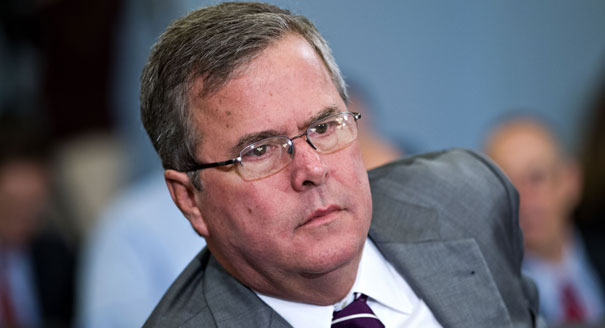
Thank you, Jeb Bush for putting into words what I have been thinking for quite some time!  How exactly to express my frustration with a National Leadership that is getting absolutely nothing done.  Nothing fair, nothing honest … simply nothing at all.

Washington, D.C. is broken.  And while Jeb Bush touched on one aspect of the problem – the severe hyper-partisan divide, my frustration is centered on another cause of this political stagnation.

What has happened to the Moderate Middle in American politics?!?

First off, allow me to lay the basis of my beliefs for this post:

  • Hyper-partisanism is a problem with BOTH political parties.  The Democrats in Washington are just as hyper-partisan as the Republicans.  A point which former Florida Governor Jeb Bush acknowledged in his e-mail to The Associated Press this week. 
  • There is no such thing as RINOs (Republican In Name Only) or DINOs (Democrat-INO).   

I have a HUGE issue with this blatant misrepresentation, intended to do nothing more than silence all but those on the extreme Right or Left of the political parties.  This is also problem relevant to BOTH parties, although RINO seems to get much more play than DINO.  In my opinion, Liberal Dems are simply more subtle in their efforts to trample over The Middle.

There was a time when the Democrats included conservative elements, such as those in The South known as Dixie Democrats.  There was also a time when there were Liberal Republicans, those who were more liberal on social issues while sticking to the economic virtues extolled by established GOP Conservatives. 

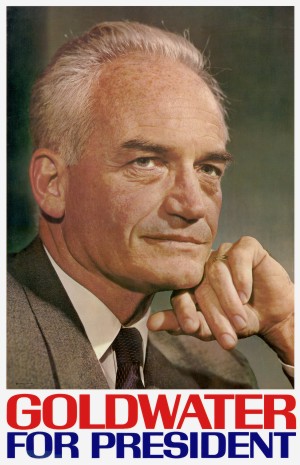
Barry Goldwater, a stalwart Conservative Republican in the ’60s and ’70s was more tolerant in his views on social issues.  Goldwater even appreciated the need for Liberal viewpoints as a counterweight to conservatism.  Anticipating that Somewhere in the Middle the two would meet!

Well, that’s simply not happening anymore …
  • The true and proper context for these misleading labels – assuming we even need them – is CINO (Conservative In Name Only) or LINO (Liberal-INO)
  • The Political Middle is the real issue here.  Moderate political viewpoints and participation serves as a buffer to the far edges of the political spectrum.  And it offers a middle ground for the germination of political compromise. 
  • The problem?  The Political Middle has all but disappeared in this country!

I consider myself a Moderate Republican with conservative leanings.  I believe in Smaller Government, reduced Government spending, and a strong National Defense.  But I also hold more moderate views on Social Issues (e.g. poverty, illegal immigration, LGBT lifestyles, education, and women’s rights).  I believe there are times when increased Government spending is both necessary and unavoidable (e.g. economic crises, natural disaster, military conflict, international leadership). 

I have a pragmatic view about taxes.  I hate like hell paying them.  I despise paying more of them.  But at times you simply have to cringe and bear it.  And yes, some people should pay more if their financial means allow for it, especially when the condition of the fiscal house rivals an EPA Superfund site.

The spread of views I possess apparently classifies me for the title RINO.  Not that I care …

Yet this explains exactly how we have gotten to the point in this country where no National Leader will dare make compromise or reach “across the aisle” to work towards solutions to our very real problems. 

  • It led to President Obama’s decision to throw his own debt reduction plan – Simpson-Bowles Commission – under the bus, because – God forbid – we can’t deal with the specter of social benefit reductions at a time when the federal deficit is roiling out of control!  Don’t want to get on the wrong side of the Liberal political base!
  • It led to the recent attempt to recall Wisconsin Governor Scott Walker for nothing more than his desire to reign in state spending and break the cycle of union-politician cronyism.    
  • It led to the rejection by every single Republican Presidential candidate of the very pragmatic suggestion of increasing tax revenues by $1 for every $10 reduction in government expenditures.  Because – ya know – you don’t want to piss off the Tea Party or Grover Norquist …  

I wholeheartedly agree with Jeb Bush’s statement, “If you could bring to me a majority of people to say that we’re going to have $10 in spending cuts for $1 of revenue enhancement — put me in, coach.” 

Dealing in absolutes in politics is a recipe for stagnation.  Stagnation in Leadership, stagnation in developing solutions to real problems, stagnation in progress, stagnation in a much-needed, too long developing economic recovery.  What you get – what we have now – are both the Left and the Right burrowing down and digging in behind jingoism and intransigence. 

So how did we get here? 

In essence, the Political Middle has abandoned the political field of play to both political extremes.  It’s simple really to understand.  Most people disdain or – perhaps more accurately – are apathetic towards politics, especially given its hateful tone in recent years.  For those with no hard and fast anchors on the more edgy political and social questions of the day, politics are just nasty, dirty, aggravating … a waste of time better spent elsewhere.  In some ways, it’s hard to blame The Middle for its retreat.

On the other hand, those individuals who possess solid political and social issues anchors, see politics as a Means to their Ends.  And this is magnified in those who willingly describe themselves as Ultra-Liberals or Right Wing Conservatives.  For instance, they recognize the importance of the primary vetting process for weeding out Presidential candidates they perceive as weak on their respective anchor issues.  This is why the early primaries in Iowa, South Carolina, New Hampshire receive such out-of-proportion attention.  By the time those of us in Pennsylvania get the chance to cast a primary vote, the candidate list has been pared down to one or two candidates.  Indeed they will simply be the candidates who could repeat their talking points without making the Left or the Right throw up in their mouths.  

This explains how we so often find our National political choices limited to Evil and The Lesser of Two.  It explains why many well-qualified individuals will forego involvement in politics and the responsibility of civic leadership.  They simply won’t subject themselves to cannibalization by those on the edges of the political spectrum.   

 Yet few of those who survive this vetting ordeal can be elected without the votes of the Political Middle.  And so we see, as soon as the primary process ends, the rush by the annointed candidates to appeal to The Moderate Middle.  Their sole objective: to win a general election so they can continue to pander to the only segments who will pay attention to what they do and say afterwards – The Left and The Right.

And so the cycle repeats.    

What has happened to the Political Middle? 

I guess they think they have better, more important things to do.  They do not appreciate that crucial decisions on issues and problems that could potentially affect them for years are being made without their input, long before they – The Middle – even realizes another Election Day is coming.  And these decisions are not limited to the social issues that drive stalwart Liberals and Conservatives to action.  They include decisions critical to the economy, to education, to fuel and energy prices, the environment, the deficit, and ultimately their futures and the futures of their children. 

The Middle’s political apathy is – mildly put – mind-boggling! 

So while we wait for America’s Political Middle to wake up to today’s reality, the partisans dig in and refuse to budge, refuse to solve, refuse to govern.  The economy continues to falter; the federal deficit continues to grow.  We wait for yet another Presidential election where our choices are weak and uninspiring; all the while knowing, nothing’s going to change regardless of the outcome.

Jeb Bush recognizes part of the problem.  When will we recognize the solution is a formidable, continuous presence of Moderate political voices?

You read it in the Sunday papers.

This is a regular feature … as in regular, not weekly … of Cranky Man’s Lawn, where we look at – and comment on –  a few articles that catch our eye during my regular … as in weekly … Sunday morning coffee’n paper lounge-about.  My regular Sunday morning read is The Philadelphia Inquirer.  But if you do not get The Inqy delivered to your door, links to the applicable articles are provided as the header to each discussion.

.

Need a watch “dog”?  You can get one for less than $5

Parts of Texas and northwest Louisiana are in the grips of a long-lasting drought.  When drought strikes, it means cattle and sheep cannot be sustained in a way that’s profitable for ranchers.  Aggravating the situation even further is the ragged, slow state of the economy which affects the costs of everything including the price of hay, which is used to feed the herds.  As a result, ranchers have been forced to unload their livestock in order to reduce the financial footprint of the ranching operation.

One unusual consequence of the situation in this region of the country is the releasing of hundreds of donkeys by ranchers who can no longer afford to maintain them, nor can they find buyers when the animals are put on the market.

Apparently, donkeys make exceptional watchmen!   They are able to provide a passive security of sorts for the herds they accompany as they – the donkeys – eat, sleep and live among the cattle and sheep.  The ranchers use FEMALE donkeys to provide security for herds located in isolated pastures on the very large ranches located in this region.  The donkeys are naturally hostile towards wolves and coyotes.  They will even go to lengths to attack them should they come into close proximity!

The problem is that they eat the same hay that the herds eat; so if you are not feeding livestock you don’t have, you don’t need the donkeys or the costs of feeding them.  So what happens is the donkeys are simply set loose or are pushed onto the lands of other ranches … a sort of reverse rustling.

The shame is that the animals are abandoned and left to fend for themselves.  Animal rescue organizations are overwhelmed, their valuable resources used to clean up an unfortunate mess.  So if you could use a sentry animal or a decent burro around your spread, check into acquiring a Watch Donkey.  They’re going cheap!

.

Reading the minds of Supreme Court Justices

This has become a favorite activity of cable and television commentators, political bloggers and analysts, State and Federal officials, and health insurance executives over the past week.  Three days of unprecedented testimony was held this week over the challenge by 26 states, including Pennsylvania over the mandates set forth in the Patient Protection and Affordable Care Act (a.k.a. Obamacare).

We have seen this coming as early as the day former House Speaker (I still enjoy saying that!) Nancy Pelosi stated that to find out what’s in the bill, Congress would have to pass it!

It was an amazing admission of just how rushed and ill-conceived the Obamacare package really was.  With so much power concentrated in the hands of the Democrats in their heady days when Hope and Change were the agenda, they stupidly threw together a terribly complex and pork laden bill (like Nebraska’s special Medicaid deal to land Senator Ben Nelson’s support) and shoved it down the Legislature’s – and America’s – throat.  Even its favorable and sensible aspects, like covering dependent children until age 26 and ending exclusions for people with pre-existing conditions, may be lost because of the short-sighted hubris of the Democrats.

In The Sunday Inqy’s Business section Chris Mondics Law Review column took a look at the comments and questioning that emanated from the Supreme Court Justices to gauge their leanings on the law.  His take was not good news for the Democrats.

There is no surprise that Justice Antonin Scalia was pointed, sarcastic, and a bit testy with U.S. Solicitors representing the Administration’s case in favor of the law.  But the questioning coming from Chief Justice John G. Roberts and Justice Anthony Kennedy were much more troubling for the Obama Administration and the Democrats in Congress.  Both Roberts and Kennedy have been seen as the only hope for a majority decision in favor of Obamacare; yet neither seemed impressed with the Administration’s arguments.  Worse yet for the besieged healthcare law, both also seemed unlikely to let separate parts of the bill stand if the central buttress – the individual mandate – gets overturned.

The Democrats should have seen this coming the moment Nancy Pelosi opened her mouth!

The funny thing is, if the Democrats had framed the healthcare law as a tax to pay for national coverage, similar to Medicaid, it most likely would have passed muster with the Supreme Court.  But no, they were not committed enough to covering the uninsured to go to that great length.  Why?  Because they KNEW the word “TAX” would have cost them enormous political capital and a few elections along the way.  I guess being in power and staying there was just a tad more important than universal healthcare, eh?

By the way, if you have ever had a meltdown speaking in front of an audience during an important presentation, listen to find audio of Soliciter General Donald B. Verrilli, Jr. hemming and hawing; uhing and duhing; gulping copious amounts of water; and rambling barely coherently during his presentation on the individual mandate.  It goes on and on for much, much longer than presented in the link.  One wonders if he suddenly realized as he began his presentation, “Sh*t, this law really is unconstitutional!”

.

U.S. Navy and environmental pollution

Seems the U.S. Navy has been getting a lot of attention from environmental groups over it SINKEX program, under which they tow old out-of-commission ships to sea and allow Navy ships to hit them with bombs, torpedos, and missiles until the sink.  They do this quite naturally to give its sailors the chance to use the same weapons they will be called upon to use in a real ocean conflict.

The problem?  The ships often contain unacceptable levels of toxins from PCBs to asbestos.

I won’t get into the rest of the article, which makes a lot of good points about sinking toxins in the ocean.  Instead I wanted to address the work being done by the Navy in its efforts to REDUCE the environmental footprint it leaves on the oceans it travels through and operates in.

For several years I have worked with a group responsible for environmental policies applicable to all Navy ships, though I have not worked directly in any of these programs.  The Navy has spent a lot of money on reducing the amounts and types of garbage they eject from their ships every day.  All ships do this, from those luxury cruise ships you like to travel on to those tankers and cargo vessels our economies rely upon.

Garbage in the form of biodegradables like foods, some paper products, and human waste generally present no harm to the ocean environment provided they are treated in some way before disposal.  Other trash like plastics, styrofoam, caustic solutions and industrial products are another story altogether, and should never be dumped into the seas.

The Navy has been working deliberately and diligently to eliminate the dumping of any non-biodegradable substances into the oceans.  The fleet is under strict guidelines to prevent to eliminate the need to dump dangerous substances into the ocean.  The Navy has re-engineered the way it collects, handles, and removes harmful substances that are unavoidably generated by ships holding hundreds – if not thousands – of sailors along with their weapons, aircraft, and equipment.

I have worked for a short time on one program that dealt with the handling and disposal of trash generated aboard nuclear submarines as they spend upwards of six months cruising – non-stop at times – around the world’s oceans.  You can not grasp the difficulty of this effort to reduce ocean pollutants until you appreciate the problems faced with the mess that gets created aboard a cramped, closed system – essentially a tube filled with people, electronic equipment, and war fighting capability.

Suffice it to say, the U.S. Navy has been doing a heck of a job in getting on top of their waste issue and in its efforts to eliminate to the extent possible its fleet’s impact on the ocean environment!

.

Generation Y is having a difficult time with life after college.

This post is already getting a bit too “wordy” as my friend, Bob likes to remind me; so I’ll leave you to read the specifics of the series in The Inqy that started on Sunday about the problems college graduates are having finding work  in a stifled economy.

I have one son just out of Millersville University and exploring the job market.  But he just completed his requirements in December, so he’s fairly new to the market.  And my youngest is a freshman now at Temple University.  So the details of Generation Y’s post-college job market frustrations is of particular interest.

I was not really sure how to take the stories provided in The Inquirer article.  I guess I hope that these are the worst case scenarios.  But as a parent you worry.  You want the best for them.  Who wouldn’t?

So my message to my sons – all three of them – is to make sure you are making the right decisions as you build your background and your resume’.  Don’t take shortcuts.  Don’t blow off classes.  Don’t be satisfied with “OK grades”.  Maintain your flexibility when it comes to future employment opportunities and career choices, unless you are truly fixed on a very specific field of study and profession.  Don’t limit yourself to specific jobs to certain employers in limited geographic areas.

The reality is that you could do everything right and still not land a suitable opportunity.  But a well-developed resume’ and maximum personal flexibility should give you the best chance of getting a job of which you can be proud.

Good luck to them and to all who are searching for a fair post-college opportunity!

Lady Allyson of the 1%

Democracy can be a tough nut to crack.  But it gets so much harder in this day and age if you have neither the power nor the money that your opponent can muster and use to keep you at bay.

Nate Kleinman

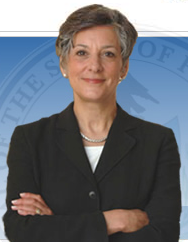
This was the lesson Nate Kleinman learned this week in his bid to challenge Representative Allyson Schwartz for the Democratic nomination in the Pennsylvania 13th Congressional District.

Kleinman is a human rights activist and political organizer within the Democratic Party.  He has worked for President Obama and Joe Sestak in his failed U.S. Senate bid.  He is also considered the first Occupy Wall Street political candidate.  But he really had no chance against the very well-financed, very well-connected Schwartz.

REP Allyson Schwartz (D-PA 13)

REP Allyson Schwartz (D-PA 13)

Allyson Schwartz, currently serving her fourth term, has always been a savvy fund-raiser, and is reported to have in excess of $2.3 million in her war chest.  Her only Republican challenger is Joe Rooney, a former U.S. Marine fighter pilot and current resident of Ardsley.

Schwartz’s funding for the 2011-12 election cycle came primarily from large individual contributors (57%) and Political Action Committees (38%), only 3% came from small individual contributors.  Her biggest corporate and association sponsors include Comcast Corp, Teva Pharmaceuticals, and the American Association of  Orthopaedic Surgeons.  Her top industry support comes from lawyers, health professionals, pharmaceuticals and insurance companies.

Not exactly residents of the 99%

You would think that with all that fire power behind her, the last thing Allyson Schwartz needed was the appearance that she was insensitive to the interests of the Occupy Wall Street movement.

Yet when it came to Nate Kleinman, Allyson Schwartz went for the throat.  She could out spend, out fund-raise, out network, and out wait just about any in-party challenge with one hand tied behind her back.  Not to mention the difficulty such an insurgent Democrat faces in getting any form of support from within The Establishment of the DNC when running against such a successful incumbent.

Challenging the validity of nomination petition signatures (required to qualify to appear on Election Day ballots) has become a regular tool for suppressing political opposition.  It’s the quick and dirty way to score a knockout; yet it rarely works to the satisfaction of the petition challenger.

The petition challenge has become one of the accepted political practices with which I have a problem.  When did it became acceptable to silence opposition in the public square?  It smacks of fear for open debate.  It makes a candidate look petty, aloof, and overbearing.  But as bad as that looks, it gets even worse when the conqueror decides to machine-gun the life rafts.

And this is the part of the Kleinman episode that makes Allyson Schwartz look ruthless and more than a little afraid.

Last week, Kleinman decided to withdraw his name from the ballot as a formal challenger to Schwartz’s Congressional seat.  Instead he decided to continue his candidacy by seeking to win the April 24 primary via write-in ballots.

As if Democracy wasn’t already hard enough.

The reason Kleinman decided to throw his lot with the Hail Mary of write-in ballots is the tortured hell that Schwartz’s campaign intended to put Kleinman through just to keep his candidacy hidden from the Democratic voters of the PA 13th.  In a move reminiscent of Richard Nixon-esque dirty tricks, the Allyson Schwartz campaign pushed the nominating petition issue to the extent that Kleinman, who has no real political organization, would have had to spend weeks of his own time sitting down with Schwartz’s rather ample campaign staff to go over each and every individual petition signature to prove their validity or to rehabilitate questionable entries.

In other words, keep Mr. Kleinman penned up in a conference room, off the street, out of the public’s view, and away from any potential media attention.

And just when Nate Kleinman was standing there like a deer in the headlights, the Schwartz campaign pulled out the napalm by filing a claim that would have required Kleinman to pay the legal costs incurred by the Schwartz campaign!  It’s a legal option for the campaign to request that Nate Kleinman pay legal fees,” says Rachel Magnuson, Rep. Allyson Schwartz’s Chief of Staff.

Nice …

And since Kleinman’s “campaign war chest” totals just $10-15,000., as compared to Schwartz’s $2.3 million, it’s not hard to see what that move was all about.  It was an attempt to threaten Nate Kleinman with personal financial retribution for having dared to challenge Lady Allyson of the 1%!

Joe Rooney for Pennsylvania’s 13th Congressional District

If you are a Republican living in the Pennsylvania 13th Congressional District***and have been waiting for a fiscally conservative candidate to mount a serious challenge to the liberal Allyson Schwartz, this could be your year.  Joe Rooney, a former U.S. Marine Corps fighter pilot, is the lone candidate seeking to take on Schwartz this November.  His message of fiscal responsibility and American optimism will play well from Northeast Philly to Lansdale and King of Prussia.

As background, I went to my first Congressional meet ‘n greet in 2010 as a member of the Horsham Republican Committee (HRC).  That year the MontCo and Philly GOP organizations entertained a slate of four or five candidates running to oppose Ms. Schwartz, a popular and well-financed liberal Democrat Congresswoman.  I remember a long, long evening of seemingly endless, rambling monologues that failed to connect, let alone inspire.  I knew that night Schwartz would have little trouble winning re-election.

But at this year’s meet ‘n greet Joe Rooney turned out to be a pleasant, refreshing surprise for the 2012 election cycle.  His background, leadership, and values will play well to both moderates and conservatives concerned about the economic future of the country.  His home page offers a hint to Mr. Rooney’s motivation in representing the people of the 13th:

“America is the most powerful nation in the world.  However, we are in danger of damaging the future of this great nation by blatantly ignoring the ongoing fiscal crisis.”

It’s a message with which any hard-working head-of-household, retiree, unemployed worker or mortgage holder can empathize.  National fiscal health results in a robust economy that begets more job opportunities, better wages and a safe, secure path into the future.  And Rooney’s background is indicative of strong leadership that makes tough decisions and possesses the strength and commitment to see them through.

Joe served for twenty-three years as Marine Corps pilot of F-4 Phantoms and the F-18 Hornets, retiring as a Lt. Colonel.  And as good a pilot as he was, Beth – his wife of  25 years – was one of the Navy’s first female pilots and just the second woman to graduate from the prestigious US Navy Test Pilot School!

In person, Joe Rooney is a direct, no-nonsense speaker with a genuine populist message.  I found Joe to be personable, intelligent, and focused on the message he believes is important both to the people of Pennsylvania and to America’s future.  He is also well aware of the difficulties he faces in trying to unseat a popular Congressional Democrat with a huge campaign war chest. 

Joe Rooney is an American Optimist. 

 “The American economy can be the engine that drives the rest of the world out of the economic hole that currently exists.”   –  Joe Rooney

When Joe addressed our group, he referred to the view of America as that “Shining City on a Hill” – made popular by President Ronald Reagan – that portrays America as a land for Hope, Progress and Leadership.  The above quote illustrates his view that America can lead the global economy to recovery so long as we can get our own fiscal house in order.   

The Rooney’s live in Ardsley, PA and have five children, including a daughter currently serving in the US Navy aboard the USS KLAKRING and a son attending the US Air Force Academy, studying to become a fighter pilot.  Joe, who graduated from Bishop McDevitt High School, flies and captains B737s for Delta Airlines.

The biggest obstacle to a successful run by Joe Rooney in the PA 13th is FINANCIAL!  Allyson Schwartz is a deeply rooted, popular liberal Congresswoman, with a staggering financial advantage.  So please take a good look at Joe Rooney’s message and consider contributing to – or volunteering for –  the Joe Rooney for Congress campaign!

***  Important Note:  The judicial decision that threw a wrench into Pennsylvania’s attempt to redraw state legislative voting districts DOES NOT affect the redistricting of national Congressional Districts.  So the redrawn boundaries for the 13th Congressional District will be used for the 2012 primary and general elections.  Click the link to see if your vote will be included in the new PA 13th.

I pledge not to pledge!

Other than The Pledge of Allegiance, I know of no pledges worth taking.

For the life of me, I fail to understand the phenomena of committing to pledges as the latest iteration of the dreaded political litmus test.  Few of the Republican Presidential hopefuls show the backbone or willingness to be a LEADER!  It has gotten to the point where I am forced to agree with a Liberal scribe, such as Karen Heller of The Philadelphia Inquirer, whose Wednesday column reflects my own growing frustration with spine-ophobia.

It is time to begin looking with jaundiced eye at any candidate who feels compelled to kowtow to every political group looking to push a narrow, unyielding agenda.  The trend is growing beyond the point of disturbing.  Is winning in the Iowa caucuses really worth losing any claim to being a strong, independent leader?!?

Don’t get me wrong.  I agree with the underlying premise of some of the more popular pledges.  Others however, like Rick Santorum’s public pledge to remain faithful to one’s wife, are simply silly and capricious.  If we honestly admit to NEEDING such a pledge, then the problem is magnitudes larger than the objectives of all pledges combined.  In reality what we are saying is, “We no longer TRUST you, Mr./Mrs. OfficeSeeker, to use your judgement and do the right thing!”  And that to me, says much more about the shallowness of our expectations than it does the worthiness of any candidate.

And what might we expect in the way of governance from candidates who so willingly allow narrow political agendas to bind their feet so tightly as to make compromise impossible?  Currently over half of the entire House of Representatives has signed Grover Norquist‘s call for no tax increases. 

At this particular time, how does that further the interests of The Country?  Does anyone really believe that with skyrocketing national debt and the sacrifices being made on Main Streets throughout The Country, that taxes on the richest cannot ever be raised? 

The concept of republican government requires compromise.  Without it no progress can be made towards the true goals and interests of the country.  There are plenty of areas on both sides where compromise can and should be made.  But binding one’s feet only guarantees nothing can be done.      

At least ONE candidate has refused to prostrate himself before the pledge seekers.  Jon Huntsman, the former Ambassador to China, has steadfastly refused to take any pledges other than The Pledge of Allegiance and his marital pledge to his wife.  Interesting that he didn’t seem to need anyone to force him to sign for the latter!

That’s a breath of fresh air!

Review: “Decision Points” by George W. Bush

At times I have been accused of being an apologist for former President George W. Bush.  Rightfully so, I must add.  That’s why I have been looking forward to reading Bush43‘s memoir, Decision Points

The book starts out with a frank, introspective look at Bush’s struggle to overcome his problem with alcohol.  Most telling was his failure at Laura Bush’s urging to remember a day when he had not had a drink.  Unable to do so, he begins to realize that he just might have a problem.  From my perspective, it was a surprising way for an ex-President to kick off his memoir.  But it conveyed the obvious importance that struggle was to his future success.  It also helps to understand his reliance on Laura’s strength and wisdom.  They were married just three months after they met!

Of course the linchpin event of George Bush’s presidency was the attack of September 11, 2001.  Through all the smoke, fire and loss of life from that day comes the one pledge that overshadowed the rest of his presidency.

Yet after 9/11, I felt my responsibility was clear. For as long as I held office, I could never forget what happened to America that day. I would pour my heart and soul into protecting the country, whatever it took. (page 151)

This is the prism through which one must view his subsequent decisions and actions, both here and abroad.  Afghanistan was a no-brainer; but going into Iraq was a dicier decision that resulted in a major distraction from the Afghan operation.  

However a decade after Operation Desert Storm, the Saddam Hussein situation required a solution.  The international community, the U.N., and the Clinton Administration had been convinced that Hussein had WMDs; and the reliance on no-fly zones was not the solution to Hussein’s cruelty, oppression, and perceived threat to the region.  That no WMDs were found does not diminish the validity of these widely held beliefs.

President Bush’s 9/11 pledge also explains the decisions to house captured terrorists at Guantanamo Bay, The Patriot Act, creation of the Department of Homeland Security, and the development of the Bush Doctrine and the Freedom Agenda.  And no matter where you stood on the pro-con scale as the Bush Administration enacted these measures, they are still in place two years after President Barack Obama entered The Oval Office!

The book’s tone is straight-forward and conversational.  My impression was that the book read much the way his speeches and national addresses sounded (minus the ill-timed gaffes).  Those who regarded President Bush as a fumbler and stumbler would be impressed by GWB’s efficient style.  I found the book to be an easy and enjoyable read.

The common thread throughout the book is how Bush43 approached the problems and decisions he faced.  Oft times criticized for not being naturally inquisitive, he relied heavily on experts and leaders in applicable fields of research and study – both from within his administration and in industry and academia – when facing complex issues and problems.  And when it came to making a decision, GWB viewed all situations through his strongly held core values.  Although he was not pretentious in his religious beliefs, his beliefs were the foundation of those values.

And yet President Bush was capable of making sound value-based decisions that were not restrained by the desire to pander to his political base.  An example was his decision on stem cell research.  Despite the fervent wishes of the religious right, GWB was adamant in his commitment to seek out all sides of the controversy.  His final decision was based on several factors: stem cell research offered the potential for monumental breakthroughs in medical research; research was already progressing on several dozen stem cell lines (per the National Institute of Health), and the number of lines in development were plentiful for current and future medical research.  His decision to allow federal funding for existing stem cell lines, while affirming the dignity of human life and preventing the use of federal funds for future stem cell harvesting was a practical and compassionate solution to a difficult problem.

If the measure of a good compromise is the reality that neither side is entirely satisfied with the solution, then George Bush certainly hit the mark with stem cell research.  A good leader can never be burdened with the concept that he must please everyone all the time.

Several other aspects of the book were very interesting; some surprised me:

  • As Governor of Texas, GWB was renown for his ability to work across the aisle.  Something that was essential as a Republican Governor with a State House and Senate headed by seasoned and well-respected Democrats.  In fact, Bush and Lt. Governor Bob Lubbock – a Democrat – respected each other to the point where Lubbock not only endorsed Bush for his second term as Texas Governor, he predicted that Bush would be the next President of the United States!
  • Laura Bush was a real cutie when she landed GWB!  (See third page of the first photo section.)
  • The Bush Administration committed $15 billion over 5 years to fight the spread of AIDS in Africa.  After a 2003 visit to AIDS-ravaged Uganda, Bush was inspired to push the country to do more in fighting the disease.  He envisioned the President’s Emergency Plan for AIDS Relief (PEPFAR) as a medical version of The Marshall Plan.  In addition to testing, counseling and treating tens of millions for AIDS, there was also considerable commitment to eradicate malaria.
  • During the 2008 presidential campaign and the banking crises that resulted in the Toxic Asset Recovery Program (TARP), Republican candidate for president, Arizona Senator John McCain insisted that The White House host an emergency meeting of both candidates, the leadership of both parties in the House and Senate, and the Bush Administration.  Expecting McCain, who instigated the meeting, to address the issues and how Congress could support TARP, the President was astounded at McCain’s silence in contrast to Barack Obama’s succinct analysis of the program.

In my opinion, anyone interested in politics and government whether a supporter or critic of President George W. Bush would enjoy reading a Commander-in-Chief’s view of his eight years in The Oval Office. 

DISCUSSION TOPICThe Bush Doctrine included the concept that America’s interests would be maximized by promoting freedom and democracy wherever possible.  It supported fledgling democracies in the Ukraine, Georgia, Lebanon and the Palestinian Territories as well as Iraq and Afghanistan.  And it lent encouragement and support for dissidents and reformers in places like Syria, Iran, North Korea, and Venezuela.

“America’s vital interests and our deepest beliefs are now one.”

Given the uprisings in Egypt, Yemen, Bahrain, Libya, etc., can the argument be made that the Bush strategy of supporting democratic reforms in that region has been much more successful than illustrated by the novice democracies in Iraq and Afghanistan?

On this date in 1875 …

… President Ulysses S. Grant signed into law the Civil Rights Act of 1875

This tends to surprise many people, even those who can refer to the Civil Rights Act of 1964, maybe even the Act of 1957.  But it’s a bit of a shock that Civil Rights was the topic of an act of Congress only ten years after the end of The Civil War.  Yet political and legal battles would be waged for almost another century before full civil rights law was established.   

The 1875 Act was written in an attempt to provide equal access to public accommodations such as restaurants, trains, theatres, etc.  The reason why so many have problems recognizing the earliest civil rights law was that it was declared unconstitutional by the U.S. Supreme Court in 1883.  Its rejection by the country’s highest court was based on the law’s lack of standing within the context of the 13th and 14th Amendments.  Fact is, in its eight-year existence the 1875 Act was rarely – if ever – enforced anyway. 

What is most telling to me, is the realization as early as the 1870s that only reliance upon national law held any potential for mitigating the heinous treatment of African-Americans, both pre-Civil War freemen and newly liberated slaves.  And that despite this realization, it would take another 89 years before full civil rights legislation was enacted.      

In 1957, the Civil Rights Act of 1957 provided voting rights to black Americans in a way that was ineffectual in increasing their political power.  Then-Senator Lyndon Baines Johnson is touted with the tricky political accomplishment of both progressing the measure through Congress, while at the same time ensuring the bill’s evisceration by assigning it to a Judiciary Committee run by anti-civil rights Senator James Eastland (MS).  The bill’s eventual passage also had to survive the longest lasting Senate filibuster by Senator Strom Thurmond, who railed on about nothing in particular for 24 hours, 18 minutes.      

It would not be until the Civil Rights Act of 1964 that full civil rights to women as well as blacks would be institutionalized.  Oddly enough, the Act of 1964 was signed into law by the very same, now-President Lyndon Baines Johnson, after President John F. Kennedy was assassinated in 1963.

Just share the pain … please!

I’m sorry, but the expectation that I “tough out” the economic pain caused by large government deficits, which were caused by economic mismanagement and two wars, are starting to wear me down. 

This urge to apologize is the result of my position on the political scale.  (You have all seen these questionnaires I’m sure, the ones that ask a range of political, economic, and social questions designed to measure your leftward or rightward political tilt.  The program then compiles the results to pinpoint your location on a two-dimension political scale.  I always test to the center of the scale, slightly conservative socially, slightly libertarian economically.)     

My apology stems from the fact that lately my libertarianism is starting to fray. 

You see, it’s much, much easier to remain faithful to your clan when everything is hunky dory (i.e. ducky, jake, copacetic, good).  It gets only slightly harder when things get tough but you can sense that the pain is shared … roughly equally and across the board. 

But now the board seems to have a wall across it.  I never had a problem when the wall prevented the better things on the other side from trickling over to my side.  But I have a real problem when the wall prevents whatever pain is being inflicted on me from seeping over to inflict those people on the other side, especially when they would barely even notice.

I’m a big fan of New Jersey Governor Chris Christie.  Not because I’m convinced he possesses all the right answers, but because he is at least willing to speak plainly about what he perceives to be the problems; is unafraid to tack deliberately into politically turbulent areas; and is bold in taking the actions he deems essential to New Jersey’s longterm health.  Similarly, I can identify with Wisconsin’s Scott Walker.  His attempt to unilaterally suspend union bargaining rights seems a bridge too far.  But it’s hard not to agree with the view that unions cannot – in this economic climate – get away with paying little towards burgeoning healthcare costs or with enjoying incredibly generous pensions that are publicly funded.        

However, as a federal employee, I can also sympathize with the union members of Wisconsin.  So far this year I have had my salary frozen for the next two, three or five years depending on which flavor of the day emanates from Congress.  We have also heard the whisperings that unpaid furloughs could be in the offing as well.  No matter how you slice it, it comes out to a pay cut, since no one’s costs of living are frozen along with your frozen pay.

But you can deal with – if not fully accept – it, because you have the sense that The Other Guy is suffering along with you.

That’s simply not the case with the rich.

During the recent budget negotiations between the newly minted 112th Congress and the Obama administration I was an interested member of the audience.  The give-and-take that bounded back and forth between the two camps, and as examined eight-ways-to-Sunday by the talking heads, was a fascinating balancing act between how best to resolve the exponential growth of the national debt and at what point higher tax rates for the rich might retard business growth and investment. 

Should higher taxes kick in for those making over $250K a year?  $500K?  a million?  The warnings were dire.  The pictures, painted by the analysts, bleak.  Common sense seemed to indicate that the line had to be drawn in there somewhere.

So, you can imagine my befuddlement at the decision to punt the issue, not into next year but two years hence (or quite coincidentally, after both The House and President Obama run for re-election in 2012).

Even then, I wasn’t particularly annoyed … libertarian supply-sider that I am.

No, it wasn’t until I started grappling with the first-hand economic realities that I had to start venting some steam.  Health insurance – up, food prices – up, gas prices – up, new tires for the car … you get the picture.

No.  I’m sorry.  This has got to stop. 

You can’t keep dumping on the working people without throwing some of the manure over that wall.  The rich can be characterized as Hosni Mubarak-like, disconnected and blithely oblivious.  But the “solutions” are just few more strafing runs away from Moammar Gadhafi!