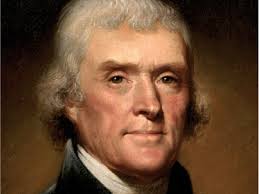
Thomas Jefferson: The Art of Power (Jon Meacham)

Thomas Jefferson 3rd President of the United States

Thomas Jefferson
3rd President of the United States

Jon Meacham‘s Thomas Jefferson: The Art of Power is the fourth book of his I have read.

Meacham makes history easy to read for even the most casual fan of U.S. history.  His management of theme through the issues of the day and the personality of the subject helps the reader see a broader picture of a man like Thomas Jefferson.

His approach to describing in overview the important events and critical issues; developments and solutions that evolved; giving the reader the essential insights without bogging down in a load of minutia.  Meacham’s works are thoroughly footnoted, which helps the real history junkie decide where they might like to do more in-depth reading or research.

The American Revolution, and the birth of the country which followed is a favorite subject of mine.  Of particular interest is the collection of men that came together in challenging times to take a dangerous stand against England; risking life and property for Liberty; then steering a course towards constitutional government that resulted in a Republic now over two centuries old.

These men were the wealthiest, most educated, and most successful in the American colonies.  But …

These men were not perfect.  They had their flaws.  Yet they came together and created a politically complex national union out of disparate regions and competing interests in such a way that enabled growth; promoted its survival through the tests of time; and allowed it to emerge from the crucibles of several dramatic – even catastrophic – national and international crises as an even stronger nation.

George Washington appointed Jefferson  the first U.S. Secretary of State

George Washington appointed Jefferson
the first U.S. Secretary of State

Thomas Jefferson‘s contributions to the success of The Great American Experiment in the period between George Washington‘s inaugural as our first President and Jefferson own presidency (following John Adams) were – in my opinion – the most compelling .

Citizens with a casual appreciation for American history might believe that once the U.S. Constitution was ratified as the Law of the Land, the Forefathers simply finger-skimmed the honored document whenever a question of function or politics arose.  But The Constitution was but a “blueprint” with many operational and philosophical issues undefined or at the very least open to all manner of nuance and interpretation.

Thomas Jefferson was one of those flawed individuals that rose to play a prominent role in taking that constitutional blueprint and – if I can stretch an analogy – installing the wiring and plumbing that allowed the Government to relate as best as possible to the People it would govern.  It was a herculean task that required the input and at times the nastiest of opposition between Federalists and Jefferson’s Democratic-Republicans to negotiate a national vision from contending philosophies of governance.

Jefferson was a study in contradictions throughout his personal life and public service.

Sally Hemings

Sally Hemings

1.  He was a man who passionately subscribed to the concept of Individual Liberty.  He made several attempts early in his public career to advance the concept of slave emancipation in the Virginia colony.  He provided insights for the French Declaration of the Rights of Man and of the Citizen via the Marquis de Lafayette, which became the central theme of the French Revolution; and he fought hard against John Adam’s Alien and Sedition Acts.

Yet he continued to own slaves; using one – Sally Hemings – as a concubine; and went so far as to maintain their offspring as slaves until they turned age 21 or until his death in 1826.

2.  As a member of Washington’s first American government, serving as its first Secretary of State, Jefferson fought aggressively with fellow Democratic-Republican James Madison to counter the Federalist’s efforts (Led by Alexander Hamilton and John Adams.) to create a strong national government with a singularly powerful Chief Executive.  Jefferson was fearful that such a strong centralized authority, with the prospects for close ties with Great Britain, would eventually whittle away at individual liberties.
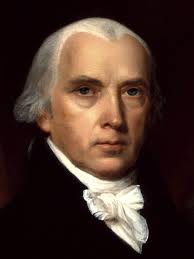
James Madison Fellow Democratic-Republican

James Madison
Fellow Democratic-Republican

However, when he served as President himself, he found a way to expand the powers of the presidency in order to take full advantage of a French proposal to effectively double the size of the United States through the Louisiana Purchase.

3.  Jefferson was an accomplished author of A Summary View of the Rights of British America (a list of grievances against King George III), The Declaration of Independence, and as contributor to the French Constitution.

But he wrote only one published book in his life, Notes on the State of Virginia.  And he was not much of a public speaker for such a renown politician and communicator!

Meacham’s primary theme emphasizes that in his quest for power, that he wanted for the good he felt he could accomplish, Jefferson was a practical politician.  He had his ideologies, his strongly held positions.  But Jefferson believed in “limited government” only to the extent that it was practicable.  If he thought a more expansive government was the better option in the best interests of the country (e.g. Jefferson’s quick actions to accept and ratify the Louisiana Purchase), he held no qualms about pushing the National Government’s reach and authority.

In the end, both the Federalists and Democratic-Republicans enjoyed a mixed success influencing the path of The Grand Experiment.  As bad as contentions grew in the early years of the Republic, it was clear both Federalists and Democratic-Republicans were advocating what they believed was best for The Country.

One can only hope the current crop in Washington, D.C. feels the same way for all the right reasons.  They certainly give you reason to question their over-arching objectives
A very cool John Adams

A very cool John Adams

Thomas Jefferson and John Adams formed the opposing poles of American political thought from 1790 to 1809, when Jefferson left the presidency.  They were close friends at one point, including Jefferson’s pleasant plutonic relationship with Abigail Adams; strong allies during the colonial confrontations with Britain; friends and co-commissioners to Europe (along with Ben Franklin) for the infant U.S.; and then nasty political opposites during those formative years of the constitutional republic.

They served as consecutive Presidents, then went to their separate corners of the country after leaving office.  They eventually renewed their friendship years later with frequent letters.  And on July 4, 1826 – coincidentally the 50th anniversary of the issuance of The Declaration of Independence – within hours of each other, first John Adams and then Thomas Jefferson shook lose their mortal coils and left the rest of the work on the grand experiment to later generations of Americans.

Other interesting aspects of Thomas Jefferson learned from Meacham’s Thomas Jefferson: The Art of Power:

  • Jefferson received his early inspiration for public life and politics at the age of 22, when he heard Patrick Henry give his treasonous Stamp Act speech in opposition to British taxation.
  • Jefferson’s term as Governor of Virginia changed his view on the use of authority.  His oft criticized indecisiveness and timidity during the British invasion of the colony in 1780 were also valuable lessons in leadership and government.
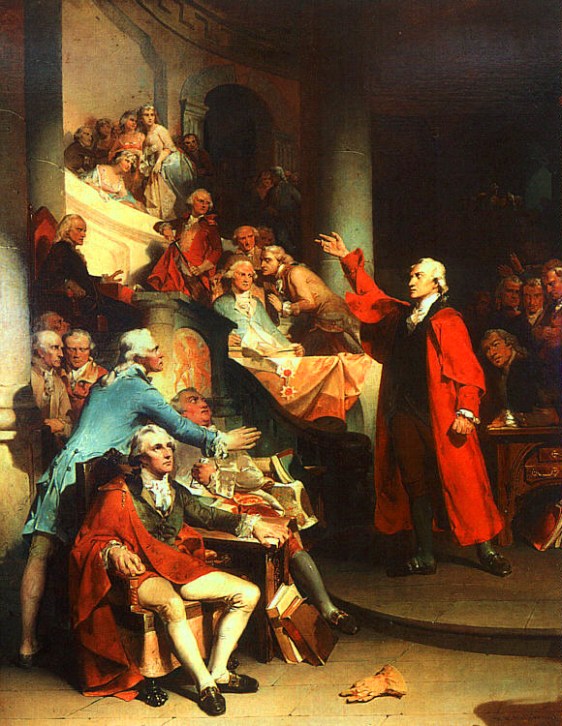
    Patrick Henry gives his Stamp Act speech

    Patrick Henry gives his
    Stamp Act speech

  • Jefferson was derisively referred to as “the negro president” by opposing Federalists, who disliked the congressional advantage Virginia and the other southern states enjoyed due to the 3/5 clause on The Constitution.
  • It took 36 ballots in the House of Representatives to finally confirm Thomas Jefferson as the 3rd U.S. President.  (Electoral College ties, which go to the House of Representatives, were common early in the Republic.)
  • Jefferson may have been the earliest President subject to an assassination plot (December 1804), although no overt attempt was actually made.
  • He requested just three of his accomplishments be etched upon his gravestone:  The Declaration of Independence, the Statute of Virginia for Religious Liberty, and Founder of the University of Virginia.
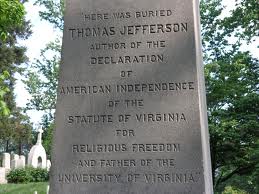
    Memorial marker at Jefferson's Monticello gravesite

    Memorial marker at Jefferson’s
    Monticello gravesite

  • Sally Hemings accompanied Jefferson’s daughter when he summoned her to France during his ambassadorship there.  By French law, as soon as she stepped foot in France Hemings was a free person.  Jefferson convinced her to return with him to America (additional evidence of their relationship) by negotiating an agreement with her that ensured eventual freedom for their offspring.
  • Philly Connection:  Jefferson leased a house from Thomas Leiper, a merchant and politician, at 274 High Street in the east Germantown section of Philadelphia when he served in the then nation’s capital as Secretary of State under George Washington.
The real John Adams

The real John Adams

Interesting Jefferson quotes …

  • Jefferson’s oft quoted words on fertilizing the Tree of Liberty was written in a letter to John Adams in comment on British criticism of U.S. instability in the wake of Shay’s Rebellion in western Massachusetts, which erupted over early financial difficulties in the infant U.S.

” … what country can preserve its liberties if their rulers are not warned from time to time that their people preserve the spirit of resistance? Let them take arms. The remedy is to set them right as to the facts, pardon and pacify them. What signify a few lives lost in a century or two? The tree of liberty must be refreshed from time to time with the blood of patriots and tyrants. It is its natural manure.”

  • Jefferson’s famous position on the separation of Church and State came from a letter to the Danbury Baptist Association in Ceaderbrook, Connecticut as they planned to celebrate religious liberty.

“Believing as you do that religion is a matter between Man and his God, that he owes account to no one for his faith or his worship, that the legitimate powers of the government reach actions only, and not opinions. I contemplate with solemn reverence that act of the whole American people which declared that their legislature should ‘make no law respecting the establishment of religion, or prohibiting the free exercise thereof,’ thus building a wall of separation between Church and State.”

  • Jefferson loved the use of guns for hunting and sport, and recognized their importance in defending Home and Homeland.

“I am a great friend to the manly and healthy exercise of the gun.”

  • Finally, Jefferson felt that  the U.S. Constitution was a worthy effort as imperfect as the brave men who declared independence in ’76.  But he was much dismayed by the lack of a bill of rights in the original version.  Still he saw hope for the good conscience of the American people.

“If they approve the proposed Convention in all its parts, I shall concur in it cheerfully, in the hopes that they will amend it whenever they find it work wrong.”

images-5

The Corbett approach to Medicaid sanity

images-2

Once a month the Horsham Republican Committee meets to discuss political developments – both local and regional; to strategize on political organizing within Horsham Township; and to update the Committee on issues of Party management.

To be honest, the meetings can be a bit dry, and that’s even if you’re a bit of a political junkie.  It’s not often that we get into REAL political discussions that provide interesting insights into the issues of the day.

This past Wednesday was different with a small but animated gathering of committee representatives (who represent township Republicans in matters of Party interest), local Republican pols, and the local Party leadership.

My keenest interest is always with the progress – or lack thereof – in Horsham Township’s redevelopment plan for the NAS-JRB Willow Grove property.  At present the Horsham Local Redevelopment Authority (HLRA) is awaiting the approval of its redevelopment plan, which was submitted in the Spring of 2012.

It’s been a year-and-a-half, and no decision as yet from the U.S. Navy.  The Federal Government, which must review and approve the plan before fully vesting the HLRA with redevelopment authority, indeed takes its time when mulling over any decision.  In this case, the Navy, charged with the responsibility of conducting an Environmental Impact Statement (EIS) has met delays in completing their evaluation.  The plan – due this Fall – will not be ready until Winter at the earliest.

Which means, look for it in the Spring or Summer.

The Navy blames the effects of sequestration.  But frankly, as a federal employee, I can speak confidently that, if it wasn’t the effects of sequestration, it would have been something else that would delay such a huge and complex evaluation.  No, not unexpected at all …

Several other issues were also touched on briefly as updates from Harrisburg.

  • Movement on Pennsylvania’s transportation bill, which is seeing progress in the State House after the Senate passed their version earlier in the year.  The biggest hurdle would be in reconciling the two versions as passed, particularly to the level of funding.  There are roughly $5 billion in infrastructure improvements that have been underfunded for decades and well overdue for remedial action.
  • Pension reform at the State level is getting much discussion.  With the State’s two pension plans (state employees, public school employees) underfunded by $47 billion (!) and projected to grow to $65 billion without action, Governor Corbett has moved pension reform to the top of his list of priorities.  Currently, the biggest reform under consideration is moving new employees in both categories into 401(k)-type programs that are similar to those found in the private sector.
  • A brief discussion on the national Affordable Care Act (Obamacare) revealed one persistent problem in Pennsylvania’s rural health services … Finding doctors to work in the less income-lucrative areas of rural Pennsylvania.  This has long been a problem nationwide, not just in PA.  One solution, proposed by the Corbett Administration in its recent proposal for expanding Medicaid as part of its ACA compliance, is a student loan forgiveness program for any doctors who agree to spend a specified amount of time in Pennsylvania’s more doctor-needy areas.
PA Governor Tom Corbett

PA Governor Tom Corbett

The discussion I found most interesting this night dealt with the recent Corbett Administration proposal for expanding Medicaid.  Some of the facts and issues covered …

  • All state-run Medicaid programs vary in benefits and costs from state-to-state.  The terms of Medicaid coverage are negotiated by each state individually.  Passage of the ACA effectively “locked in” every state’s specific Medicare program in whatever form it existed at the time.
  • After eight years of Ed Rendell’s Democrat Administration in Harrisburg, Pennsylvania’s current Medicaid program is one of the most generous – if not THE most generous – state program in the U.S.  This goes a long way towards explaining why some states, such as New Jersey and Arizona are more willing and able to accept the ACA-mandated expansions required for full state participation in federal-run healthcare exchanges.
  • Currently the State and Federal governments combine to spend about $19 billion a year to cover 2.2 million Pennsylvanians on Medicaid!  $19 billion …!!
  • The federal government’s ACA Medicaid expansion financial contribution maxes out at 90% after three years of fully funded coverage. That 10% unfunded liability equals an additional estimated  $200 million – as a minimum – that will have to be covered by the Pennsylvania state budget!
  • Even before any ACA-mandated Medicaid expansion, Pennsylvania estimates Medicaid costs will grow by $400 million in fiscal year 2013-2014.
  • A Rand Corporation study showed that Pennsylvania would save roughly $154 million a year by not expanding Medicaid coverage.

So it’s pretty easy to see why the Corbett Administration is not all that anxious to get on board an ACA-mandated Medicaid expansion.

As with the Philadelphia School District’s annual funding crisis, the Corbett Administration has taken a very responsible approach to any expansion of the financial commitment falling to Pennsylvania’s tax payers.  The Governor realizes that without reforms accompanying this constantly growing financial responsibility, the economic health of the State will be threatened.

images-3In the Philly school crisis, by which you can calibrate your calendar each year, additional funding was offered to the City through negotiations with Mayor Michael Nutter’s administration.  The catch was that the settlement required reforms that call for concessions by the Philadelphia teacher’s unions.

Concessions are necessary on the cost-side of the Philadelphia school issue, if the cycle of funding crisis followed by funding crisis is ever to be broken.  You should not be surprised in realizing that funding solution never really had a chance to succeed.

As for the Medicaid expansion, the facts are that without serious reforms in the way the Pennsylvania program is managed, the state’s’s tax payers and businesses will be on the hook for that rather significant $200 million hole in the Pennsylvania budget … on top of the projected $400 million shortfall for FY13-14 … plus all other projected increases.  Cost reform is essential to Pennsylvania’s future fiscal sanity.

There’s also the very real possibility that the Federal government may not be able to uphold even its 90% Medicaid expansion funding as promised.  And what happens then? 

For these reasons, the Corbett Administration’s approach to the ACA federal exchange and Medicaid expansion proposal should be lauded as the kind of fiscal sanity one should expect from their Governor.

Changing Hearts and Minds through Weakness

I have to give President Barack H. Obama credit.  He has changed my mind on the prospects of taking action against the Bashar al-Assad regime in Syria in the face of alleged – and all but certain – use of chemical weapons against opposition forces and civilians.

My nut is not an easy nut to crack.  I have long-held the personal belief that the United States held a special place in the community of nations.  It’s a place – to my own thinking and values – where a World Superpower belongs.  It’s the role that goes beyond the kind of standard-setting usually the purview of the United Nations.  It’s the role of enforcing those standards of common decency when it comes to the bitter realities of armed conflict.

A lot of Americans will categorize this simplistically as the role of World Cop.  Many disagree with me on this premise, that our country should be involved in events overseas that appear to have little or no direct impact on U.S. interests.

Those sentiments are well-founded and reflect the commonly held belief that American military personnel and U.S. treasure should be risked only in those situations linked to National Security in almost all cases.  So maybe my viewpoint is quite firmly in the minority.

Yet it is a role that in my mind comes with being a World Leader and Superpower.  It is a role we have filled many times in the past in various regions of the world in varying degrees of participation.

images-1I am not fond of unilateral U.S. action.  I do not favor the use of American boots-on-the-ground, especially in a situation like Syria.  What I look for is an American-led process of Consensus Building; the development of a common sense and purpose amongst our primary allies, major world powers, and those countries in closest proximity to the danger and most likely to be affected by any widening of a regional conflict.

My view is of the United States as The Point Man on the diplomatic front and The Muscle when it comes to the military response for which we hold a decided advantage (i.e. technological, hardware, delivery systems, weaponry).  When it comes to boots on the ground, the only enforcement situation where this should apply – in my humble opinion – is as part of a multi-national approach to a controllable environment (e.g. Bosnia; Clinton 1999) or where an immediate U.S. response would be sufficiently overwhelming (e.g. Grenada; Reagan 1983).

Now when it comes to Syria, President Obama has sufficiently altered the course of my thinking in a situation where a struggling regime gassed an overmatched military uprising and a defenseless civilian population …

… for all the wrong reasons.

Introducing the Freedom Muffin! Introducing the Freedom Muffin!

Suddenly, under his mislaid concept of “leadership”, the U.S. looks timid, indecisive, and unfocused.  American efforts to build an International Coalition of the Willing was shot in the foot by its biggest allie (Great Britain) before it even got rolling.  (WIll we have to rename the English muffin?)

The Office of the President – long The Decider when it comes to the use of U.S. military power in short, direct, and sometimes personal (Libya, Muammar Gaddafi, 1986) responses to violations of international norms – appears confused by Britain’s rejection and unsure as to what to do next.

Instead the country’s Decider punted the issue – just as British Prime Minister David Cameron did – to the Legislator.  From my perspective, this has the look of a President hoping someone will get him off the fish-hook he firmly set in his own mouth.  When you use terms like “red line”, you had better have a plan of action with several iterations to account for unexpected developments like your Biggest International Allie getting cold feet.

The alternative, fall-back strategy?  Apparently there wasn’t one.  Which leads one to the obvious question … Who was doing the Leading?  Right now, it looks like Cameron and the Brits.

Where's Margaret Thatcher when you need her? Where’s Margaret Thatcher when you need her?

So now Syria mocks us.

To fill the role of International Leader, you must be convinced of your Righteousness; firm in your ability to Lead, even if it means you must lead without your closest friends and allies at your side; and when all else fails, you must be prepared for bold action if necessary and if supported by the facts.

These are the kind of considerations President Obama should have kept in mind before speaking of “red lines” in August 2012.  Obviously he and his National Security team didn’t.

And this is what ultimately changed my mind.

If you can not be a strong, prepared, flexible leader, you have no business  drawing lines; making promises; and scheduling attacks when you do not have the backbone for the toughest decisions … actually sending Americans to clean up the World’s ugliest messes.

God help the Syrian people …

‘Twas the Night before Furlough

Enjoy a little Christmas in July with me and my fellow Federal civil servants with this twist on an ageless classic.

Twas the Night before Furlough

Concept and execution if not the actual words

by Barack H. Obama

Santa Jack Lew with furloughs for you!

Santa Jack Lew with furloughs for you!

‘Twas the night before Furlough
And all through The White House,
Not a creature was stirring,
Barack had Droned the last Mouse!

Congress was nestled all snug with The Fed
While visions of Mid-Terms danced in their heads.
With Michelle in her kerchief and POTUS in his cap,
The First Couple was hankerin’ for a Hawaiian recess.

When on the South Lawn there arose such a clatter,
Barack leapt from his bed to see what was the matter!
Away to the window he stumbled and crashed,
Tore open the shutters, “Get me a ‘Publican to lash!”

Then towards him on the breast of Taxpayer Dough,
Came Chief-of-Staff Lew, the House Liaison in tow.
And what to befuddled POTUS appeared
Was the Promise of what all Liberals hold dear!

The conspiring driver, so witty and quick,
Had come with an idea to surely do the trick!
More rapid than pirates on good winds of trade,
Jack Lew had found the secret for more Treasury raids!

I'm not saying this looks like anyone, only acts like some.

Leadership?  Plenty of butts instead …

“Now Nancy! Now Harry! Wake Biden up too!”
“On Fienstein and Boxer!” clammored The Lew.
“Grab Van Hollen and Stoyer and Allyson Schwartz!
We know how to get those ‘Publicans by the shorts!”

Sequester”, Lew cried, “is how we’ll get what we want!
Higher debt, more money, no need for any cuts!
They would never let it happen, and we won’t cut a dime!
The ‘Publicans will fold handily. They do all the time!”

Then amid all the whooping, the hollering, the yells
Someone asked, “What happens if it freezes in Hell?”
“Don’t worry about that. Our Gambit is sound.
We’ll make the ‘Publicans bad guys. Make it painful as well.”

But The Voice was persistent, an answer was needed.
What of sequestration, if the goal goes unheeded?
Of workers, fixed incomes, and services rendered,
What if the ‘Publicans didn’t surrender?

The Democrats turned on that Voice with wild looks.
Who dare throw a wrench in their Debt Ceiling hook?
Joe Taxpayer had wakened in the midst of the hoopla,
Was asking who’d suffer should The Plan prove a faux pas?

‘Twas The President’s turn to show that he cared
For those who paid taxes and relied on their share
For their services rendered, and the wages they need
For mortgages, tuition, that new Healthcare decree!

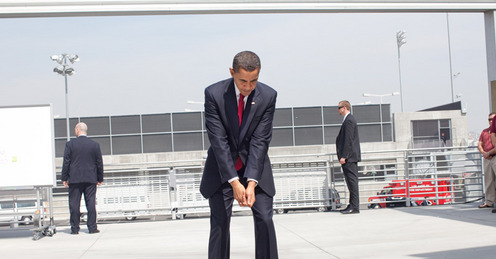
The grip of a golf club was light in Barack’s hand
Like the fate of the Middle Class throughout The Land.
He had a kind face and whispered so sweetly,
“Let us worry of that, we’re The Power Elitely!”

(From www.golf365.com)

The grip of a golf club was tight in his hand …
(From http://www.golf365.com)

He was chummy and glib, quite full of himself
So Joe Voter shrugged off the misgivings he felt.
The Democrat leaders returned to their caucus,
Plotting and planning how to best drain the coffers.

In the end their Big Gamble, it soon fell apart.
Their opponents, the ‘Publicans refused to impart
Higher taxes without spending restraint and responsibility
Towards an Economy renown for its fragile instability.

Joe Taxpayer saw this, and wondered aloud
“The Gambit was futile, so let’s kick this around.
The budget’s important!  The worst case is here!
You can’t stand on principle, and at taxpayers sneer!”

But the Democrats were nothing if not committed
To getting what they wanted without being fitted
With ceilings and limits to what they could spend
Even if it was Taxpayers who suffered in the end.

“We need them to suffer, to really feel hurt
From silly cuts in Park services to the pay for their work!
So process those furloughs!  Don’t spare them any Pain!”
The POTUS was certain their pain was his Gain.

So as Barack headed off on another vacation,
He climbed up the steps of his tax-paid ‘portation.
And we heard him exclaim as he flew out of sight
“Happy  furloughs to all!  Thanks for paying The Price!”

Obama-Claus-600

Once upon a Furlough …

Chuck Hagel

DoD Secretary Nagel, it’s “fair” to furlough Navy employees, despite the assertion that cuts can be absorbed without furloughs.

Well, it finally happened, after 33 years of Federal employment … My first Adverse Action.  A furlough, long speculated upon and hanging out there like a piece of space rock that you know is screaming – maybe more like meandering – towards you; yet you’re not quite sure if or when it might hit, or how big the mess if it does.

So it appears to be hitting, regardless of my own personal opinion (denial?) that there was no way they would allow said space junk to impact.

The story gets much uglier the further you peel the onion.

My first attempt at writing this, the day after we received our Notice of Proposed Furlough, came off like an angry rant … which it surely was.  It went in part like this:

I’m mad at all the bozos in Washington, D.C.!  All of those who would rather drive their ideological stakes into the ground and tether to those constraints the Government’s ability to function, the Country’s long-term economic health, and the tenuous condition of the Middle Class rather than dealing with the realities of the National Budget!

That goes for the Democrats as much as the Republicans, the Conservatives as much as the Liberals.  Governance requires Adults.  Unfortunately few can be found among those currently taking up space in the building they call The Capitol.  A building which frankly should have a sign draped across the front, advertising it as “The World’s Largest Day Care”!

bg-1-136694

But the biggest chunk of anger I feel is towards The White House …

That last part won’t surprise anyone who has visited here before, as I reserve a  particular animosity for those who created such an unpredictable sequestration gamble with the livelihoods of working class Americans!

But yes, I feel a little better today, thank you.  Still more than a little pissed however.

The reason is summarized somewhat by today’s title, “Once upon a Furlough …”, a twist on a phrase used by story-tellers since at least the year 1380 according to the Oxford English Dictionary.  Afterall, sequestration with all its head-scratching “cost savers” – among them the furlough of federal employees – is great big Fairy Tale.  And the story has its origins in The Oval Office during the 2011 debt-ceiling negotiations.

Sequestration Fairy

Sequestration Savings Fairy

At that time The White House was working with the Democrat’s Congressional delegation, trying to figure a way to wheedle agreement from the Republican side of The House to raise the federal debt limit.  It was then Chief-of-Staff Jack Lew (now Treasury Secretary) and White House Congressional liaison Rob Nabors who “brain stormed” The Great Sequestration Gamble of 2013.

The idea being that the sequestration would be such a painful penalty for not agreeing to a future “grand bargain” on the budget and deficit, and more importantly on what – if any – cuts could be made to said budget, and who and how much more in taxes would be paid.  This “pain” of course was aimed squarely at the Republicans, a bet on the prospects that the politics of the situation would force the Republican’s hand at a crucial moment.

Like much of what this Adminstration does, it was a poorly developed gamble that was just as shoddily executed, minus any form of Presidential Leadership, and with no fall back position other than to blame the whole mess on the Republicans in Congress.

Problem is the ploy required building sufficient political pressure to force Republicans to seek a deal.  But the Republicans dug in; refused to yield on earlier commitments to taxpayers; and held the Democrats and The White House to their promise of suitable budget cuts without more in tax revenue than Congress accepted to avoid the other contrived 2013 budget trigger – the New Year’s fiscal cliff .

Leadership???

Leadership???

The Democrats’ problem – and a continuing theme – became the need for strong Leadership from The White House.

As Scoobie Doo was so fond of saying … “Ruh Roh!”

Of course no Leadership emerged … only insistence that more tax revenue was the solution and a lot of political rallies disguised as “taking the argument to the people”.

“Ruh roh …”

Sequestration Dragon

Sequestration Dragon

And when the time came for the put-up-or-shut-up necessary to cut the heart out of the Sequestration Dragon, The White House decided to double down and really force the issue.  Though it would not be through strong leadership, circumspect vision, and the art of compromise in seeking a deal on spending and taxing.

No, no, no … Instead came the none-too-subtle message to the Republican caucus in the House of Representatives, Refuse to surrender, and the Country will suffer!

“Ruh roh …”

That’s how we ended up with the silly cancellation of White House tours, hand-wringing over Easter egg hunts, contrived air travel delays, and accusations that every unfortunate event from a bridge collapse to the bombings in Boston were the result of the sequestration.

pennyHowever, as I outlined earlier this year, the actual affect of sequestration on the 2013 fiscal budget was just 1% of everything the federal government will spend in Fiscal Year 2013.

A penny on every dollar!

And yet, here we are.

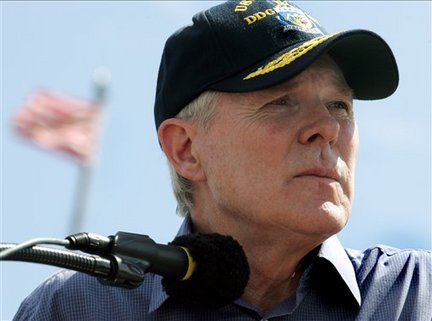
For federal employees of the U.S. Navy, the sequester furloughs are particularly infuriating because they are completely unnecessary!  Secretary of the Navy, Ray Mabus and other senior Navy executive leaders have made it known that the U.S. Navy could comfortably absorb the sequestration-driven budget cuts without a single civilian furlough.

Secretary of the Navy Ray Mabus

Secretary of the Navy Ray Mabus

The response from White House Cabinet DoD Secretary Chuck Hagel?  Yet another absence of Leadership … Insisting that the Navy furlough it’s civilian workforce in order to “be fair” to those who work for the Army and Air Force.

What?!?

Yep, that’s right  … Fairness now is the real reason for the furloughs of Navy employees as opposed to “the extraordinary and serious budget challenges facing the Department of Defense” as my deliberately misleading furlough notice states.

DoD has every indication that the Navy can absorb its share of the shared pain from this silly sequestration without affecting the incomes of its civilian employees; yet they insist the Navy reduce their employees annual earnings by 20% in order to “be fair” to those working for the Army and Air Force!

Welcome to Fairy Tale Land!

So what’s a Federal Employee to do?!?  Make them pay more of course!

imagesOne of the protections, federal employees enjoy is that of the Merit System Protection Board.  The MSPB is expecting a potential tsunami of appeals over the furloughs being forced on federal employees.  Since an appeal to the MSPB can cost the Government up to $10,000 (See “Cost of Appeals”), the Federal Government desperate for a way to stay within budget and sacrificing its employees, ends up potentially paying twice as much as it expects to save for each employee who decides to file an MSPB appeal.

For this reason every Federal Employee should consider filing an appeal regardless of how dim the prospects are for vindication!  For Navy employees in particular, Chuck Hagel has laid a very nice gift at your feet.

You can view instructions and a link to the appeal process here.  MSPB even has an e-file application to ease the confusion.  Furloughed employees have 30 days from the date-of-notice or from the first day-of-furlough, whichever is later, to file their MSPB appeals.

There … now I feel much better!

Sequester ’13: The Magic Penny Theory

pennyFive days have passed, and so far the Earth has not – as yet – careened off its axis to spin wildly off into the black void of deep space.  Commercial air travel did not turn into a nightmare overnight due to air traffic controller layoffs; the schools are still open; and I still had to go to work!

You would think that maybe – just maybe – all the Chicken Little with hair-afire warnings might have been just a little exaggerated.  Just a little …

Recently I finished reading Killing Kennedy: The End of Camelot (Bill O’Reilly and Martin Dugard), and it brought back a lot of memories.  One concept brought to mind from the aftermath of that horrific day was the Warren Commission’s development of the Magic Bullet Theory.  The bullet was believed to be the first shot that struck President John F. Kennedy; and although it was not the fatal shot, it passed through Kennedy and did major life-threatening damage to Texas Governor John Connally, who was riding in the seat in front of The President.

A second or third shot, depending on who you read, ended President Kennedy’s life.

The Magic Bullet Theory was originally greeted with much disdain by those history and conspiracy buffs, who delighted in disparaging the physics involved and the presentation made by Warren Commission Assistant Counsel Arlen Specter.

It was even the subject of a segment on Seinfeld!

Bare with me here …

Last week’s move into Sequestration automatically put into effect $85 billion in across-the-board budget cuts.  That certainly sounds like a lot of money … until you consider that the Federal Budget for Fiscal Year 2013 is $3.8 trillion!

The Congressional Budget Office, an apolitical organization that performs independent analyses of budgetary and economic issues to support the Congressional budget process, released a report stating that the effect of sequestration cuts for Fiscal Year 2013 will be $42 billion, not even half of the full measure of $85 billion estimated as sequester-related cuts!

Of course that assumes that the sequestration will last throughout the remainder of the fiscal year.  I wouldn’t bet the House … or the Senate … on that proposition.

In fact another trigger date – a Continuing Resolution – is scheduled to hit by the end of March.  Lack of an agreement then could shut down ALL of Government, minus the traditional exemption provided the Department of Defense.  Will this opportunity also pass without a Presidential Vulcan mind-meld (Sorry, couldn’t resist.) on a grander solution?

But it’s the math involved with this current sequestration that is irrefutable.  $42 billion equates to $0.01 ($42 billion/$3.8 trillion = $0.01) for every dollar in the FY13 federal budget.  One stinkin’ cent … an Abe, and not the more lovable $5 Lincoln … One penny on every dollar!

But that single cent is one Magic Penny!

The Magic Penny set off the wailing of the sirens warning of National misfortune and personal misery from The White House and Democrats.  There have been almost daily pronouncements of Sequester Doom & Gloom in local newspapers, on national broadcasts, and on-line media.  The Sequester, a mechanism that was actually resurrected by The White House and proposed by those very Democrats in debt ceiling negotiations, would have profound effects on the country and its citizens at the hands of those heartless Republicans in Congress.

Now all of us, particularly those outside the upper reaches of the top tax brackets, have been under constant financial pressure for the past 5-6 years.  Most recently, you lost the 2% reduction in payroll tax from 2010.  And while some will argue the expiration of tax relief is not a tax increase per se.  Fact is you are paying more in taxes; bringing home less money.  Call it what you will, your household is doing with less income.

Even if your wages have held fairly stable over this period, certainly your Costs of Living continue to rise.

Have those increases in taxes and rise in daily costs been more than a penny on your dollar?  Most probably … Were you able to adjust; do without some things; change plans; push out major expenditures waiting for better financial times?  Probably …  Has your loss of buying power been an adverse development for your household budget?  Most likely …

But you made the adjustments. You do what you can.  You bag the rest, and hope for better times.

Sequestration is perhaps the WORST strategy for fiscal negotiations ever to be uttered by any White House Administration.  And certainly, both sides should get back to work on a solution that will benefit the long-term economic health of the Nation.  But for President Obama and the Democrats to expect capitulation by the Republican Congress on their principles of fiscal responsibility over cuts equal to a penny on the dollar in the Federal budget is simply silly.

Yet Washington Democrats – in particular The White House and President Obama – will have you thinking the sky will be falling all over that Magic Penny!  Some of the pronouncements coming out of The White House have been downright hyperbolic.

National air travel would be disrupted; teachers were being furloughed, The President said (That is until the press corps challenged The White House to give one example – just one – of a school district that had issued pink slips.  They couldn’t!);  National Parks would be closing; dangerous food situations would increase, caused by the loss of food inspectors; coastal inhabitants would be at the mercy of Superstorms because weather forecasting will be unaffordable; an entire aircraft carrier group held back from active front-line service; grannies kicked to the curb; the Nation would totter on the brink of financial ruin; communities would no longer be able to protect its citizens …

All over one penny on the dollar of a ridiculously bloated Federal Budget!

That, my friends, is what Seinfeld would call One Magic Loogie!

Ch-Ch-Ch-Changes …

UnknownChange is a word loaded with potential, dread, promise, and uncertainty.  Change is powerful.  Change is scary.  Change is hopeful.

As a single word, “Change” became half the anthem (Hope and Change) of President Obama’s 2008 Presidential race.  The word was a double-edged sword, cutting both to the positive and to the negative depending on which end of the sword you were standing.  Five years later, whether you perceive that any real Change has occurred depends not only on your perception of Change, but also what you thought needed – or did not need – changing.

You hear references to Change in every facet of life eventually.  Usually when you least want to deal with it.  In the workaday world, Change is often sold as a panacea for everything from sluggish performance to being severely underfunded.  In those situations, the attempts to sell Change with its accompanying catch-phrases can be annoying or downright foreboding.

The older you are, the more set in your ways, the more threatening Change can appear.

My perspective on Change is that it is inevitable no matter what your situation or station in life.  Never count on anything remaining the same forever; and you can bet, when you find something in your life that is comfortable, enjoyable, or efficiently familiar, it will Change.

imagesMy personal demon in Change is the dreaded “Change for the sake of Change“, an underlying mantra in Government and its lecherous bureaucracy.  I have experienced change in my Department of Defense job that was simply the result of one person’s hellbent desire to claim Change as part of their legacy, sad as that reality is.

These individuals resort to changing the work paradigm as they head out the door for leisure pastures, leaving those left behind to deal with the consequences.  Like the engineering feat required to change the course of a mighty river, they view their ability to make the Bureaucrats bend to their will – even in a small way – as a personal feat of professional strength.

Rarely is such Change viewed favorably.  The common reaction being, if it was such a great idea, why didn’t you pursue before you started heading out the door?

And so with that as a background, let’s look at a few examples in the recent news of good Change – bad Change, we Change – you Change.  Being a male, my particular interests well-known here, most of these examples involve sports and politics.

Except this one of course …

State Patty’s Day

UnknownAuthorities in State College, PA, home of Penn State University are offering three dozen downtown bars, restaurants and package stores $5000 subsidies to cut off sales of alcohol during the annual State Patty’s Day celebration.  The party weekend, created spontaneously by Penn State students when St. Patrick’s Day fell over Spring break, has become a community nuisance.  Excessive drinking, arrests and property damage became such a huge problem that community groups have been joined by the students themselves in seeking solutions to Change the paradigm.

Good Change … Good for the community, for Penn State, for law enforcement, and for the students themselves,  But with a price tag of an estimated $180,000., you certainly hope the benefits outweigh the payoffs to be made in the name of peace-of-mind.

Beware the Walmart Mom

Unknown-1Sometimes Change is the result of how one sees their station in life being affected by those in leadership positions.  Let us consider the political leanings of the Walmart Moms.

Some might consider the Walmart Mom moniker to be demeaning or perhaps a judgement of economic impotence.  But the Walmart Mom has become a political force in recent years.  The Walmart Mom has been studied extensively by both political parties as defined as a woman, who shops at Walmart at least once a month and comprises a significant 14-17% of the electorate.

In 2008 Walmart Moms voted for Barack Obama in 2008.  In 2010 they switched to support Republicans in the mid-term elections.  Then switched back again to support the President’s 2012 re-election.

A small group of Walmart Moms was the subject of a recent Philadelphia Inquirer article.  (See above link.)  The impression one gets is that the Walmart Mom views politics and the opposing parties from the perspective of how those parties’ politics and policies affect their lives.

Unknown-2The women, who were brought together during the President’s recent State of the Union address, recognized both parties as obstructionist whenever their opposition controls The Oval Office.  They prioritized the issues facing them as women and mothers, feeling less supportive of issues like immigration reform and climate change.  They support efforts to reduce gun violence.

The recent trend suggests the Walmart Moms could be persuaded to back a coherent Republican message in the 2014 midterms; yet they were baffled as to the current Republican message.

imagesFor Republicans, this potential for Change relies on their ability to prove to the Walmart Mom that they have their best interests at heart.  At this point, the prospects for persuading the Walmart Moms to switch away from the Democrats has to be scary for the GOP.

Self interest is often the catalyst for Change.  If your target audience sees you as no better than the current regime, you never stand a chance.

.

Appropriate artsy intermission:

.

Back to our program …

.

Change can be the source of anxiety, both welcome and foreboding.  For examples we need not look any further than our beloved Philadelphia sports teams.

Charlie’s Last Year?

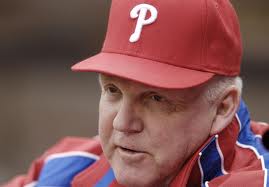
images-1As the Philadelphia Phillies gear up for the 2013 MLB season, many of its fans speculate on whether this season will be Charlie Manuel‘s swan song.  His current contract will expire at the end of the season; and at the age of 69, there is much to consider for both Manuel and the Phillies.

The Phillies have been grooming Ryne Sandberg, a Hall of Fame second basemen the Phillies stupidly traded before the 1982 season along with Larry Bowa for Ivan DeJesus (Don’t get me started!), for a shot at a managerial job.  The question is … Is Charlie ready to move on?

One would think Manuel might be ready to move up in the organization, but not likely to move on to another managing job.  And frankly, it would be an insult to push Manuel out the door, unless of course 2013 turns out to be a down year unrelated to the many injuries the team suffered last season.

images-2In the best of both worlds, Charlie goes out when he’s ready as is worthy of a World Series winning manager; and Ryne Sandberg is still waiting in the wings to take Manuel’s spot as the team’s on-field General.

Provided the upcoming season does not provoke a rash change in Uncle Charlie’s status, Phillies fans should feel good about Manuel moving on, whether it be into retirement or on to an executive opportunity here or elsewhere.

Of course Charlie could decide after the 2013 season that he’s not ready to move off the bench just yet.  In which case Change will just have to wait.

Can a Duck help the Eagles?

Unknown-4The team on the other side of Pattison Avenue is facing a situation of an entirely different hue.  After 14 seasons of Andy Reid‘s leadership, the Philadelphia Eagles are facing a challenge they have not experienced since the turn of the century.

New head coach Chip Kelly comes from the vaunted University of Oregon Ducks, a team that ran a very up-tempo offense that requires a lot of speed, read and react play by the Quarterback, and the ability to keep defenses off-balance by constantly pressing the offensive attack.

The Change has elicited a set of anxiety reactions in fans that covers just about every facet of play on the field and personnel management off it.

First and foremost is whether Kelly’s high-octane offense can work in the NFL.  Indications are that it already is in limited ways on a number of teams, including the New England Patriots and Superbowl contender, San Francisco 49’ers.  But the underlying cause for concern revolves around the question of player personnel and their suitability to run Kelly’s fast paced, attack offense.

Unknown-5The level of anxiety gets ratcheted up for some Eagles fans when they consider the prospects of promising, but unproven QB Nick Foles, and even more so when the Eagles decided to re-sign out-of-favor QB Michael Vick.

All you need to turn most Philadelphia Eagles fans into helpless bundles of anxiety riddled meatbags is to throw the above questions into a bowl; stir in huge gaps on the offensive line and the question of how Kelly and new Defensive Coordinator, Billy Davis will remake the team on the defensive side of the ball; and serve over a defensive secondary that at times couldn’t cover a casserole dish.

Finally, Change can be seen as threatening, while at the same time provide a wealth of opportunity.

That Lada … What a cherry ride!

bildeRecently, Christine Armario wrote an article, featured on the Associated Press, about the extreme manipulations Cubans must go through in order to keep the island’s very, very old fleet of long outdated Russian automobiles running.  The mainstays of the island’s remaining auto fleet are upwards of 30-year-old, ancient Russian Lada and Moskvich models, for which it’s almost impossible to buy parts.

While it’s hard to fathom a Cuban visitor to Miami having to walk into a certain auto parts store; walking out with a carburetor or a set of brake pads: and having to physically carry back to the home island.  It’s even harder to rationalize this country’s continued reluctance to exploit – if you will – a country and a people so ripe for the depth and breadth of opportunities America can provide.

The problem?  Well, it’s Cuba!

Fidel Castro extolling the virtues of a straight - but artificial - Christmas tree!

Long the bane of 1960 Domino Theory on the control of the spread of Communism … Site of President John F. Kennedy’s biggest foreign relations/national security blunder … Home of one of the most ruthless – and oldest – Red revolutionaries … And of course home to hundreds of thousands of Cuban expatriates currently living in the U.S. after leaving Cuba in the decades since the Fidel Castro-led revolution.

But it’s difficult to ignore a Cuba that is very backward in its economy, infrastructure, politics and human rights.

Imagine what a boon to American business to have a country just 90 miles off the coast of Florida as very needy destination for construction services, consumer goods, medical equipment, and technology.  Imagine the inroads – now that Fidel is near terminal age – Americans can make in exporting its way of life, political freedoms and social philosophies.

Imagine how grateful the Cuban people, and maybe even the post-Fidel or post-Raul Cuban government might be, especially now that the Russians are no longer as influential internationally as they were two decades ago.

There’s a wealth of opportunity there.  But it will require a sea change in public and political perceptions to make it happen.

Sequestration: The President’s ugly Child

obamaHow many people realize sequestration, which The White House continually warns will be a “disaster” for the country and its citizens from Arizona to Connecticut, was actually The White House’s brain-child???

Don’t listen to the hype … or the lies.  The sky, if it falls, will not be the sole responsibility of Congress.  Heck, it wasn’t even their idea.

The Public is a pawn in this chess game.  The political pressure being applied by The White House, in the form of Dire Economic Impacts on individual states and even the victims of Superstorm Sandy, is intended to force Congress (i.e. Republicans) – by portraying them as the troublemakers – to cave in so they can pass to the American people an even bigger financial federal budget burden without cutting a single one of the Democrats’ Sacred Cows.

Sequestration was the gamble suggested by then White House Chief-of-Staff Jack Lew (Secretary of the Treasury nominee) and White House Congressional liaison Rob Nabors.  It was endorsed by President Obama before being presented to the Senate Finance Committee, and proposed as a negotiating strategy to Senate Majority Leader Harry Reid (D-Nev) during the 2011 negotiations to raise the National Debt Ceiling.

Certainly House Republicans accepted the sequestration as part of those negotiations, but it wasn’t their idea; it wasn’t their gamble.

It was the President’s idea of “leadership” in difficult political times.  Push it off; deal with it later.  Maybe, just maybe it will go away on its own.

Keep that in mind as you continue to hear about how Sequestration will damage your benefits; your income; your local economy!

Remember it when The President shows up on C-Span or the nightly news speaking about the dangers of sequestration and surrounding himself with Emergency Responders, teachers, healthcare workers, and seniors warning about all the damage the sequestration cuts will entail.

Sequestration:  The President’s ugly child!

Who were those people in the background?

imagesNow I know the Obamas receive a lot of criticism was those who do not agree with them politically, socially, economically, etc.  Some of it is over-the-top, some of it valid as well.

But performances like tonight, where Michelle presented the Best Picture Nominees and Winner at The Oscars, is what gets people talking about their priorities and values.

As Michelle spoke live from Washington, D.C. to the Hollywood elite, many of whom contributed significantly to The President’s re-election, her backdrop consisted of several young military personnel in full parade dress.

(View the entire segment here.)

She spoke about overcoming obstacles, courage, the importance of art to young people, and “that vitally important work” being done in Hollywood …

Seriously … Their “vitally important work” …

But never once was the presence of those young people in uniform acknowledged, their service recognized.

It appeared that those courageous young people in their dress uniforms were there simply as drapery.

Did you notice?

What’s wrong with that picture?

The Art of Fiscal Cliff-Diving

Too far out front to be from D.C.

Way too bold to be from D.C.

There was a point in my life – a long, long time ago in a land far away – that I waited not-so-patiently for late Saturday afternoons when I could hijack the family TV (NEVER during a Notre Dame football game!) and flip on ABC’s Wide World of Sports.  WWS was a hodgepodge of traditional, niche market sports such as the Penn Relays, amateur boxing, international soccer (Remember now, this was the 1960s.) and some really arcane competitions like barrel-jumping.  (Who doesn’t enjoy a good barrel-jump crash?!?)  and the iconic cliff diving competitions from La Quebrada, near Acapulco, Mexico.

Cliff diving – it appears – is making a big comeback!

No, this version does not include majestic vistas of bright sunlight glistening off blue water as a backdrop to a group of whacked-out daredevils perched on a rock sitting perilously close to a huge cliff that looks a mile high even on black & white TV (the 1960s … Remember?).

No, this fiscal cliff diving version just includes the whacked-out daredevils.

No Speedos, please

No Speedos, please

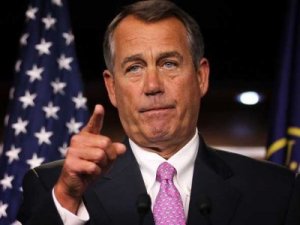
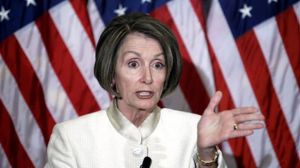
Now admit it … Wouldn’t you just LOVE this fiscal nonsense as REAL cliff-diving?!?  Are you a bit twisted, just enough that you would enjoy this political pissing contest just a little bit, if it included the possibility that John Boehner, President Obama, Harry Reid and – please, please, please – Nancy Pelosi could possibly … just maybe … go SPLAT at the bottom of the shallow end???

Hmmm … But that would leave Joe Biden in charge.

Well, this is hypothetical; so let’s push that thought way, way back into that Dark Space we reserve for the Zombie Apocalypse, IRS audits, and Nicki Minaj.

Where was I?!?  Oh yeah … cliff diving …

Full-length burka only

Full-length burka only

Anyways, cliff diving competitions use of method of score-keeping that emphasizes style, creativity, and a difficulty factor in lieu of how many jumps you make before going SPLAT or the number of broken bones should you survive.

That’s the way I would score it.  But remember, I also like a good barrel-jumping crash!

Now, regardless of where you stand on the impending Thelma & Louise act (Obama as Susan Sarandon’s Louise, of course) currently being played out on the cliffs overlooking Washington, D.C., it’s best to be prepared when it’s your turn to Follow-the-Leaders over a perfectly good cliff.

Frankly, I really could not care less about the Fiscal Cliff.

My long, long-standing federal employment never required me to pay into or rely upon Social Security (Thank God!).  So not only did I NOT benefit from the Bush tax cuts, which were applied to Social Security taxes, I will not suffer from their expiration either.  And maybe … just maybe … we actually NEED this to happen.  Afterall, 51% of the Electorate did not give a rat fart about the Economy during the November election, so why worry about it now?!?

Yes, in that regard I am a bit selfish.

The reality is that BOTH parties would probably benefit from a hand-holding cliff dive, no doubt screaming “WEEEEEEEEEEEEEEEEEE!” all the way to the bottom.  President Obama could then brag that he faced down the terrible Republicans, who realize that raising taxes in a bad Economy is a really stupid idea.  (Apparently so does The President, since he couples his demand for increased marginal tax rates on the wealthy with a $50 billion stimulus package.)

The Republicans – on the other hand – can claim they never gave in to the anti-economy, income-redistributing Democrats.  (Is there really any other explanation for taking from the rich with one hand and pushing out a stimulus with the other when the “real issue” is supposed to be deficit reduction?)  All told, The President’s proposal amounts to a $1.6 TRILLION in new taxes and spending, and $400 billion – or 2.5% of the total $16 TRILLION of National Debt – in deficit reductions!

As one critique described it, “Four hundred billion in spending cuts is like forgoing the monogrammed towels in the 16th bathroom of a 52,000 square foot house.”

So, if you too are willing to embrace the possibility of becoming a mushy piece of fiscal fish food, now is the time to consider your approach to Taking the Dive.  Will you scream like a teenage girl on the Tower of Terror?  Will you stick out a stiff upper lip and leap with resignation and a modicum of dignity?  Or will you dive with flair and style, performing a triple flip with a full twist while singing Madonna‘s classic, “Material Girl (Guy)” all the way to the bottom?

And if you’re wondering how it all came to this, to ridiculous deficits, to abject failure in Leadership for addressing the excess in deficit spending, to the notion that raising taxes on 2% of the population – as if forgoing the monogrammed towels – is a “solution”, then simply check out the story this week coming out of Detroit’s City Council.

Hey, $200 million here, $200 million there … What’s the BIG DEAL, right?  At least we now know why Detroit voted Obama … To bring home “the bacon”!

Tocqueville, South of France (1992)

Tocqueville, South of France (1992)

As historic French cliff-diver, Alexis de Tocqueville is rumored to have said,

“A democracy cannot exist as a permanent form of government.  It can only exist until the majority discovers it can vote itself free stuff * out of the public treasury.”

(* OK … He actually said, “… largesse …”. )

With that in mind, allow me to recommend the following in cliff-diving hints and suggestions:

1.  Never hit the water head-first, as dives above 85 feet can result in concussion.  (How high exactly is a $16 trillion dollar stack of Benjamins?!?)

B.  Select a spot along the cliff with an unobstructed view all the way down to almost certain Death.

4.  No Speedos for men.  Women?  Topless, of course.

iii)  Poise precariously on the smooth rock of Economic Sanity; time the incoming wave of debris from the Eurozone; and push away violently from this amazing fustercluck.

p.  Immediately assume the simple pike position; feet wisely pointed down; and extend the middle digits on both hands as you sing the following verse from Sarah Johns’ The One in the Middle:

And now I’m giving you the one in the middle,

The one that’s a little bit longer.

And I have another one on the other hand,

So I can say it even stronger.