The Inconspicuous News

American Board of Thoracic SurgeryDr. Achintya MoulickDylan PurcellTom Avril Children’s Hospital of Philadelphia Children’s Hospital of PhiladelphiaDiscussion and comment on selected articles from The Philadelphia Inquirer on Sunday, March 20, 2016.

(Jeff Gamage) printed an article, Those Kids Never Got to Go Home about a small, sad cemetery located within the confines of the U.S. Army base in Carlisle, PA. … about 125 miles west of Philadelphia.

The U.S. Army base in Carlisle, PA is the object of an unusual request from the Rosebud Sioux Indian tribe of South Dakota.  Long before the army base existed, the site was home to the Carlisle Indian Industrial School, the flagship of federally-funded, off-reservation boarding schools where the motto was “Kill the Indian, save the Man.”
PRETURN20P

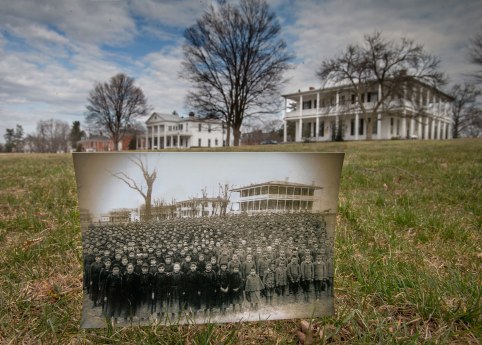
A photo of the student body of the Carlilsle Indian School from March, 1892, is photographed on the school grounds where it was taken. The Rosebud Sioux in South Dakota have begun efforts to repatriate the remains of the 10 Rosebud students buried on the Carlisle school grounds. CHARLES FOX / Staff Photographer

Within the Army’s current home 186 graves of Indian children from numerous Native American tribes.  The children victim of disease, abuse, and inadequate care at the industrial school intended to assimilate Indian populations with white culture and society.  The children were largely the offspring of Indian chiefs, who were convinced by the program’s agents that the children would be properly educated and better prepared to lead their scattered tribes to relationships on more equal footing with their white counterparts.

The intent of the program might be looked upon today as simply one of those backward thinking, even “progressive” attempts to help a defeated and exiled people to adapt and even prosper within the dominant society.  Maybe even a noble cause to promote better relations with the Europeans, who were spreading westward like ants.

However the abuses, including forced labor, beatings for refusal to speak English, physical and sexual abuse, and inadequate care, exposed the program as an attempt to expunge Indian cultures.  These 186 children never made it Home.

The Rosebud children were sent 1400 miles away from home. Some were pried away from parents forced with the choice of giving up their children or their food rations.  Many of the children died from diseases and malnutrition, some due to abuse.
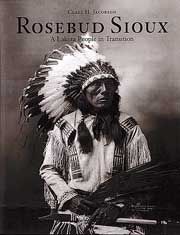
675abb611e806736640cba306701eeb7Leaders of the Rosebud Sioux tribe had forgotten about the spirits of their dead children buried (some without parents even knowing they were dead) so far from home.  The issue was raised after a group of young Rosebud students visited the cemetery after a trip to Washington, D.C. last Summer for the Tribal Youth Gathering.

Now I never understood the motivations and mindset of our earlier American ancestors as they set upon a vanquished Nation, taking advantage of Position and Power to denude Indian cultures and then to exploit them in their imposed poverty.  This example seems to be one of the more egregious ones, although the effort does reflect much of the social and cultural thinking of the time.

I hope we have evolved beyond that kind of social engineering think.

As for the Spirits the Rosebud Sioux insist are restless to return home, demonstrated – they say – by the swarm of fireflies that visited the cemetery after a traditional Sioux ceremony, the Army should simply allow the Rosebud Sioux to take their children home.

***********************************************************************

Next up is a rather disturbing article about the length of post-operative stays at Philadelphia’s St. Christopher’s Hospital for complicated newborn cardiac surgery vs. stays for similar procedures at regional counterpart, Children’s Hospital of Philadelphia (CHOP).  The article, Recovery Times for Newborns Lengthy, written by Tom Avril and Dylan Purcell, suggests the extended stays at St. Chris’ have much to do with the quality of post-operative care.

6e1c643a636c67f002280f826731ae3e.jpgThe Inquirer’s study, based on a review of insurance claim forms, follows another study that found St. Christopher newborn cardiac patients were also much more likely to die than similar patients at CHOP.  St. Christopher’s recently stopped all non-emergency heart procedures as it conducts an internal review of its heart surgery program.

As bad as all that is, one also learns that Dr. Achintya Moulick, head of the heart surgery at St. Chris’ is not certified by the American Board of Thoracic Surgery!  This in contrast to the other five heads of pediatric heart-surgery program in Pennsylvania and Delaware.  Dr. Moulick does possess certification in thoracic surgery from the University of Bombay (Mumbai) in India … from 1995!

Now, I’m no medical professional, but I would presume that in the 21 years since Dr. Moulick attended the University of Bombay, there have been a few changes in the ways thoracic surgery is performed, particularly for infants.  When you consider that the Head of Thoracic Surgery also sets the tone for those performing under him, you get the idea that maybe it’s time for Dr. Moulick to break out his “How to …” books and seek an American-style recertification from this particular century!

***************************************************************************

Finally a story, Bringing Down Blumberg, by Aubrey Whelan on the history and destructive end on the Norman Blumberg Apartments at 22nd and Sharswood Streets in North Philadelphia.  Blumberg was built in the late 1960s as a high-rise apartment complex dedicated to low-income residents.

l_phabuildings-3“But within a few short years, the towers came to typify all that had gone wrong with the public-housing policies of the 1960s – a symbol of misguided urban planning, concentrated poverty, and official neglect writ large.”

Two intricately related resident reactions – just seven years apart underscores the kind of hopelessness that permeated mass low-income urban housing in many parts of the country.  In 1967, the day Blumberg opened to its brand new residents, one gushes how “Each resident helps out the other.”.  Just seven years later after a gang-rape at Blumberg, a resident told The Inquirer, “The amazing thing is that no one helps anybody out.”


Baby, It’s Cold Outside!

For years now, I have had difficulties understanding the attraction of a song we never hear at any time other than the Christmas season. That’s kind of weird really, because whenever you listen to the song you never hear a reference to Christmas or the holidays in general.

Yes … Baby, It’s Cold Outside!

But to be honest, I hadn’t really wondered aloud about why it’s considered a “holiday tune” until I downloaded the song – in one of it’s many, many versions sung by many, many artists – to my iPod. Then, after a few years of hearing it only during the playing of my Christmas playlist, thinking to myself, “What the hell does this have to do with Christmas?”

And in these Days of Enlightenment, the lyrics are simply creepy! At least in Neptune’s Daughter, the movie where the song made it’s premiere wide distribution, the women get a bit of a turn-around in the second part of the song, which featured the comical interpretation by Red Skelton. But it’s the first part of this popular song duet, as sung in the movie by Ricardo Montalban and Esther Williams, that most listeners connect with.

Unfortunately, and for good reason, that connection – as Jessica Cantrera writes in The Washington Post– is “icky”.

The song obviously is the whimsical version of the classic late-night attempt at seduction. The wily male working his mystical – or mythical – charms to seduce the seemingly attracted, yet uncertain, female. Plying her with compliments, alcohol, and his “worries” she might suffer hypothermia due to the rampant Winter weather.

But in this day and age, when we consider ourselves so much more enlightened, critics point to the female’s repeated desires to leave, although she seems unwilling to “break the spell”, the phrase “Hey, what’s in this drink?!?” (and flashes perhaps of Bill Cosby), and the females pointed, “The answer is ‘No!'” as indications of something more sinister.

Maybe they are right …

Now I have a theory about the hows and whys the song became and remained so popular. It’s my own personal theory, which I do not recall ever hearing discussed, so I’ll lay it out there for you to consider. But first some history on the song itself

Frank Loesser

“Baby, It’s Cold Outside” was written Frank Loesser – an accomplished Broadway composer (Guys and Dolls, How to Succeed in Business Without Really Trying) – in 1944, and performed by he and his wife, Lynn Garland at their house-warming party. They performed it together for years before Frank sold the song – to his wife’s consternation – in 1948. The song appeared in Neptune’s Daughter (1949) and won an Academy Award that year for Best Original Song.

Now my theory is wrapped in the biggest event circling the globe in the year Loesser wrote the song, 1944 and World War II.

It’s not hard to understand the attraction “Baby, It’s Cold Outside” may have had for those in our parents’ (and grandparents’, great-grandparent’s) generation. At a time when the song was published (1949), many men had been home just a few years after witnessing and participating the largest, most tragic periods of American history. Many of these men may have witnessed the deaths of friends in the most grisly of manners. Many had killed men themselves in the most grisly of manners.

I envision a mindset that suggested living Life to its fullest; refusing to allow opportunities for Life, Love, or Fun to pass by. Perhaps the song touched that chord that suggests living for Today and being bold enough to pursue such pleasures.

The same chord might have just as easily been struck in the women of the day as well. Many of them fresh off the assembly lines of the war, building tanks, trucks, airplanes, bombs, etc. Some say the female subject of the song was exercising a form of liberation by not conforming to the expectations and standards of a society after shouldering the burden of supplying the Arsenal of Democracy in its destruction of fascist oppression.

She earned many a hefty paycheck and the Independence that goes with financial power. Perhaps she is flaunting social convention as held by her parents, siblings, maiden aunt, and even her neighbors … She simply doesn’t sound so sure that’s a good idea!

Maybe … After all the sexual revolution would be just 15-20 years away in 1949; and certainly some of that rebelliousness would have been felt by both sexes coming off four years of liberating responsibility!

Then again … The fact that the original song score referred to the male role as the “wolf” and the female role as the “mouse” coats the entire subject once again in potential ickiness.

Only you simply cannot get past the fact that the song has amassed incredible popularity for those generations that preceded us! You only need look – even now – at performers still singing the song every holiday season: Seth MacFarlane and Sara BareillesIdina Menzel and Michael BubléDarius Rucker and Sheryl Crow. And that is in just the last two years!

But certainly, it seems the song has outlived its playfulness.

Heck, I still can’t get passed the fact that it’s considered “holiday music”. And for the past few years, every time it came up on the iPod rotation I would mention this to whomever was sitting next to me who might – or might not – care. It has gotten to the point where Carol now will immediately say, “Yes, I know … Why is this a Christmas song?!?”

I can be a bit redundant. Surprise!

Now it’s becoming common to drag the song out into the light and bludgeon it with images of Bill Cosby (as Saturday Night Live did recently) or date rape as “Funny or Die” portrayed the song.

Personally, I think that’s a bit unfair as parodies seem to be sometimes. After all in all versions of the song, we are left to imagine what the outcome was. Can any of us say it was Good or Bad? Who are we to judge?

I do have a healthier respect for the song now that I have read of its origins, the man who created it, and its initial purpose. And frankly, until today I had never seen its basic premise turned around 180 degrees, as it was in the second part of its Neptune’s Daughter version.

One must concede that its imagery and language are dated and present complications for a society firmly ensconced in no-pressure sexuality, where slick talk or chemical gimmicks are rightfully seen as robbing individual choice. Yet I can not ignore that initially it was simply a quaintly mischievous song, written by a renown composer to be sung with his wife to family and friends as a way of saying “Good night, the Party’s over.”

Now, someone needs to explain to me how this duet became associated with the Christmas holidays!

Trump Is Wrong On Muslims … Kinda

Donald Trump made a rather bold and infuriating statement the other day. He also told the Truth … at least in part.  And what he said was what a lot of people wanted to hear.  Of course a lot of people didn’t want to hear it too.

Both groups were right.


Trump told us that Americans do not want and that America should block all Muslims from immigrating to the United States from Syria.

He was right and he was wrong.

As a country, we have grown past religious tests.  We are not perfect.  We have had them.  We have learned, sometimes the very, very hard way.  We have – collectively – moved on.

JFK was too Catholic for some people, who feared the Pope would be running the country.  Of course the earliest settlers came here to flee British religious oppression, only to set up their own style of religious repression here.  And there were flirtations with Nazi extremism in the late 1930’s, and then that very uncomfortable World War II prelude in the voyage of the St. Louis, loaded with Jews to be denied entry to the US though they could view the lights of Miami from on-deck.

But we’ve grown past all that. Or so we thought.

No, Donald … We do not exclude people from our country just for religious reasons. It’s the lowest form of exclusion, right next to race.

But you can’t really blame the approach to a problem that – in the wake of Paris and San Bernardino – has a lot of people avoiding crowded spaces, high-value locations, and mass public events.  The demographics drive you to the Conclusion … almost.

Personally, I don’t think you target all Muslims.  You can whittle down the high-risk pool by narrowing the focus to the true demographic … the demographic prized and targeted by the extremist political factions we worry about most … young, unattached to family, disenfranchised Muslims.

Trump is partially right, but importantly wrong.

Then there’s the other lessons from our History, that give you a look at how Presidents in the past have over-reacted when you have the luxury of 20-20 hindsight.

Jimmy Carter cancelled the visas of Iranian nationals who might visit the US during the Iranian hostage crisis.  But this was not a “national security measure” as much as it was a pressure point to force Iran to comply with demands to release the hostages.

And it wasn’t based on religion.

Franklin Delano Roosevelt – on the other hand – went a bridge-too-far in interning 120,000 Japanese nationals during World War II.  He indeed did this for National Security, but on purely racial terms, which is horrendous even if you can dismiss the fact that few Germans or Italians were similarly interned.

Were his actions contrary to American ideals?  Definitely.  Were they productive?  Hard to tell from the existence of a negative (the absence of wartime sabotage).

Were the actions reasonable, given the events of the time?  Certainly, they provided a sense of greater security at a dangerous time in what was seen as vulnerable areas.  Remember, Japanese forces invaded and created a tenuous foothold in Alaska’s Aleutian Islands.

Looking back, were the measures excessive?  Certainly … But you do have the Luxury of Hindsight!

Let’s look at the official release from the Trump campaign.

“Donald J. Trump is calling for a total and complete shutdown of Muslims entering the United States until our country’s representatives can figure out what is going on .”

Now I’m willing to bet dollars-to-doughnuts that not too many sources condemning the Trump issue provided those last 11 words.  And if you really think about it, it’s not far off the same reasoning FDR used.  Securing what was perceived as the riskiest elements of the country’s western population until they could figure out what was going on.

Frankly, given all we know the reaction makes perfect sense.  After all, there are no Uruguayan basketball players heading to America with the intent of shooting up the infidels.

But it goes too far.  It’s far to broad and is based purely on religious belief.  It reeks of prejudice and violates American ideals.

So let’s take the most reasonable, sensible, and fair approach.

Ban all young, unattached, disenfranchised Muslims until our country’s representatives can figure out what is going on.

Debt of Honor (PBS, November 10, 9:00 PM EST)

disabled_veteransUsually at this time of year, I dedicate a blog post to U.S. veterans of foreign conflicts as an homage to their dedication, patriotism, and sacrifice.  It’s a bit odd for me, not having served in the military myself.  I think it’s simply a matter of trying to pay back what little I can within the realization that the sacrifice they made was to the benefit of all of us.

This year though, I will diverge a bit to recognize a very special class of veteran, the disabled veteran.  Those who came home from conflicts with horrible wounds that left them significantly disabled for life.

Tonight (November 10) at 9:00 PM EST (2100 HRS EST) PBS will air the premiere of Debt of Honor, a documentary that looks into the history of America’s disabled vets.

Disabled veterans hold a unique place in the history of veterans in the United States, one that palpably illustrates the human cost of war, and speaks to the enormous sacrifices of military service. Debt of Honor examines the way in which the American government and society as a whole have regarded disabled veterans throughout history, beginning in the aftermath of the Revolutionary War through today’s continuing conflicts in the Middle East.

Many of us consider the issue of disabled veterans to be a recent phenomena, the result of political scandal over the management of the Department of Veterans Affairs.  The problem came to the forefront of American politics largely due to the neglect of veterans recently disabled from present day conflicts in Iraq and Afghanistan.

But instead of sitting here, trying to blame one President or another for the problems they rightfully have responsibility for, I’d like to take a different tack today.

dav-logoThe problems faced by veterans in all walks of like, from those suffering not at all to those able to function physically but unable to psychologically due to the effects of Post Traumatic Stress Disorder (PTSD) to those horribly disfigured and only permitted to function through the graces of modern medical science once they return from protecting us is no one’s fault but our own!

We own it, because so many of us simply do not care enough. If we care enough about it and make it a serious National issue, potential Presidents and all sorts of politicos would find import in the issue.  We allow politicians to skirt the issue because we skirt the issue.

I make no bones about the aspect that many politicians might only care because we MAKE them care about it.  Who really cares what selfish motivation we might instill in our politicians, if it gets the job done?  Self-interest – particularly in politicians – can be an extremely lucrative motivator.  So let’s put it to use!

Take the challenge … The next time you have a chance to speak to your Congressional Representative or a local politician with a potentially promising future in National Politics, don’t ask them first about Jobs, the Economy, Immigration, Gay Marriage, or their views on the Rights of gun owners, minority members of society, or the 1%.  Ask them FIRST about what they would do to improve the lives of disabled veterans in their own districts, or how they would address disabled veteran care during their next term in Washington, D.C., or what they might do to fix the problems at the Veterans Administration.

disabled veteranIf you can’t wait that long (and certainly there is no time to wait), write them a letter and demand an answer from them that matters.  Do not take “no” or a lot of fluff as an answer.  Press the issue and press it hard.

With 11 months until the Presidential election, much hay could also be made by constantly asking our POTUS candidates what they will do in their first days in office to address the problems faced by disable veterans across the country!

The only way we can make this problem go away is by making it The Constant Problem of every politician we elect, especially those we send to Washington, D.C.!

Rocky Balboa, the common cold, and “Family Feud”

latestThose three things are an unusual combination.  And although there’s nothing Rocky Balboa, the common cold, and “Family Feud” have in common with each other, they converged to create a social phenomena in Pennsylvania in the Spring and Summer of 1977.

The Pennsylvania Lottery was only five years old at the time; offering only a Daily Number (3-digit) until recently adding scratch-off instant lottery tickets.

It was May 1976.  Tom and Philomena Drake had been married for two years and living in McMurray, PA when Tom happened to plop into a seat in a Pittsburgh movie theatre to see the critically acclaimed movie, “Rocky“, about a down-trodden Philadelphia club fighter thrown by happenstance into a title fight against Apollo Creed, the Muhammad Ali-like Heavyweight Champion of the World.

It was the planting of a seed that would soon sprout for Tom Drake a tree of dubious inspiration.

One year later, Philomena came down with a cold.  Their doctor told them that stress was contributing significantly to her health issues.  The Drakes were pulling in roughly $20,000 a-year in wages, and they were never seeing each other. She working during the day as a secretary at U.S. Steel; he as a neophyte real estate salesman working many nights and weekends.

Tom was looking for a way to relieve their financial pressure and maybe – just maybe – allow Phil to give up her job.  Or as Tom put it, “What can I do so she can quit her job and we can get closer together?”

richard-dawson-440_featured_photo_galleryThat Monday Tom was watching “Family Feud” (the original version with the since deceased Richard Dawson) and that – amazingly enough – was the clincher!  Somehow Tom put together his wife’s physical malady, a movie about a brawler’s a never-ever Big Stage opportunity, and a game show highlighting overly energetic family members being alternately wooed and ridiculed by a smarmy Brit in a nice suit to come up with a – not surprisingly – wacky idea.

Tom called his wife at work; told her to come home right away; to not even wait for the bus.  Take a cab ($20 fare)!  When Philomena arrived at home, she found that her husband had cleaned out their savings account ($1100.) and then announced the fruit that had flowered from that Tree of Dubious Inspiration.

His idea:  Liquidate all their assets and buy $20,000 worth of $1 Pennsylvania “Instant Bingo” scratch-off lottery tickets!

The goal:  Win the grand prize of $1,000-a-week for Life!

State lotteries were new back then.  So when someone saw what looked like a get-rich-quick scheme, they perhaps did not take as close a look at the odds of winning.  The odds, under the method Pennsylvania was using for “Instant Bingo” and awarding the grand prize, came out to 35,000,000-to-1.  But since the Drakes were intending to buy 20,000 tickets, a local university professor calculated the odds at 1700-to-1.

Not exactly a sure thing …

Once State lottery officials heard of the scheme, they tried – unsuccessfully – to talk the Drakes off their 20,000 ticket ledge.  To no avail, largely because of “Rocky” and “Family Feud”.

“The people want me to win.  They really believe I’m going to win.  I’m going to win.”, Tom said, climbing higher into that Tree of Dubious Inspiration.  He was certain “Rocky” had sent him a message.  No one gives up.  Family Feud proved ” … all over the country people were rooting for these people to win.”

In Tom Drake’s head they would root for Tom and Philomena Drake too.

Maybe they did.  Maybe they didn’t.  But certainly I can remember the story, and thinking to myself, “This guy is nuts.”  But what did I know.  Over the course of that Summer I lost track of the story.  The Drakes were scratching off tickets into November of that year.  I wondered from time to time how that all turned out.

1972_Chevrolet_Vega_HatcbackAmong the assets the Drakes sold were their furniture, two trotting horses, and three acres of farm land.  Despite the farm, they were living in a one-bedroom apartment.  They also sold their 1974 Chevrolet Vega.  (Remember those butt-ugly cars?)

There were two ways you could claim the top prize of $1000-a-week for Life.  One was to collect enough games pieces to spell out (There were letters on each “Instant Bingo” card.) “Pennsylvania”, “Lottery”, or “Bingo”.  The second method was to win a random drawing, where entry was controlled through qualifying numbers on the “Instant Bingo” cards, resulting in 42,000 potential entrants.  Ten (10) qualifiers would be picked from those 42,000, then one Grand Prize winner would be selected from those 10.

The Drakes’ dream amounted to allowing Philomena to quit her job; buying a nice house; raising a family; and allowing Tom to “… get into harness racing the right way.”  Hmmmm …. to that last one, but dreams are dreams.

Personally, I might have been satisfied with the horses and the farm land, though maybe not the Chevy Vega.

So how did it all turn out?

Through their first 1500 scratch off tickets, they won $500 (down $1000.).  After 3000 scratches, they had accumulated $700 (down $2300.).  $14,100. in scratch-offs later (roughly 200 scratches a day), they finished up by a thousand, having hit one $10,000. prize and several smaller hits.

Was it worth it? Going through all that work, the scorn, the shaking heads and perplexed looks, not to mention the obvious anxiety of “chuck(ing) it all” – as Tom characterized it – at a lottery long-shot dream?

Most of us would say, “No.”

But Philomena would disagree, echoing a statement by Tom quoted earlier in this post.  As they sat a card table in front of a drug store perfume counter, speaking to a reporter and frantically scratching instant tickets, Phil said, “We get to spend so much time together now.  We’re so much closer.”

Sometimes the Dream that gets answered is The One you really needed, not the Dream you thought you wanted.

Ponder the true purpose of Memorial Day

On Friday, May 22 I will strap my golf bag to a noble electric steed (i.e. golf cart) and spend four non-productive hours chasing a small, dimpled ball over hill and dale in a contest against Nature, technology, and my inner golf demons.

memorial-dayOn the same date in 1863, 79 Union soldiers would earn the Congressional Medal of Honor in what would be called the “forlorn hope” of a volunteer storming party attempting to breach the Confederate defensive works surrounding Vicksburg, Mississippi.

The plan, ordered by Union General Ulysses S. Grant, required the building of a bridge over a moat and the placement of ladders against the heights surrounding the town in preparation for the main attack which was to follow. Knowing the odds of survival were minimal to non-existent, only single men were asked to volunteer.  Despite this knowledge twice the needed number of volunteers stepped forward.  Many were turned away.

After being pinned down by Confederate fire in the ditch they were to cross, the party unsuccessful in their forlorn hope was unable to withdraw until nightfall.  Of the 150 men who made up the storming party, nearly half were killed.

On Saturday, May 23 I will cut the lawn; plant my usual late May impatiens; and perhaps finish off my piecemeal effort to mulch all the flower beds.

USS Squalus

USS Squalus

On the same date in 1939, the submarine U.S.S. Squalus suffered a catastrophic incident while conducting a “crash test” off the Isles of Shoals.  The crash test, designed to simulate the sudden dive of a submarine to avoid enemy detection, went horribly wrong.  A valve used to supply fresh air to the boat’s diesel engine was mistakenly left open.  The aft torpedo room, both engine rooms, and the crew quarters were immediately flooded. Thirty-three (33) survivors rushed to the forward compartments and awaited a rescue they had little hope of seeing.  A sister sub coming out of Portsmouth found the boat’s telephone buoy, and 40 hours later they were rescued.  Twenty-six (26) sailors drowned in the initial flooding.

On Sunday, May 24 we will take the three-hour trip near Williamsport, PA to visit our son, his wife and our first granddaughter, Harper.

On that date in 1968, 75 U.S. servicemen lost their lives in Vietnam.  To be honest, I could not find sufficient information to do justice to those who died that day in a land far, far from home. So I will simply list their names.

  • JOE E. ALLEN; Bay St. Louis, MS
  • MICHAEL F. ANDERSON; Evanston, IL
  • FREDERICK V. ARENS, JR.; Boston, MA
  • CLARENCE J. BALDWIN; Cherry Valley, NY
  • STEPHEN L. BEAN; Saco, ME
  • JAMES P. BIRKS; Pattotomie, OK
  • JAMES D. BOWERS; Johnson City, TN
  • MICHAEL J. BURKHART; Chicago, IL
  • DONALD B. BUTTON; Charleston, SC
  • FRANCHOT T CALHOUN; Anniston, AL
  • RICHARD A. CARLSON; San Franscisco, CA
  • RICHARD CARRILLO; Los Angeles, CA
  • DWIGHT W. CARROLL; Springfield, TN
  • WILLIAM E. CASSIDY; Baltimore, MD
  • CLINTON CHAPMAN; Newton, MS
  • CHARLES M. CHESSHER; Crestview, FL
  • JERRY M. CHITWOOD; Washington, OK
  • GEORGE W CLARK; Lakeville, CT
  • JOHN C. COLLINS; Moorehead City, NC
  • THOMAS C. CONNOLLY; Chicago, IL
  • RONALD J. COOK; Phoenix, AZ
  • KEVIN CORCORAN; Garwood, NJ
  • DAVID W. CRAWFORD; Grants, NM
  • RONNIE J. DAUGHERTY; Newcombe, TN
  • JOSE DAVILA; Chapman Ranch, TX
  • MICHAEL L. DEANE; Westfield, MA
  • ANTHONY A. DISCEPOLO; Cleveland, OH
  • MELVIN DIVENS; Chicago, IL
  • FRANK G. EAVES; Atlanta, GA
  • ROBERT A. FEDEROWSKI; Lansing, MI
  • RICHARD C. FINA; Hudson, WI
  • WALLACE A. FORD; Huntington, WV
  • GARY D. FOX; Sheridan, WY
  • RONALD L. FRAZER; Cambridge City, IN
  • JEFFERY A. GOSS; Oren, UT
  • ROBERT A. HAYDEN; Bridgeport, WA
  • LYNN G. HIEBERT; Thief River Falls, MN
  • JERRY L. HILBERT; Louisville, KY
  • JERRY J. HILL; Minneapolis, MN
  • DAVID A. JACKSON; Tulare, CA
  • JOSEPH M. KAMINSKI, JR.; Wilmington, DE
  • DALE D. KENYON; Sioux Falls, SD
  • WILLIAM E. KNOX; Canton, OH
  • JOHN G. KOMERS; El Monte, CA
  • AL R. LEWIS; Memphis, TN
  • PAUL LEWIS; Saugerties, NY
  • JOSEPH D. MACK; Prairie Point, MS
  • GEORGE E. MASSIE; Clear Spring, MD
  • LARRY R. McFADDIN; Paintsville, KY
  • RUSSELL A. MICHALKE; Saline, MI
  • LARRY D. NOVAK; Platt Center, NE
  • GERALD T. PARMETER; Cazadero, CA
  • JOSEPH J. PASSAVANTI III; Park Forest, IL
  • GARY L. PATTERSON; Seattle, WA
  • ROBERT M. PAULK; Vallejo, CA
  • GARY W. PURCELL; Torrance, CA
  • LAWRENCE G. RENO; Cincinnati, OH
  • HU B. RHODES; Shelbyville, TN
  • GLOUSTER RHYNES; Fort Pierce, FL
  • LARRY L. RILEY; Midwest City, OK
  • EMMETT RUCKER, JR.; Wichita Falls, TX
  • GERMAN A. SANTIAGO; Hato Rey, PR
  • HERBERT E. SCHMIDT; Kansas City, MO
  • JAMES L. SHANKS; Freeport, NY
  • RONALD J. SHEWMAN; Los Angeles, CA
  • MICHAEL A. SMOGER; Two Harbors, MN
  • FREDERICK G. STEFFEN; New Baltimore, MI
  • BRENT L. SWABBY; El Monte, CA
  • PAUL R. THERIAULT; Cambridge, MA
  • TOUSSAINT L. TITUS; Fairfield, TX
  • PHILIP G. TURNER; Jackson, GA
  • NICHOLAS S. VRANKOVICH; Beaver Falls, PA
  • DAVID H. WHITEHILL; Newburgh, NY
  • ROGER D. WILLIAMS; Roanoke, VA
  • FLOYD L. WILLIAMS, JR.; Northglenn, CO

On Monday, May 25 I will spend much of the day chilling and perhaps do some light yard work.

On that same date in 1862, 2400 Americans died in the First Battle of Winchester, VA. The battle proved to be an important strategic victory for Stonewall Jackson in his Shenandoah Valley campaign.

An undersized Union Army formation was forced to flee the town of Winchester, VA, which had been outflanked by Jackson’s defeat of the Union garrison at Front Royal, VA. The battle was one of many smaller conflicts during The Civil War that do not receive the attention of the larger, more notorious battles in the War Between the States.

Regardless of how one feels about the goals and motivations of the Confederacy, one must keep in mind that all who died had been Americans, and their sacrifice helped define what the United States of America would become in the decades to follow.

On Tuesday, May 26 the long Memorial Day holiday will be a wistful memory as many of us head back to work.  I will cheat a bit here to include one more memory in salute to those World War II veterans that are leaving us in sad, alarming numbers every week.

On May 26, 1942, Admiral Nagumo’s 1st Carrier Fleet sailed from Japanese waters for Midway Island.  His task force contains the carriers Akagi, Kaga, Soryu and Hiryu with two battleships, cruisers and destroyers as escort.  The Battle for Midway Island was fought a few days later, from June 4-7.  The sea conflict occurred just six months after the attack on Pearl Harbor, at a time when the Japanese were largely unstoppable throughout the Pacific.  Three hundred and seven Americans died over those three days (Japanese losses: 3000 men, four aircraft carriers) as the American Pacific Fleet dealt a blow that would in effect end the hegemonic wave surging from Japan.  From that day forward, the tide of war in the Pacific would flow The Allies way.

10404121_10152078664097823_8863390345067128923_n

Now this post is not intended to sour anyone’s Memorial Day holiday, although I have to admit, copying those 75 names from May 24, 1968 was more than a little sobering for me.

No, my intent is to simply encourage you to take pause during the weekend to remember the true purpose of Memorial Day … To remember those who died to birth our Country, to build and shape its future, and to protect that future from forces hostile to the ideals it embraces.

Have a great holiday!

Should Cuba return to our sphere of influence?

from The Philadelphia Inquirer (Clem Murray)

from The Philadelphia Inquirer (Clem Murray)

An interesting article in today’s Philadelphia Inquirer about U.S. students who have been studying abroad in Cuba from before recent Obama Administration inroads. The main subject of the article attends Arcadia University, which is about 20 minutes from here. Personally, I think it’s high time we try something different with Cuba, since it’s not like the previous course was changing anything. Changing something – I think – is important, given the island is barely 90 miles from U.S. shores and has already been the inviting target of one global antagonist. Do we really want that to continue shunning Cuba, especially in light of China’s expanding interests?  What might the reaction be if suddenly China made its own inroad to Cuba? Also, the capitalist in me sees a HUGE market for American goods and an opportunity to change the direction of the Cuban people, once they see what a Capitalist system can provide. Just the market for 50-plus year-old junked auto parts would be amazing! old-cars-of-cuba-dsc_4474-1024But the bigger question is, how do you change the political climate of an island so close to the U.S. if you continue to work to isolate it?

Chuck Bednarik: They don’t make them anymore!

2Chuck “Concrete Charlie” Bednarik, legendary figure in Philadelphia sports history died yesterday at the age of 89 after a short illness.

Playing for the Philadelphia Eagles for 14 years, Bednarik was the last of the “two-way players”, on the field for both offense and defense and routinely playing 55-58 minutes in a 60 minute game.

That kind of playing time is unheard of now in a sport where hard hitting is no longer the backbone of a game built on speed and athletic ability.

Bednarik’s life – football aside – was a microcosm of The Greatest Generation.

  • Born in Bethlehem, PA, Bednarik spent his entire life living in Pennsylvania.
  • Bednarik_CorpsJoined the Army Air Corp right out of high school with World War II in full swing. Flew 30 bombing missions over Germany as a waist gunner in the B-24.
  • All-American footballer at the University of Pennsylvania where he played linebacker, center and also punted. (In 1947, Bednarik’s junior year, Penn was ranked #7 in the nation.)
  • Philadelphia Eagles signed him for a $3000 bonus, $10,000 salary. He never made more than $27,000 a season!

Bednarik is most widely known for his hard, legal hit on NY Giants running back Frank Gifford, of Monday Night Football fame and Howard Cosell in a 1960 game.

Bednarik separating Frank Gifford (16) from the ball (1960).

Bednarik was an outspoken critic of the modern football player in his later years, bemoaning the end of the two-way player, then laughing at the likes of Deion Sanders when he decided to play “two-way football” at the cornerback/wide receiver positions.

They don’t make them like that anymore.

The inconspicuous news

The stories that might escape your attention for any number of reasons.

A Greek warning to Peace and Democracy

alexis-tsiprasTracy Rubin, a regular contributor to The Philadelphia Inquirer’s editorial board, posted an interesting article on the recent election in Greece and its potential ripple throughout the European Union.  Rubin phrases her warning as one to the European elite, but the effects of widespread dissatisfaction throughout Europe, largely due to financial struggles and large-scale disenfranchisement, should be am alarm to every EU citizen.

Greece’s new Prime Minister, Alexis Tsipras, won the government’s top post by promising to renegotiate the austere economic measures imposed by the EU and International Monetary Fund in its 2010 bailout of the bankrupt country.  The causes of the collapse are not much different from those in the U.S. in 2008.

Free-wheeling borrowing and lending were the primary cause; but Greece’s overly generous public benefits programs were also a huge factor in the collapse.  Unfortunately austerity measures imposed on Greece in the bailout left many without jobs and even without heat .  Youth unemployment, always a catalyst for populist revolt and even the attraction of political extremism, reached 60%. Many of the same conditions can be found in Spain, Italy, France and other less well-off countries.

One only need refresh their 1920-40s European history to understand what the potential is for such widespread austerity, and the disillusionment it breeds, and to realize the kind of extremist behavior can result.

Boys and our toys

Yes, Virginia, some of us never, ever grow up completely.  Let’s just get that fact out of the way!

So what could be more appropriate on a Superbowl Sunday, than to relive one of those epic memories from those days before animated electronics and computer-generated graphics!  Those days of wiffle ball, street hockey, and electric football!

20150201_inq_fitz01-aThe game was tabbed as the closest a kid could get to real football without the risk of concussion or the need for future hip replacement surgery.  Until you flipped on the power and – as the author notes, the field looks like “a jarful of crickets had been released onto a hot skillet.”

Good memories surround the hours needed to properly set up one’s squad and maybe play a full quarter of football.  More time was wasted than in any other childhood activity that fascinated for reasons that puzzle us to this day.  But the memories? Irreplaceable!

Now for some really crazy numbers.  In 1947 over 40 million sets were sold.  But if you think interest in the game has died in those 70-plus years … An electric football newsletter currently has over 20,000 subscribers.  In 1999 a group from Philadelphia hosted an electric football competition and attracted 1500 participants!

Yep, us boys are loyal to our toys!

Moderates start pulling GOP a bit their way

The political reality in the Philadelphia suburbs is that, if you are a Republican looking for wide, cross-party appeal and win elections, you must present a more Moderate political view.  The same probably holds true in a lot of suburban communities surrounding large concentrations of urban Democrats.

Charles_W._Dent,_official_photo_portrait,_color

Congressional Rep Charlie Dent (PA-15)

Such an approach helps to explain the popularity of such local talents as Congressional Representatives Charlie Dent and Patrick Meehan.

But another factor to consider is the political weight these Moderates might pull in a Republican Congressional caucus looking to grow their national appeal.  In recent weeks, Moderates in the delegation have been able to blunt some controversial legislation and political moves.

As Dent mentioned in a recent debate, “Week One, we had the vote for Speaker. Week Two, we debated deporting children. Week Three, we’re debating rape and incest. I can’t wait for Week Four.”

The rise of the Moderates might be worth watching.

Inconspicuous news

The video he wishes he never shared

Ahmed Merabet

Ahmed Merabet

The most disturbing piece of video shot during the Charlie Hedbo massacre was perhaps that shot by man across the street from the assassination of French police officer, Ahmed Merabet, a 42-year-old Muslim himself.

Engineer Jordi Mir described the terror and panic he felt after having just witnessed the cold blooded, merciless shooting as Merabet lay obviously wounded on the sidewalk. Alone and feeling isolated in his flat, Mir fled to his computer and posted the video to Facebook.

After but 15 minutes, he thought better of his decision and took the video down; but it was too late. Within an hour he was mortified to see it being replayed across the world on hundreds of media sites and broadcasts.

No one – in my opinion – could blame Mir for what he did, given that moment in time and the terror he must have felt. The story does not go into why he felt posting it was a mistake he regrets. But it is a lesson in the unforgiving nature of today’s instantaneous “share it” culture.

Krauthammer: Boost the gas tax

Political commentator Charles Krauthammer, never one to be mistaken for a “tax and spend” liberal, is championing a $1.00 boost in the national gas tax. But he’s not pushing it as a way to fix the transit infrastructure.

Krauthammer wants the tax boosted to continue the psychological pressure on the consumption of petroleum products and as a way to relieve the pressure – even if only a little – on those consumers living day-to-day in everyday America by reducing Social Security taxes among other options.

He makes several valid points on the both the psyche of the American automotive consumer and his fickle relationship with overseas oil. lying just below the surface is the same mistrust all should feel about the obviously selfish motives of the Saudis, who are driving down the cost of oil (now below $50 a barrel) in a blatant strategy to corner market share and render economically less feasible the hunt for and development of alternative energy sources.

If, as some sources suggest, this artificially low price of foreign oil persists for two years, exactly how much damage will be done to efforts to wean us from the oil nipple?!?

Louie and the Quarterback

If you know the story of Louie Zamperini, you know of the extraordinary trials he went through in his early life. I haven’t yet seen the movie, “Unbroken”, but I plan to. I did thoroughly enjoy Lauren Hillenbrand’s book by the same title. If you haven’t read it, you really should, especially if you can squeeze it in before seeing the movie!

From all accounts, Zamperini is an extremely likeable man. A close family member had several chances to meet Zamperini at public events in a law enforcement role in his native home of Torrance, CA. He had nothing but praise for the old WWII hero.

Zamperini died this past July.

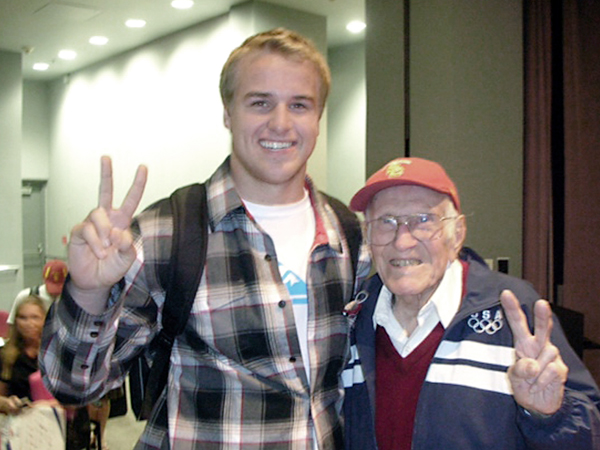
But another interesting friendship Zamperini encouraged was with former USC quarterback, Matt Barkley. Barkley, third string QB for the 2014 Philadelphia Eagles, met Zamperini as a USC freshman in 2009.

Barkley describes how no one know who this “old guy” was as he addressed their class. But by the end, Barkley was listening intently and was so struck by his story that he hung around to talk to “Unbroken” hero afterwards.

Matt Barkley and Louie Zamperini

Matt Barkley and Louie Zamperini

And a friendship was born.

Barkley shares that “Louie embodied what it means to push through your mental limits and even the physical limits of what your body can do.”

It was a lesson that served Barkley well in his struggles to make the transition to the NFL. The two men, roughly 70 years apart in age, conversed regularly. Zamperini even invited Barkley to watch the U.S.-Canada 2010 Olympic Games hockey matchup in his home.

Spoiler alert: Zamperini became such a gracious man in his later years, when he was given the opportunity to carry a torch for the 1998 Olympics in Nagano, Japan he sought a media-arranged meeting with the former Japanese soldier who tormented him in the WWII prison camp. The offer was rejected by Mutsohiro Watanabe.