Cranky Man’s Lawn Epistles ’12: tick tock … tick tock … tick tock …

It’s almost Winter … yippee …

Soon the frost will be on the pumpkin; the snow will be on the roof; the chestnuts will be roasting; and I’ll be moaning and groaning.  I like this time of year; I hate this time of year.

Yes, I’m certain that makes sense.

In any case, here be your last Lawn Epistle for 2012!

If you have been a loyal reader and pay attention to my long-winded rants on lawn care, you are more than familiar with my oft cranky, frantic pleadings of  … Fertilize! Fertilize! For the love of God … Fertilize!

I do get a bit exuberant about it.

Another season is coming to a close.  But as with many aspects of Life on this Big Blue Marble upon which we live, the end of one cycle signals the beginning of another.  And as any true Lawn Junkie will tell you, the Seeds of Success for the coming Spring – no matter how miserable I might be while waiting out Winter – are sown in the barren chill of transitional Fall.

My point??  Fertilize … Fertilize … Ferti …

Sorry.

The point is you – Dear Lawn Buddy – have ONE MORE treatment left before you can look forward to the next three months of Leisure, like a 1st grade school teacher at the end of May!  Let’s review …

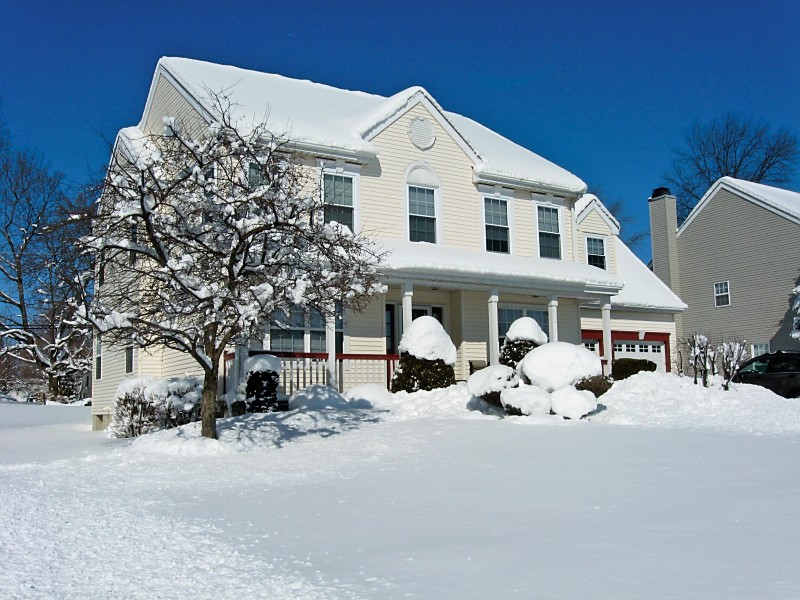
It’s too late when it looks like this …

Winterfeed  (from an earlier Epistle) 

The last step for the Fall, is a Winter feeding that should be applied no later than mid-November.  The Winter feed goes right to the grass’ roots and is stored there over the Winter.  Once Spring arrives, the root-stored nutrients will give your lawn a growth boost to start the season off right,

Yes, that says “mid-November!  And no, I haven’t done mine yet.  But it’s at the top of the chore list for this weekend!

The important thing to remember is that the Winter feeding has to be accomplished before the grass goes dormant for the Winter.  If you have treated your lawn nicely, you are also still mowing … just less frequently … as your grass should continue to grow until the first REAL frost sets in.

Now, time is a wastin’!  We are at the very latest point for putting down the last feeding of the year.  So get to it … and enjoy your Winter downtime!

… if this Spring you want it to look like this!

Cranky Man’s Lawn Epistles ’12: Getting ready for the Fall growing season

Happy Lawn Days are here again!

Wet, humid conditions in our Southeast corner of Pennsylvania have resurrected our Summer-baked lawns with damp air and plentiful rains.  A quick look around your neighborhood will reveal lawns much greener than should be expected for mid-August, especially if you followed the rules for helping your lawn beat the heat.  Those of us, who value the work and money spent on keeping our lawns green and vibrant, appreciate what a bit of Summer rain and the prospects for cooler temperatures will bring.

Now is the time to set up your lawn for the Fall growing season!

The biggest advantage September will bring are cooler nights.  Even when temps hit the 90s during Indian Summer, the cooler nights allow for substantial dew falls that effectively water your lawn ever so slightly every day.  This combination of warm days and cool, dewy nights are perfect conditions for grass growth.

Here are several things you can do to get the maximum benefit out the September to mid-November growing season:

Dethatching rake

1. Clear dead matted grass where it exists in large patches.

For this I recommend a good dethatching rake; although if you have significant dead grass issues, you may want to look into renting a dethatching machine (a.k.a. lawn comb).  Using the dethatching rake, look for those areas where the dead grass is thick and covering the ground.  Then use your mower to mulch the dead growth into the soil.  Removing dead grass will provide a good bed for dropping seed and will allow existing grass plants to spread and fill in bare spots.

2. Aerate

Most home owners probably aerate in the Spring, many in the Fall.  Some aerate twice a year.  Aerating is an important step in

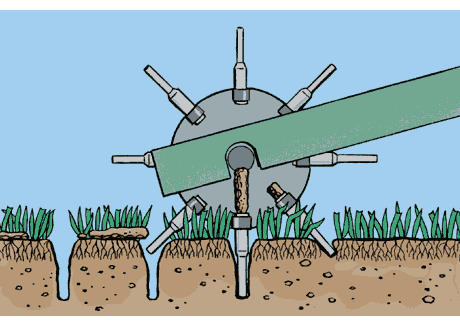
How core aerator works

lawn health by reducing soil compaction caused by foot traffic and normal settling.  Aerating allows air and nutrients to penetrate the soil, helping roots grow deeper and healthier.

Use a core aerator as opposed to a spike aerator.  The core aerator removes a plug of soil each time it penetrates, whereas a solid spike aerator simply compresses the soil even further, defeating the purpose of aerating.  For maximum effectiveness wait for wet weather to soften up the ground.  Plugs that result from aerating will naturally decay and provide additional food for the lawn.

Personally, I will aerate only once every other year, since my lawn no longer gets the foot traffic (i.e. kids) it used to.  I never got around to doing it in this past Spring, when the wet weather makes aerating easier.  Hopefully, I’ll get to it weather-permitting this Fall.

3. To “Weed & Feed” or “Seed and Fertilize”?

Do one or the other, not both!

If you experience a lot of brown or bare spots that need attention, overseeding after you clear out dead growth and applying a Starter fertilizer would be the way to go.  Make sure you this happen no later than mid-September (Labor Day weekend is ideal.) to take maximum advantage of favorable Fall weather.  If you decide to put down new seed, DO NOT apply a Weed & Feed product.  The weed portion of the weed & feed treatment will prevent new grass seed from germinating.

Weed & Feed is the way to go however, if you decide not to overseed.  Even if you applied a Weed & Feed in the Spring, another application in the Fall will give your lawn a boost in growth, and provides weed-free momentum to your lawn that will help keep weeds away next Spring!

4.  Water

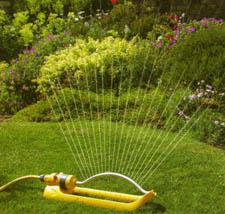
Man's other Best Friend

Man’s other Best Friend

Yes, the weather has been delightfully wet recently.  But all we need is a stretch of 7-10 days of dry, hot days and all our work could be undone, especially if you decided to put seed down.  So keep an eye on the forecast; be mindful of your lawn’s condition; and drag out the hose and sprinkler, if you’re not fortunate enough to have an in-ground irrigation system.

5. When the leaves start falling

Make sure you get excess leaves and debris off your grass as much as is practicable.  Ensure your lawn isn’t covered by a choking layer of dead leaves when the weather turns cold.  Dead leaves left to blanket your grass – especially once the snow starts falling – can destroy what grass plants are there underneath.

I have several large trees on neighboring properties, but only a small one in my front yard.  I have learned my lesson from Falls past, and worry about removing dead leaves only after most – if not all – the trees have lost their leaves.  Otherwise, you will be out there all Fall long.  Work smart, not hard!

6.  Winterfeed

The last step for the Fall, is a Winter feeding that should be applied no later than mid-November.  The Winter feed goes right to the grass roots and is stored there over the Winter.  Once Spring arrives, the root-stored nutrients will give your lawn a growth boost to start the season off right.

Now get to work; and Good Luck out there!

(Cautionary Tale: These tips are based on my experience alone.  I offer no illusions of formal turf training or professional experience.  This is solely what seems to work for me and my Southeast Pennsylvania lawn.  Always proceed with caution and be mindful of conditions in your specific region.)

Cranky Man’s Lawn Epistles ’12: Losing the battle, winning the war

Once again the result of another Battlefield Summer Lawn was both predictable and unavoidable, if you are one of the common folk who struggle to maintain a healthy, vibrant lawn without the benefit of an in-ground irrigation system.

Honey, did you let the dog out?!?

In the last week you lost.  You lost BIG!  Your lawn looks like a short-cropped version of Africa’s Serengeti Plain during the dry season, missing the lions and lionesses lounging about your tinder-dry prairie, waiting for Fido to venture off the front porch.

But if you have been paying attention, you realize you may have lost Battle Summer, yet you could still win The Lawn War!

Question is, did you follow the Cranky Man Rules for Summer Lawn Survival?

  • Follow a regular fertilizing schedule to set your lawn up for success?
  • Cut the grass at higher mower setting once it gets hot?
  • Water your lawn whenever practical in cooler temps and every other day – as a minimum – once it got HOT?  (Yes, even when the grass turns brown.)
  • Refrain from fertilizing and lawn treatments when it’s hot and dry?  (e.g. Did you really need that anti-grub treatment?)

    Hippocrates preaching lawn care, circa 400 B.C.

In the words of Hippocrates … “Do no harm!  And make sure you water regularly!”  (Few appreciate Hippocrates’ legendary reputation for lawn care!)

Yes, watering your lawn even when it’s hot, brown, dry, and as hard as your driveway can make a difference!

The long-term health of your lawn lies in its root system.  Even when the grass looks dead, it’s really just dormant.  Dormant on top, but the roots still function and they NEED water to stay healthy and strong!

This is best demonstrated after a few days of cool, wet weather.  If your lawn is healthy, you should see immediate improvement in greenness and growth.  It will not come back completely green very quickly; but you should definitely notice a difference!

So even if your lawn looks like straw and smells like straw when you water it, you are helping your lawn survive another long, hot summer and setting the stage for a quick, easy lawn recovery once the dog days of summer are over.

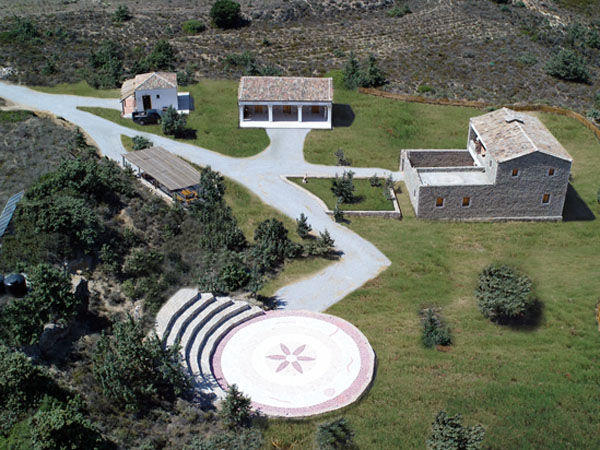
Replica of Hippocrates Garden and Lawn Center on the island of Kos, Greece.

Cranky Man’s Lawn Epistles ’12 – Help your lawn beat the heat

When it comes to my little 1/4 acre of turf, I have a few lawn care prejudices.  They are in descending order of irritation:

  • crabgrass
  • large dogs with inconsiderate owners
  • all other weeds
  • lawn mowing contractors
  • small dogs with inconsiderate owners

As you can see, I consider lawn mowing contractors roughly equivalent to “medium-sized dogs with inconsiderate owners”.  It’s not that I “hate” them per se; and I do not begrudge their need to earn a living or the demand for their services by home owners who simply don’t want to be bothered.  The truth is lawn mowing services rarely care about your lawn.  They cut your grass way too short – no matter how hot it is – in order to make it easier on themselves should rainy weather prevent them from making a weekly cutting. 

But I digress …

The point of this post is to provide some uneducated, experience-related tips on how to help your lawn survive the long, hot, dry summer and then thrive once cooler temps return. 

My front lawn absolutely BAKES during the summer.  An east-by-southeast exposure, and the absence of shade or an irrigation system, guarantees that by late August it looks more like a lawn in Afghanistan than it does one in southeast Pennsylvania.  My back yard is exactly the opposite … plenty of shade provided by the house and large neighboring trees.  It still gets dry; but it doesn’t sun-bake nearly as much as the front. 

Differing conditions should influence how much time and care you dedicate to your lawn’s summer survival.  I will water the front yard every other day during hot, dry weather; but I NEVER bother watering the back yard.

Common sense is the recurring theme in my suggestions for helping your lawn beat the heat and survive the summer:

  1. Make sure you fertilize regularly, especially in the spring and fall.
    • Search the Tag cloud or Categories on the menu bar for Lawn Care to read these posts.
  2. Don’t be afraid to let your lawn grow LONGER once it starts getting HOT. (This is where the aforementioned lawn-mowing contractors are so often no friend to your lawn!) 
    • A well-maintained lawn will look fuller and more lush when allowed to grow longer.
    • Longer grass will collect and retain more moisture, even just from morning dew.
    • Long grass also helps shade underlying soil, helps it retain moisture, and protects the plants’ roots.
  3. When it starts getting hot, water regularly those sections of your lawn that tend to dry out first and turn brown.
    • It’s never to late to water; but do not wait until the lawn is already starting to brown to start watering.
    • Pay attention to weather forecasts for anticipated rains and plan accordingly.
    • Water in the evening when moisture has longer to soak the soil and reach plant roots.
  4. Use common sense when it comes to fertilizing during heat waves and dry conditions.  Don’t fertilize a severely dry or burnt lawn.  You’re likely to do more harm than good.
    • This is generally an issue only with anti-grub applications, normally applied around the 4th of July.  In my opinion, you could do more harm than any lawn pest by applying a grub treatment when your lawn is water-starved.
  5. If worse comes to worse and the lawn turns to straw, watering can still help to keep the roots from drying out completely. 

The most important take-away here was best addressed by my Great Grandpappy* who used to say …

If you cut your lawn like a golf course fairway in May, it will look as lush an airport runway in July! *

(* OK, I never really knew my great-grandfather and barely remember one grandfather, but folksy wisdom always sounds more believable when attributed to someone older, wiser and near death.)

None of these suggestions will guarantee your lawn won’t turn brown.  If Mother Nature doesn’t cooperate with an occasional rain, only an irrigation system will keep your lawn green for any extended period of time during hot, dry weather.  So far this year, Mom Nature has been kind.  But like all women, that could change in the time it takes to narfle the garthok

My lawn does not have an irrigation system.  So I TRY to water every other day (which is a practical compromise between wanting to water every day and the cost of doing so).  But even when I am conscientious about watering, without help from Above, my front lawn will stay green only for so long.  There is NEVER a summer where patches – usually the same spots each year – don’t thin out, turn brown, and resemble more closely straw than grass.  These areas get early special attention in an attempt to mitigate the damage.

The MOST IMPORTANT result is that my lawn usually bounces back pretty quickly because – I like to think – I’m sensible about keeping it in as good a shape as I can BEFORE the long, hot, dry summer starts taking its toll!  The secret is to pay attention to your lawn’s condition BEFORE Mother Nature turns on the oven, and to anticipate what needs to be done to protect it!  

Good luck out there!

Cranky Man’s Lawn Epistles ’12: Good crab – Bad crab

Ah yes … The Summer season is officially upon us!  And as we settle in for three months of hot temps, cool surf, outdoor parties and traditional Summer foods, it’s important that we not forsake the home turf when those hot temps hit.  I will assume that if you have gotten this far without closing your browser, that we are on the same wavelength!

Remember these summer lawn tips:

  • If you haven’t started already, now is a good time to raise your mower settings to allow your lawn to grow longer.  This will help to prevent some of the damage a hot, dry summer can cause by keeping your grass-roots shaded a bit from the searing sun.  And even though we have been getting plenty of rain in May, damaging heat is right around the corner.
  • Once temps start to rise, don’t forget to water your lawn!  Once these May rains end and the heat starts to build, it will not take long for your lawn to dry out.  Making sure your lawn gets water every 2-3 days is crucial.  Blah blah blah … You get the point.
  • DO NOT apply fertilizers to your lawn when it has been hot and dry for some time with no relief on the horizon.  Chemicals that sit on a lawn without water is a recipe for disaster!
  • And finally, enjoy your blue crab, your soft crab, your King crab this summer, but get the crabs out of your grass!

Vile weed, CRABGRASS!

Late May to the first week in June is the most important time for crabgrass treatment.  In previous posts, I put forth my objections to the long-held belief that crabgrass treatments are best applied in the early Spring.  Many lawn supply stores will recommend one treatment in the early Spring to prevent crabgrass from germinating.  But even if crabgrass plants successfully germinate in March or April, the plants will not grow until the heat of Summer hits.  Crabgrass likes it hot!

So there are two theories on crabgrass treatment … The preemergent treatment that attacks the germinating crabgrass plants, and the postemergent treatment that attacks crabgrass as it gets ready to bloom.  (Of course, your lawn supply store will say you need BOTH.  But that’s not always the case if your lawn is in very good condition.)  If your lawn is in poor shape or has a recent history of significant crabgrass, then treating BOTH ways is probably the safe choice.  However, if your lawn is healthy and full, without a significant crabgrass issue, then I recommend an active crabgrass treatment applied just before the heat of Summer activates the growing cycle.

These are the choices that have worked for me.  Your mileage may vary!

I never really liked the preemergent route because it relies on a bit of “soil whispering” which many of us non-professionals is pure guesswork.  Soil temps must hit 55 degrees for several days in a row for crabgrass germination to start.  And who has that kind of precision when it comes to weather prediction and taking soil temp readings???  Not I, I can assure you.  If you know someone in the turf business (No, not the kid at the Lowe’s Garden Center!), they might let your know the perfect timing if you call frequently enough.  So I opt for the simplest way to treat crabgrass, just as I do other weeds.  Wait for the suckers to be there with no doubt and then bring down the wrath of chemical warfare!

I’m also frugal (cheap), so I prefer the one-and-done method of crabgrass eradication.

The trick is timing it right to give your lawn the full benefit of crabgrass protection.  If applied in late May-early June, most crabgrass treatments will be good for three months.  (The reason I avoid early Spring preemergant applications.)   An application now will carry you into late August-early September when temps will cool (i.e. not the best temps for crabgrass growth)

Use a post-emergent product even if you do not see active crabgrass plants.  Preemergents will only work on germinating crabgrass plants.

Here are some other good anti-crabgrass tips:

  • Keep your grass longer!  (Yet another benefit of letting your grass grow longer in the Summer.)  Crabgrass seed need direct sunlight to grow.  Longer grass will keep the soil shaded, frustrating crabgrass growth.
  • Reseed any bare patches.  Similar to the above line of thought, a bare patch with direct sunlight is an inviting bed for crabgrass growth.
  • Water LESS frequently, but for longer durations.  (Not a big fan of this suggestion from an overall lawn health angle.  But if you have an active crabgrass problem you might want to consider this).  The theory is that crabgrass plants have shallower root systems, so frequent and quick watering benefits the crabgrass.  On the other hand, healthy grass-roots are longer and deeper, so less frequent watering that run longer will benefit the good grass, not the crabgrass.  (I can’t say I buy this idea, since ANY watering has to benefit the crabgrass.  So what difference does it really make?  You will have to make this call, based on the condition of your lawn.)

Finally, I share the following link for the Purdue University Turfgrass Science program. 

Cranky Man’s Lawn Epistles ’12: Beware the lure of Big Green lawn $$$!

“AN EDUCATED CONSUMER IS OUR BEST CUSTOMER”
 
Those words were the advertised motto of the Syms discount clothing empire, which enjoyed much success before falling into bankruptcy in 2011.  
 
I always allude to that banner whenever considering a significant purchase and whenever I look for consumer services.  It also bodes as great advice for the average Joe Shmoe who works hard each week of the growing season to render the outside of their home clean and beautiful. 
 
This is important to keep in mind because, although your local lawn and garden center can be a cornucopia of seasonal advice, they are also in the business of maximizing their profit margin.  And they LOVE the lawn & garden OCD types.  Of course, as a die-hard advocate for a robust economy,  I support and welcome their efforts.  I just want them doing so from everyone else’s pocket, not mine.  So with that in mind, I offer you the following advice and precautionary tales.
 
Precautionary Tale #1:  For years I frequented a local outlet for a National fertilizer company; but after several corporate buy-outs and name changes they closed shop.  I found another local, small business lawn and garden center which I now use.  But a friend mentioned that the old place had re-opened under new ownership, so I went to check it out.
 
They had a huge inventory of fertilizer products and all the toys and accouterments with which lawn junkies love to play.  They also had an advisory pamphlet on a proper season-long program for lawn care.  But when I reviewed it, I noticed that they recommended SEVEN lawn treatments a year!  
 
This stuck me as odd, because I do five myself and that’s only when I observe an uptick in Japanese beetle activity.  And this hasn’t been the case for about three years now. 
 
When I reviewed their recommended program, they listed TWO treatments for BOTH crabgrass and grub control.  Yet I knew from experience that if you time the applications properly, one treatment is sufficient.  CA-CHING! Estimated Savings: $160 (assuming I skip the grub treatment when not necessary and one crabgrass application due to the judicious application of one)
 
  • I try to support local small businesses whenever possible.  But when it comes to annual flowers for the home’s landscaping, you cannot go wrong buying flowers in bulk from large chains like Lowe’s, Home Depot, Wal*Mart, etc.  I have always found small specialty garden stores to have excellent flowers; but the prices very high.  Supporting the local economy is admirable, so long as it does not excessively strain the household budget!
  • I have never used a commercial lawn fertilizing service to keep my lawn healthy and good-looking.  Frankly, the serviced lawns do look great, but I can’t imagine the guy on the truck paid to spray your lawn per a pre-defined schedule really pays attention – or cares – about how your lawn looks before he sprays those chemicals on it.  That being said, I can’t suggest that doing it yourself is actually cheaper, as I have never checked on how much a lawn service would cost.  So I provide a link to a Fact Sheet put together by the Ohio State University Horticultural and Crop Sciences for your benefit.

Precautionary Tale #2:  My current lawn fertilizer supplier stocks a high quality spread of lawn fertilizers and treatments.  But I have found that they never carry a granular weed-control product.  That’s granular as in a product with the consistency of course sand.  Instead, they carry only a pellet-type dissoluble, time release product. 

A weed control product of a sand-like quality will cling to active weeds when the lawn is wet.  This clinging allows the chemical to be absorbed directly into the weeds.  A time-released product will work fine, but takes longer.

When I asked what treatment they recommended for active weed control, they suggested a LIQUID weed product.  I wondered why, because a liquid product is more difficult to apply – in my opinion – assuming you have the necessary equipment to do so.  When I mentioned this, they advised that they also rent the equipment needed to apply the weed control product.  (This also goes for the milky spore treatments many lawn centers recommend.  To me, ensuring a even application of the liquid treatment seems way too difficult.)

CA-CHING!  Or so I thought …

But when I asked for pricing on a liquid-based product plus the equipment needed to apply it ($5 per hour), the cost is comparable to a two-bag application of a dry weed control.  The obvious question to me is whether the added effort of applying a wet weed product overcomes the ease of applying a dry one.  You’ll have to figure that one out for yourself.

  • The Cecily Tynan Factor:  Those in the Philadelphia area will recognize the reference.  The objective here is to pay attention to your weather forecast when planning to apply all fertilizers and in deciding whether watering the lawn is necessary.  Some fertilizers – like pre-emergents and grub treatments require the product be “watered in” to maximize effectiveness.  Other applications require a LACK OF RAIN (weed control for active weed problems) to work.  Also when the weather gets hot, watching the local weather for potential rain and even a good thunderstorm would preempt the need to drag out the hose and up your household water bill.
  • I covered lime applications for lawns in my last Lawn Epistle.  And although lime is not an expensive lawn product, the need to apply lime is often overstated for those lawn aficionados with already healthy lawns. 

The point to all of this is that you should get to “know your lawn” to know what it needs and what it does not.  Then you need to research your treatment options and decide what works best for you.  Lawn care can be an expensive proposition.  But you can render it as economical as possible – like any other needed product or service – by doing your homework and seeking the best solutions at affordable prices. 

Either way the idea is to keep that lawn clean, green and healthy when the weather is at its best, so your lawn can withstand the tests of summer.

Good luck, and I’m always here for any questions.

Cranky Man’s Lawn Epistles ’12: To lime or not to lime … Rain worries

rain-clouds-enjoy-waterBefore I get into the question of whether lime applications are necessary, I have to express my concerns over the lack of normal Spring weather.

Where is all the rain?!?

We were supposed to have showers this week; but all we got were very light, very short sprinkles.  I patched and seeded a number of bare spots on the front lawn last week.  But seed isn’t going to grow without moisture; so I’m already dragging out the hose to water those areas.  And if we don’t get some substantial rainfall soon, I may start wholesale lawn watering.  It’s WAY too early for that, but what choice does one have?

What we need a nice stretch of 2-3 days of soaking rain.  And we need it soon!

Rainfall totals for the first months of the year are way down, more so now for March and April; and that presents some concerns about where we are headed.  I can remember one year – I’m guessing 1999 – where rainfall for the entire summer was non-existent!  By August everyone’s lawn was a brown, crunchy straw.  (When you can HEAR your lawn crunching underfoot, you’ve got REAL problems!)  Once the rains came some lawns recovered, others did not.  You really don’t want to be in the latter group.  The costs and work involved in replacing a lawn are not pretty!

If the weather does not become more favorable soon, I suggest cutting your lawn at the highest mower setting you have.  Longer grass leaves will provide some protection for grass-roots should they begin to dry out, and longer grass can help the ground retain moisture longer.

So … Do a little Rain Dance …

Make a little love …

Get down tonight!

Sorry … a little KC and the Sunshine Band moment.

Now to the subject at hand … Lime treatments for your lawn!

And right off, if you pay attention to such things, you would have noticed that I already made a mistake!  Lime treatments are not for your lawn, they are for the soil in which your lawn grows.

Lime is essentially a “soil sweetener”.  It will make acidic soil less acidic.  Lawns like a slightly acidic soil.  Acidity/alkalinity is measured in pH levels.  A healthy pH level for lawn health is between 6.2 – 6.8 pH.  7.0 pH is considered “neutral” acidity/alkalinity wise.  The lower the pH, the higher the acidity.

Not quite ... but save these for later!

Not quite … but save these for later!

Lime adds calcium and magnesium to the soil.  There are chemical processes at work here which I do not pretend to understand.  But if you’re interested in delving into that aspect, check out Lime and Your Lawn.

So, does your lawn need lime?

Here’s a Cranky Man Secret:  I have added lime ONCE to my lawn; and I have learned two things since then.

  1. One lime application is not nearly enough to make a difference in the soil if my lawn had needed it.  Multiple applications of lime over a number of years is required to change the acidity level of your soil.  Lime is absorbed VERY SLOWLY.  Studies have shown that it can take as long as two years for lime to penetrate 2 inches into the ground!
  2. I really don’t need lime in my lawn.

If your lawn is already healthy, chances are lime applications will not make a difference.  Your soil is probably within an acceptable range of acidity.  Soils vary in acidic level depending on a number of environmental issues, including acid rain and the use of synthetic fertilizers.

If – on the other hand – your lawn is not particularly healthy, DO NOT rush out and buy lime!  If your lawn is not overly acidic, lime may actually harm your lawn.  Always have your soil tested FIRST!!  Then if you end up applying lime based on those results, have the soil tested again each year to prevent “overshooting” which could cause even more problems that can be much harder to fix!

Soil testing can be done by home and garden centers or landscapers.  Call around first to find someone in your area.

More tips from Lime and Your Lawn:

  • If you apply lime, never use more than 50 lbs. per 1000 square feet of lawn.
  • Do not apply lime when applying other fertilizers, the combination could be lethal to your lawn.
  • Do not apply lime when it’s HOT.  Spring or Fall is the best time to apply lime.  If you apply lime in the Fall, make sure you leave several weeks between the lime application and your Winter fertilization.
  • There are two kinds of lime (calcitic and dolomitic).  Make sure your testing indicates which type should be used, as they offer differing ratios of calcium carbonate and magnesium carbonate.  (And that’s about all the chemistry I can handle!)

For those who like to do their own research, I suggest Penn State University, College of Agricultural Sciences, Center for Turfgrass Science, Turfgrass Advice.

As always, good luck out there!

Cranky Man’s Lawn Epistles ’12: Bag or mulch lawn clippings? An age-old question …

For those of us living in the Philadelphia region of southeast Pennsylvania, it’s quite easy to tell how healthy your lawn is early in Spring.  If you are having a difficult time cutting the grass using medium height adjustments on your mower because the grass is too thick to cut, your lawn is in very good shape!  If you are busting your hump lugging heavy bags full of fresh, moist lawn clippings to your trash can or lawn bags, your lawn is in prime condition for a healthy summer.

If – on the other hand – your can cut your lawn without bagging clippings at all (medium height setting), then you have much work to do.  If you are cutting your lawn just to make it LOOK a uniform length because the only grass growing is in huge clumps in limited areas, you need all the help you can get.

If – however – you don’t really care because you have a lawn care service doing all the fun stuff, then you haven’t been paying attention.  You should skip over this and save yourself some time.  Shame on you!

My message today deals with the Question of the Ages … Should I bag or mulch my lawn clippings?  But if your lawn is in tip-top shape and you are mowing the right way – in my humble opinion, the question really is should I TRY to mulch or should I bag?  I say this because, if you have your lawn in top shape, mulching your lawn clippings should be very difficult, if not impossible.

Your lawn in April should be in the Best Shape it will be all summer long.  The grass will be its thickest, its fullest, its greenest, and its wettest condition.  If you can cut it effortlessly while still cutting shorter than you will in the heat of summer, you might need to pay additional attention in the form of fertilizing and general care to your lawn.

This may not be an issue if you are using a heavy-duty industrial mower.  Though you still may want to mind just how deep those mulched clippings get.  Too much of a good thing is still too much.

Excess grass cuttings and clippings tend to lay on your lawn and can – if left to degrade on their own sweet time – cause damage and discoloration.  I use a fairly good but light Toro mower with a 6.5 cubic liter, 4-stroke engine.  It’s light-weight and effective as a mulcher.  However I tend to cut the lawn a bit shorter in early Spring when my lawn is particularly thick.  So when I mow,  the Toro has a difficult time keeping up and mulching the thickest Spring grass.  Rather quickly these clippings  will accumulate under the cut housing of the mower and end up spilling out the sides or from beneath the mower when I change directions.

To me it’s an unsightly mess on the lawn, and yes it can cause damage if excessive.  So bagging the clippings in early Spring is an absolute must … in my humble opinion!

Once the heat or – worse – the lack of rain thins the lawn out, I’ll raise the mower settings and mulch the clippings into the lawn whenever possible.

Funny aside … Recently we changed our waste removal (i.e. trash) contractor.  As part of the information package they provided us were tips for managing your household trash and lawn/garden debris.  One of their recommendations for disposing of lawn clippings was to “top mulch”.  In other words, just leave the clippings collect on your lawn week-after-week as you mow instead of bagging them or dumping them into the trash hopper they provide.  In other words, just let them coat your lawn so We – The Waste Disposal Company – don’t have to bother hauling it away.

This is not a recommended course of inaction! 

One more note about mulching … Do not be concerned about mushrooms appearing on your lawn.  Mulching your clippings helps to feed your lawn by recycling important nutrients.  So you should always TRY to mulch whenever it’s practical, limited by what has already been discussed here.  But these same nutrients are also a favorite condition for mushrooms, which are fungal growths that thrive on the same natural material your lawn loves.

If you need expert verification, munch on this from americanmushrooms.com:

You can’t get rid of lawn mushrooms without getting rid of the lawn. Likewise, you can’t get rid of mulch mushrooms without getting rid of the mulch, and you can’t get rid of potted-plant mushrooms without getting rid of the plant pot. Fungi are a vital part of every plant-based ecosystem, whether natural or manmade. Lawn grass would not be very healthy if there weren’t mycorrhizal fungi on its roots.

In short, the presence of mushrooms is a sign of a healthy, well-fed lawn!  Just make sure small children and pets aren’t eating them as they sometimes tend to do.  Most lawn ‘shrooms are non-toxic but you can NEVER be too sure.

Next Cranky Man Lawn Epistle:   To Lime or not to Lime … That is the Question!

Cranky Man’s Lawn Epistles ’12: Getting started, Planning lawn treatments

It’s official!  Spring has sprung in southeast Pennsylvania!

Spent the second half of a fine Spring afternoon this weekend making my Winter Clean-up and Lawn Inspection mow of the front yard.  Plan to do the same on the Back Meadow on Friday, weather permitting of course.

Proof that Cranky Man has an adequate lawn!

I like to split this initial cut, clean-up, and health check in two parts because to do it right takes time.  Much more time than a simple mow.  And with the additional effort of raking out the Fall and Winter debris of leaves, twigs, doggie droppings (both domestic and imported), dead growth, etc. etc. etc. … my back begins to ache and my attention starts to wander.  So dividing the project into smaller parts is best suited for a quality effort and a complete diagnosis.

My diagnosis usually goes along the lines of the following:

  1. How is the overall health of the lawn?
  2. Are there areas that need an extra level of effort to give a good Spring start and an improved chance of surviving the summer?
  3. What needs to be done in those areas?
  4. Should we aerate or dethatch?
  5. What’s the prospective schedule for lawn fertilization and treatments look like?

For me, these questions always start with the lawn in front of the house.  It’s the area that gets beat up by sun and heat every Summer due to an eastern exposure and lack of shade trees.  My backyard is ALMOST on annual cruise control, so long as I fertilize and weed treat sufficiently to overcome the neighbors’ lack of Lawn Attentiveness.  As was the case last year, you can anticipate a repeat of Operation Digitaria to protect The Homelands from the scourge of Neighboring Crabgrass!  More on this in a later Epistle!

So anyways, my answers to the Five Questions of Lawn Health were:

  1. Pretty good.  Actually downright lush!  Largely due to a light Winter and an early Spring.  For the most part we can proceed normally as any other Spring.   
  2. Worst problem area along the driveway

    Except for the areas I saw that need some help.  As mentioned above,  Summer’s sun and heat does damage every year.  It can’t be helped, though we try to prevent it.  This year we have the usual areas out front that have bare spots, where heat-damaged grass died off completely and nothing has as yet taken root.

  3.  Usually I just let Nature take Her course and see what happens.  But this year I have decided to be a bit more proactive in these annual trouble spots.  To see if maybe we can give these areas a leg up on surviving the summer without the noticeable bare spots developing again in July-August.  So I have decided to re-seed these areas.  But before I do, I am going to fill in the holes with quality topsoil, seed over the areas, then lightly cover the re-seeded areas with peat moss.  Covering the seed LIGHTLY (!) with peat or topsoil keeps the seed moist when you WATER it and keeps the birds from eating your seed.
  4. Aerate … Yes!  I’m overdue on that because I never got around to it last year.  But it will have to wait until the end of April, maybe early May.  Dethatching?  No.  I dethatched a few years ago; and even if I thought it needed it, I would wait until the Fall to do it.  But certainly you can dethatch in the Spring, if you think your lawn needs it!
  5. Since I am planning a rather extensive seeding operation as described in 3. above, I will probably apply my April weed ‘n feed only to the Back Yard – the unseeded – lawn.  I will skip the Front Yard because applying a weed ‘n feed over a newly seeded lawn will prevent grass seed from germinating.  I can probably get away without the April weed ‘n feed for the Front Lawn because I usually apply it TWICE a year (Spring & Fall), not just in the Spring.  But not applying a weed ‘n feed will mean more work controlling weeds in certain Front Lawn areas; but I’m willing to try this to get my front lawn in better overall condition.  If your weed problem is bigger that your bare-spots problem, I would definitely apply the weed ‘n feed and skip the re-seeding until September then skip the Fall weed ‘n feed.  

So there’s my Spring Action Plan!  What does your’s look like?

A high traffic area along the landscaped beds

PLANNING LAWN TREATMENTS

In general, I like to apply fertilizers and treatments five times a year!

  1. Spring weed ‘n feed … mid-April …  There is nothing wrong with seeing a few early Spring weeds on your lawn, so don’t panic and run out to buy weed ‘n feed right away.  If you use a granular weed treatment, it actually works quite effectively on weeds already present on the lawn.  So you’ll get’em eventually!  Patience, grasshopper, patience.  If you do apply a weed ‘n feed IN A GRANULAR FORM, which is used to kill a visible and significant weed presence, make sure you apply it when the grass is wet (an early morning dew or following rain that will not return for 48 hours).  Forty-eight hours of rain-free weather is needed for the active weed agent to work effectively.  (If you are applying weed ‘n feed for prevention as opposed to treatment, then you can use a weed product in a time-release form (i.e. non-granular pellets) that will eventually kill any present weeds – just more slowly – and provides for longer weed prevention.  In this scenario, the lawn does not have to be wet.)
  2. Preemergent (anti-crabgrass) … Memorial Day weekend … Previously I was under the misapprehension that pre-emergents should be the FIRST treatment your lawn gets as early as late March.  But recently I was schooled in the fact that a pre-emergent has a short (approximately 3 months) lifespan on the ground and is MOST effective when applied just before Crabgrass Hunting Season begins.  Since crabgrass germinates and blooms when the summer temps get HOT, applying it in March or April will not cover your lawn through July and August unless you re-apply.  Who wants to do THAT?!?  Caveat:  The dates used in all these treatment suggestions are based on MY experience in Southeast Pennsylvania.  You may have to tweak the order and timing of some of these treatments if your regional summer temps are different.  
  3. Anti-Grub treatment (if needed!) … 4th of July give or take a week …  Grubs (fat white worm-type thingies) will usually hatch and begin feeding in late June-early July, so this is the best time to apply a grub control.  However, this is routinely one treatment I will forego, depending on what I see in grub and beetle activity.  In recent years, we have seen much fewer Japanese beetles during our summers, following several summers where the beetles were prolific.  So I have skipped this treatment the past two years.  Furthermore, several readings have suggested that even if you find grubs present in your lawn, there may not be enough of them to warrant a relatively expensive (relative to fertilizers) grub application to eliminate them.  One suggestion was to survey a patch you suspect has turned brown from grubs and “flap scalp” the turf from the underlying soil.  If you find evidence of more than 10 grubs per-square-foot, then a grub application is essential.  This product should be WATERED into the lawn within 2-3 days to be most effective!
  4. Fall weed ‘n feed … mid-to-late September … I’ll usually apply a preventative or “momentum-type” application of the non-granular weed ‘n feed.  Again, if significant weeds are present, apply when the lawn is wet and during a period where 48 hours of rain-free weather is expected.  
  5. Winter fertilization … no later than Thanksgiving … The final lawn treatment on the year feeds your grass one last time before it goes dormant for the Winter.  The nourishment is stored in the grass’ roots and provides a burst of growth in the Spring when temperatures start to rise. 

Once you develop a plan for you lawn, try to stick to it as best you can.  But flexibility is essential should conditions (heat, excessive rain, heavy grub and Japanese beetle presence, neighbors who don’t care or follow your advice, etc.) warrant a change in course.

Remember, it’s not just a lawn; it’s part of the family!

Cranky Man’s Lawn tips for Southeast Pennsylvania

Dude … It’s February!  Even I’m not THAT obsessive.

But I’ll throw my faithful followers a few bones …

  • February is a good time to get your lawn equipment in top working condition.  Start looking into qualified lawn mower repair and maintenance businesses. Compare prices and get your mower in for its seasonal tune up now.  If you are a dedicated mower or you did not have your mower serviced last year, make sure the service person replaces the mower’s cutting blade.
  • Read up on aerating, fertilizing, dethatching, and other lawn-health related topics.  Only you have the best, closest perspective on what your lawn needs.
  • With that in mind, pick a good weather day and complete a walk-around survey of your lawn.  Note bad spots where thinning or bare areas exist. Look for spots where thick dead growth lies just beneath or even blocks out underlying grass plants (dethatching). 
  • Consider the amount of traffic your lawn saw last year from children, pets, equipment (like your mower), activities (parties, sports, play) and consider the benefits of aerating your lawn during the early, wet Spring.

In short, get ready for another lawn season.  The time you spend and planning you do today can help your lawn tomorrow, and will give your lawn the best shot at surviving the hottest stretches of the upcoming summer. 

One last tip:  If you are on the down slope of Hill 50, consider using this time before Spring to work on your body’s core muscle groups.  Nothing will put you behind your Lawn Schedule like a balky back!