Comonwealth Court Judge Robert Simpson upholds Pennsylvania’s voter ID law and refuses to issue injunctive order to stop law from taking effect for November election!
No doubt this will head to higher Court for immediate injunction and appeal.
Comonwealth Court Judge Robert Simpson upholds Pennsylvania’s voter ID law and refuses to issue injunctive order to stop law from taking effect for November election!
No doubt this will head to higher Court for immediate injunction and appeal.
Lobster, lobster everywhere and “market price” menus

We’re gonna need a bigger butter boat!
The lobsters are running wild off the coast of Maine. Lobstermen are bringing to market so many of the popular crustacean that prices have dropped dramatically. As of last week lobster – once selling for as much as $4.00 a pound – is down to $1.35 per pound.
But what is especially good for those of us in plastic bibs, toting buckets of melted butter is not necessarily good for those who sweat out the challenges of supporting a family from the dangers of Old Man Sea and the unpredictable mechanics of supply and demand. These lobstermen find themselves working even harder to bring in the quantities needed to offset the low price, supply driven market. It’s an inescapable cycle.
The lobstermen’s problem should be a good thing for lobster lovers at the other end of the lobster pipeline however. The words “market price” on restaurant menus is always a cause for pause when cost-conscious diners consider dabbling in the finer culinary seafood options. One never wants to be embarrassed by asking what the “market price” is, when the answer is likely to be “too much”. So now would seem to be the best time to take advantage of more diner-friendly market conditions.
At the very least, you can find out whether your chosen dining establishment really lives by the “market price” mantra or simply uses it to fleece uninformed customers. If you get the chance to investigate, let us know what you find!
.
The hidden reality of the Affordable Care Act
For a nation already experiencing physician shortages, the new healthcare law is likely to widen the gap. The Association of American Medical Colleges estimates that by 2015 the country will be short over 62,000 doctors of those needed to provide sufficient healthcare options to its citizens. By 2025, the estimated shortage will be 100,000 doctors, and that’s before any consideration is given to the effects of the ACA (Obamacare) will have on doctor demand.
An example is the case of California’s Inland Empire, a region that covers the counties of Riverside and San Bernardino. The Inland Empire has grown by 42% since the turn of the century. (2000 that is, not 1900.) The increase of over 640,000 people comes along with a jobless rate of 11.8%!
In view of recommendations that any given region be serviced by 60-80 primary care and 85-105 specialists for every 100,000 in population, the Inland Empire barely makes do with an average of 40 primary care physicians and 70 specialists per 100,000. The region has a more complicated problem attracting doctors, being in such close proximity to Los Angeles and Orange County where doctors prefer to work due to the prospect of better paydays.
The real kick in the teeth for Inland Empire healthcare is the 300,000 new patients that will be seeking routine medical care when the ACA extends coverage to them in 2014.
Normally these individuals would seek care at hospital emergency rooms, which is not the most cost-effective way to meet their needs. And the purpose of this post is not to suggest that extending healthcare coverage to them through the ACA somehow creates a cost issue from nothing. But it does point out another rather interesting effect.
Once healthcare coverage is extended to these individuals, they will seek the preventative, health-maintaining care they used to neglect. Again, all good things … Any effort to see doctors when healthy and before medical problems develop will reduce the overall per capita cost of healthcare. The question though becomes what happens to accessibility and convenience of healthcare once the shortage of physicians is exacerbated by the sudden increase in better insured patients?
As Mark D. Smith, head of the California HealthCare Foundation, suggests, “It’s going to be necessary to use the resources that we have smarter in the light of the doctor shortages.” For those living in areas like The Inland Empire, the prospect of de facto rationed medical care has to be the real concern, as it will be anywhere doctors are in short supply already. Longer waits for well-care doctor appointments, more trips to emergency rooms for less-than-urgent medical issues, and substantial backlogs for tests and other treatments are a very real possibility.
In the end, supply driven rationing could very well be the unavoidable consequence of the Affordable Care Act.
.
Mike’s lazily delicious ribs …
As I sit here writing this, I am cooking up a batch of short ribs on the barbecue. I’m a notoriously lazy griller, but my comment cards indicate that many who have partaken are generally impressed. As a lazy griller, I refuse to deal with the muss and fuss of charcoal. I have not built a stone and mortar Cathedral of Grilling in my backyard. I choose a gas Weber that’s push-button easy to use and even easier to maintain.
My ribs are slow cooked, wrapped in aluminum foil and seasoned with whatever flavorings I can find in the spice rack (as a minimum onion, pepper, garlic, oregano, and a bit of crushed red pepper). At 400 degrees of indirect heat, it takes two hours for my ribs to be perfectly cooked … roasted throughout without the annoyance of falling apart, yet melt-in-your-mouth juicy and fall-off-the-bone tender.
Once the ribs are done, remove from the foil. Place on the grill curved side down, coat the tops thoroughly, and let grill for 10 minutes. Reduce the heat by half; flip the ribs; coat the insides and grill for five minutes. Then one more flip and re-coat for another five minutes. If they do not turn out well-cooked and delicious, you messed up the easiest rib recipe on earth!
.

A $1 million lawn sprinkler?
For a good chuckle read the story of the Union Fire Company in Bensalem, PA and their new $1 million boat toy, paid for by the taxpayer via the Department of Homeland Security. It’s an interesting tale of inter-Township jealousy and pettiness, poor boatmanship and weekend showboating, officially licensed largesse and fiscal mismanagement.
But the real horror is a Homeland Security budget that allows for the disbursement of $1 billion a year that encourages pushing money out the door with little obvious investigation and even less judgement as to what’s really needed and where. The good news is, if you lose an IED (improvised explosive device) somewhere along the Delaware River above Philadelphia, the Union Fire Company can help you find it with their $37,000 sideview sonar!
.
Lastly, another iteration of my most recent, favorite discussion topic – Pennsylvania’s new voter ID law …
It’s been fun watching the Democrats in Pennsylvania throwing a fit over the new photo voter ID law. It seems to matter not that the U.S. Supreme Court weighed in on the subject in its 2008 decision on Indiana’s version of the law. They somehow think the Pennsylvania Supreme Court will hold a softer view of their complaints that the law is an unreasonable burden and barrier to voting rights. It’s telling that they are forgoing the federal USSC route, which is usually the very first route taken when it comes to alleged civil rights violations.
Their biggest weapon in trying to prove the dark underbelly of the law has been the Commonwealth’s own data relating to mismatches between voter registration records and PENNDOT driver licenses.
Holy poll tax, Batman! 750,000 Pennsylvanians might be “disenfranchised”!!
Uh … not quite …
As I argued here earlier, the numbers cited by the Pennsylvania Department of State are seriously flawed. And The Philadelphia Inquirer‘s own look into the numbers showed some very interesting inconsistencies. Some of the individual cases of “disenfranchisement” were downright amusing. Names found on the mismatch list included former Philadelphia Mayor W. Wilson Goode and his son WWG Jr., four Philadelphia Councilmen, and former Veterans Stadium drunk court judge, Seamus P. McCaffrey.
The funny part? All of them have valid Pennsylvania driver licenses! What’s a panicky Democrat to do?!? Why keep on truckin’ of course!
The problem – as one can imagine when it comes to record-keeping and government – is in the details. Seems the Commonwealth’s databases and operating systems have a real issue with the nuances of people’s names. Apostrophes, hyphens, capitalization, and even spacing threw its PENNDOT-voter registration for a loop. Many of the names showing as mismatched are really nothing more than the fallout of poor programming and inconsistent inputs.
But one note should make the Democrat Champions of the Disenfranchised feel a bit better. In today’s Philadelphia Inquirer, Emily Bazelon, a senior editor at Slate, describes information passed to her by an anonymous insider purporting to show that the data on potentially endangered voters skews no further Democrat than it does Republican, with many voters living outside both Philadelphia and Pittsburgh (i.e. more likely Republican) also being affected. But of course, Ms. Bazelon also jumps to the conclusion that this initiative was an effort to disenfranchise Democrats overwhelmingly more so than Republicans.
At least now the whole picture is finally coming out, and it supports a politically neutral law designed to facilitate a more secure vote!
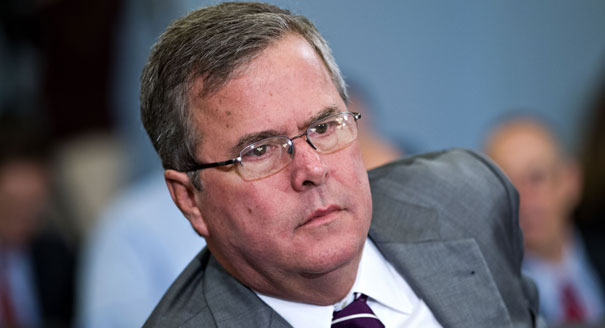 Thank you, Jeb Bush for putting into words what I have been thinking for quite some time! How exactly to express my frustration with a National Leadership that is getting absolutely nothing done. Nothing fair, nothing honest … simply nothing at all.
Washington, D.C. is broken. And while Jeb Bush touched on one aspect of the problem – the severe hyper-partisan divide, my frustration is centered on another cause of this political stagnation.
What has happened to the Moderate Middle in American politics?!?
First off, allow me to lay the basis of my beliefs for this post:
I have a HUGE issue with this blatant misrepresentation, intended to do nothing more than silence all but those on the extreme Right or Left of the political parties. This is also problem relevant to BOTH parties, although RINO seems to get much more play than DINO. In my opinion, Liberal Dems are simply more subtle in their efforts to trample over The Middle.
There was a time when the Democrats included conservative elements, such as those in The South known as Dixie Democrats. There was also a time when there were Liberal Republicans, those who were more liberal on social issues while sticking to the economic virtues extolled by established GOP Conservatives.
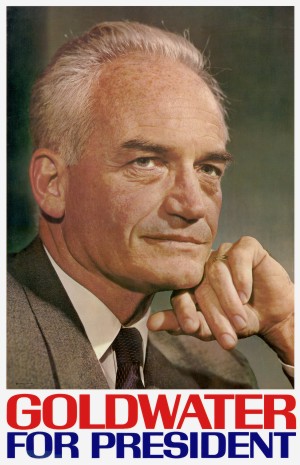
Barry Goldwater, a stalwart Conservative Republican in the ’60s and ’70s was more tolerant in his views on social issues. Goldwater even appreciated the need for Liberal viewpoints as a counterweight to conservatism. Anticipating that Somewhere in the Middle the two would meet!
Well, that’s simply not happening anymore …
I consider myself a Moderate Republican with conservative leanings. I believe in Smaller Government, reduced Government spending, and a strong National Defense. But I also hold more moderate views on Social Issues (e.g. poverty, illegal immigration, LGBT lifestyles, education, and women’s rights). I believe there are times when increased Government spending is both necessary and unavoidable (e.g. economic crises, natural disaster, military conflict, international leadership).
I have a pragmatic view about taxes. I hate like hell paying them. I despise paying more of them. But at times you simply have to cringe and bear it. And yes, some people should pay more if their financial means allow for it, especially when the condition of the fiscal house rivals an EPA Superfund site.
The spread of views I possess apparently classifies me for the title RINO. Not that I care …
Yet this explains exactly how we have gotten to the point in this country where no National Leader will dare make compromise or reach “across the aisle” to work towards solutions to our very real problems.
I wholeheartedly agree with Jeb Bush’s statement, “If you could bring to me a majority of people to say that we’re going to have $10 in spending cuts for $1 of revenue enhancement — put me in, coach.”
Dealing in absolutes in politics is a recipe for stagnation. Stagnation in Leadership, stagnation in developing solutions to real problems, stagnation in progress, stagnation in a much-needed, too long developing economic recovery. What you get – what we have now – are both the Left and the Right burrowing down and digging in behind jingoism and intransigence.
So how did we get here?
In essence, the Political Middle has abandoned the political field of play to both political extremes. It’s simple really to understand. Most people disdain or – perhaps more accurately – are apathetic towards politics, especially given its hateful tone in recent years. For those with no hard and fast anchors on the more edgy political and social questions of the day, politics are just nasty, dirty, aggravating … a waste of time better spent elsewhere. In some ways, it’s hard to blame The Middle for its retreat.
On the other hand, those individuals who possess solid political and social issues anchors, see politics as a Means to their Ends. And this is magnified in those who willingly describe themselves as Ultra-Liberals or Right Wing Conservatives. For instance, they recognize the importance of the primary vetting process for weeding out Presidential candidates they perceive as weak on their respective anchor issues. This is why the early primaries in Iowa, South Carolina, New Hampshire receive such out-of-proportion attention. By the time those of us in Pennsylvania get the chance to cast a primary vote, the candidate list has been pared down to one or two candidates. Indeed they will simply be the candidates who could repeat their talking points without making the Left or the Right throw up in their mouths.
This explains how we so often find our National political choices limited to Evil and The Lesser of Two. It explains why many well-qualified individuals will forego involvement in politics and the responsibility of civic leadership. They simply won’t subject themselves to cannibalization by those on the edges of the political spectrum.
Yet few of those who survive this vetting ordeal can be elected without the votes of the Political Middle. And so we see, as soon as the primary process ends, the rush by the annointed candidates to appeal to The Moderate Middle. Their sole objective: to win a general election so they can continue to pander to the only segments who will pay attention to what they do and say afterwards – The Left and The Right.
And so the cycle repeats.
What has happened to the Political Middle?
I guess they think they have better, more important things to do. They do not appreciate that crucial decisions on issues and problems that could potentially affect them for years are being made without their input, long before they – The Middle – even realizes another Election Day is coming. And these decisions are not limited to the social issues that drive stalwart Liberals and Conservatives to action. They include decisions critical to the economy, to education, to fuel and energy prices, the environment, the deficit, and ultimately their futures and the futures of their children.
The Middle’s political apathy is – mildly put – mind-boggling!
So while we wait for America’s Political Middle to wake up to today’s reality, the partisans dig in and refuse to budge, refuse to solve, refuse to govern. The economy continues to falter; the federal deficit continues to grow. We wait for yet another Presidential election where our choices are weak and uninspiring; all the while knowing, nothing’s going to change regardless of the outcome.
Jeb Bush recognizes part of the problem. When will we recognize the solution is a formidable, continuous presence of Moderate political voices?
Saturday night Mrs. Cranky and I attended the wedding of a close friend’s daughter. The events were held in two of the area’s nicer venues … the wedding ceremony atop The Water Works facility on the Schuylkill River; the reception across the Delaware River at the Camden’s Adventure Aquarium.
Both venues were new experiences for me, which made both memorable. The reception at the aquarium was very well done for the most part, especially if you like the idea of cocktails in the shark tunnel. Eating with the carnivores – even if it’s only appetizers and hors’ devours – was a trip!
Unfortunately, the Camden waterfront was alive with another kind of species that night … teens and young adults attending hip-hop artist, Drake‘s concert at the Susquehanna Center. I only say “unfortunately” because the Drake event was letting out just as the wedding was concluding. There’s nothing like waiting in traffic for an hour, then taking a midnight tour of Camden after leaving a wedding reception!
As we reached our car for the hour-and-a-half trip that normally takes 40 minutes, I spied a recognizable shape laying on the ground near the rear wheel. Someone had lost their wallet. Immediately – as only a parent of several young adults could – I made a mental bet with myself that this was not the wallet of one of the wedding attendees.
Bullseye!
The wayward billfold revealed the owner to be a 19-year-old Philadelphia resident and student at St. John’s University. After rifling through it looking for identification (wink, wink), contact information (none), and worthy plunder ($30 in cash including a $2 bill and two Dunkin Donuts gift cards were not worth sullying my impeccable reputation over.), I tossed it in the car and resolved to leave it go until the next day when I wouldn’t be cussing up a storm at bottlenecked traffic, GPS confusion, and ineffective spousal efforts to get me calmed down. Damn you, Drake!!
After a Sunday morning perusing the paper and intaking copious amounts of coffee, I turned to contacting the now walletless owner. After a shocking inability to find St. John on Facebook (Isn’t EVERYONE under the age of 40 on Facebook?!?), I turned to the on-line version of the Philadelphia White Pages. Ten minutes later, I had found my quarry.
After a quick noontime phone call, where I smiled to myself as St. John’s dad asked the age-old question, “Where the HELL is your wallet?!?”, St. John’s sheepishly thanked me, had my cell number and address (I had to trust him, right?), and a plan to head to my house immediately to recapture his lost identity and Dunkin coffee credits.
That was until he called me 45 minutes later to let me know they were stopping for BRUNCH on the way! St. John’s swore it “just came up”. I sensed a female – or two – might have been involved, but I let it go. I had no big plans, aside from another trip to the cell phone store to becalm my electronic-annoyed spou … (Nah, that would just get me in trouble.)
My lone condition in a situation like this is that The Losee has to expend the overwhelming bulk of effort to regain his lost and found property. It was fortunate – for St. John – that I had no other plans that day, or he would have been tracking me all week-long throughout the Mont-Phil region, playing catchup to my active, vivacious lifestyle.
OK … It wouldn’t have been all THAT difficult … or vivacious. Sad, but true …
Anyways around 3:00 PM (about three hours after our phone conversation) St. John’s knocked at the door, funky-colored baseball cap on backwards. He was an amiable kid, respectful and truly relieved to have reclaimed his personal stuff (and not for the first time, he intimated). He made no offer of reward, which was OK by me (but not so much my father-in-law). Afterall, he’s a college kid; and I would have refused it anyway, given his young stature.
No, we won’t be hangin’ out anytime. And there certainly won’t be any Drake concerts together in our future. But hopefully he learned a few things about personal responsibility (Who am I kidding, really?) and maybe – someday – he’ll pay the good deed forward.
Ya never know …
Ah yes … The Summer season is officially upon us! And as we settle in for three months of hot temps, cool surf, outdoor parties and traditional Summer foods, it’s important that we not forsake the home turf when those hot temps hit. I will assume that if you have gotten this far without closing your browser, that we are on the same wavelength!
Remember these summer lawn tips:
Vile weed, CRABGRASS!
Late May to the first week in June is the most important time for crabgrass treatment. In previous posts, I put forth my objections to the long-held belief that crabgrass treatments are best applied in the early Spring. Many lawn supply stores will recommend one treatment in the early Spring to prevent crabgrass from germinating. But even if crabgrass plants successfully germinate in March or April, the plants will not grow until the heat of Summer hits. Crabgrass likes it hot!
So there are two theories on crabgrass treatment … The preemergent treatment that attacks the germinating crabgrass plants, and the postemergent treatment that attacks crabgrass as it gets ready to bloom. (Of course, your lawn supply store will say you need BOTH. But that’s not always the case if your lawn is in very good condition.) If your lawn is in poor shape or has a recent history of significant crabgrass, then treating BOTH ways is probably the safe choice. However, if your lawn is healthy and full, without a significant crabgrass issue, then I recommend an active crabgrass treatment applied just before the heat of Summer activates the growing cycle.
These are the choices that have worked for me. Your mileage may vary!
I never really liked the preemergent route because it relies on a bit of “soil whispering” which many of us non-professionals is pure guesswork. Soil temps must hit 55 degrees for several days in a row for crabgrass germination to start. And who has that kind of precision when it comes to weather prediction and taking soil temp readings??? Not I, I can assure you. If you know someone in the turf business (No, not the kid at the Lowe’s Garden Center!), they might let your know the perfect timing if you call frequently enough. So I opt for the simplest way to treat crabgrass, just as I do other weeds. Wait for the suckers to be there with no doubt and then bring down the wrath of chemical warfare!
I’m also frugal (cheap), so I prefer the one-and-done method of crabgrass eradication.
The trick is timing it right to give your lawn the full benefit of crabgrass protection. If applied in late May-early June, most crabgrass treatments will be good for three months. (The reason I avoid early Spring preemergant applications.) An application now will carry you into late August-early September when temps will cool (i.e. not the best temps for crabgrass growth)
Use a post-emergent product even if you do not see active crabgrass plants. Preemergents will only work on germinating crabgrass plants.
Here are some other good anti-crabgrass tips:
Finally, I share the following link for the Purdue University Turfgrass Science program.
Memorial Day been observed in the United States since the Civil War. Though many towns lay claim to its origins (also known as Decorations Day), legend states that Southern women were the first to decorate the graves of loved ones and neighbors in the immediate aftermath of the War Between the States. In 1868, a little noted successor to Ulysses S. Grant as General of the Army of the Potomac, John Logan declared Memorial Day to fall on May 30, 1868.
In 1967, the U.S. Congress made the title “Memorial Day” official on a national level. And just a year later Congress passed the Uniform Holidays Bill, which moved Memorial Day and three other federal holidays to Mondays.
Leave it to Congress to screw up a good idea!
Now before you flip out at me, let me assure you that I too enjoy a long three-day weekend. But in reality, Congress’ admittedly successful attempt to promote domestic spending and increased tourism, also served to distract many – though certainly not all – from the true purpose of setting aside a day to remember all of those who died protecting us, who died for our freedom or the freedom of others, and – as in The Civil War – who died to define what present day America would look like.
“Celebrating” just never sounds like the right word to use in respect to Memorial Day.
Simply thanking a vet – though a worthy act – seems so woefully insufficient when so many never had the opportunity to be thanked for their ultimate sacrifice. So while you are enjoying the sights and sounds that make our country beautiful, as you enjoy the company of family and friends, dwell on the immense sacrifices so many – especially those grievously wounded and those who would never return home – gave to us.
–
On Friday, May 25 I spent the afternoon cutting the grass.
On that same day in 1862, 2400 Americans died in the First Battle of Winchester, VA. The battle proved to be an important strategic victory for Stonewall Jackson in his Shenandoah Valley campaign. An undersized Union Army forced to flee the town of Winchester, VA, which had been outflanked by Jackson’s defeat of the Union garrison at Front Royal, VA. The battle was one of many smaller conflicts during The Civil War that do not receive the attention of the larger battles from the War Between the States. Regardless of how one feels about the goals and motivations of the Confederacy, one must keep in mind that all who died that day had been Americans, and their sacrifice helped define what the United States of America would become in the decades to follow.
On Saturday, May 26 I dealt with the installation of a new heater and air conditioner; then bought flowers for my annual Memorial Day weekend planting.
On that same day in 1942, Japanese Admiral Nagumo’s 1st Carrier Fleet sailed for Midway Island. His task force contains the carriers Akagi, Kaga, Soryu and Hiryu with two battleships, cruisers and destroyers as escort. The Battle for Midway Island was fought a few days later, from June 4-7. The sea conflict occurred just six months after the attack on Pearl Harbor, at a time when the Japanese were largely unstoppable throughout the Pacific. Three hundred and seven Americans died over those three days (Japanese losses: 3000 men, four aircraft carriers) as the American Pacific Fleet dealt a blow that would in effect end the hegemonic wave from Japan. From that day forward, the tide of war in the Pacific would flow The Allies way.
Tomorrow – Sunday, May 27 – I will enjoy the company of close friends with a generous mix of adult beverages and bad-for-me foods.
On that day in May 1918, the German Army launched a third offensive in a string of World War I battles along the Aisne River. The German attack was an attempt to threaten Paris and represented the first exposure of American ground troops to fighting in World War I. The American forces lost over 2900 men in the Marne Valley during the war, which freed Western Europe from the first attempts of German domination.
On Monday, May 28 I will enjoy the company of family while lying low to enjoy the last day of an extended weekend.
In 1984 on this day Ronald Reagan led a state funeral for an unknown soldier from the Vietnam War at Arlington National Cemetary. In the days before DNA testing, selected remains of unknown American soldiers had been interred in the Tomb of the Unknowns in representation of all those who were lost in respective battles fought by American soldiers. In a twist of DNA advancement, these remains were later identified as those of First Lieutenant Michael J. Blassie; and they were returned to his family in St. Louis, unlike so many others who lay here and in foreign lands, never to be reunited with those they left behind.
.
Thank those veterans this weekend, certainly! But most importantly remember all those who never had the chance to be thanked in person by those who benefitted from their ultimate sacrifice.
In this my last (Promise!) Primary Day-related post, I want to reflect on some of the news stories that appeared in The Philadelphia Inquirer on Tuesday for which the LONG, SLOW Day of Apathy allowed me entirely too much time for idle thinking and obsessive analysis. This is a semi-regular feature of the blog. It allows me to share some views on the news of the day; and in this case, some of the products of having way too much time to contemplate the world around me.
.
1. Social Security Steps Up Pace to Insolvency
The Associated Press reports that Social Security has picked up down-hill momentum towards the black hole of insolvency, lopping three years off the estimated date when – if the status quo is maintained – the program so many count on for retirement funds and disability payments will become insolvent. The date-to-insolvency took a few steps closer because millions of baby boomers are now hitting the SS roles, the weak state of the U.S. economy, and the politicians’ reluctance to bite the bullet and fix the problem!
Lower payroll receipts also appeared linked to high energy costs as employers cut back on hours of operation so to save on energy. 56 million Americans rely on Social Security payments for retirement or for disability. The average retirement benefit is $1,232/month, the average disability payment $1,111.
Before I go any further, I must mention that I have no dog in the Social Security fund. I ama Civil Service Retirement System-eligible employee of the U.S. Navy. I do not pay into SS; I will not get anything out of the program either. I am constantly in awe of all the people who fret about Social Security going away because of insolvency, yet they push back hard at any attempt to even open discussions on finding potential solutions.
Hey whatever … Just hope your money is still there when it’s your time to retire.
If SS and Medicare exhausts their trust funds the U.S. Government would collect enough in taxes to pay only 75% of current benefit levels for SS, 87% for Medicare, which currently serves 50 million people.
At some point, Someone in Congress will have to step up, grab America by the scruff of the neck, and shake them into coherence. Unfortunately, that person – hero that they would truly be – would then become a political eunich following the inevitable castration by the nervous herd of American taxpayers and the likes of AARP, who would rather walk around with their hands over their ears singing “La la la la la la la” than face the reality of this worsening situation.
I’m just glad I’m not counting on Social Security for my Life After Retirement!
.
Comcast Corporation has just released a 424-page history of the corporation entitled, “An Incredible Dream“. The book is neither a tell-all docudrama, nor is it a casual coffee table conversation piece. In fact, unless you work for Comcast, you will not even be able to buy it.
The book with founder Ralph Roberts image gracing the cover is intended to serve simply as an authorized history of the corporation for the purposes of integrating new hires and for use by Comcast public relations people to polish the corporation’s image by getting the facts down on paper.
The book traces the company’s beginning as a small local cable provider in Mississippi to a corporation with $50 billion in annual revenue. Its release was timed to coincide with Ralph Roberts’ recent 92nd birthday.
.
3. Hunger Games
Saw the movie Hunger Games recently. Very dark, foreboding movie about the cruel and vindictive penalties forced upon a fictional set of Districts within a twisted materialistic, post-apocalyptic North America. The tribute which the rebellious Districts (13 of them, by the way) must offer each year is that of a male and female adolescent for the Hunger Games fight-to-the-death.
It was sad, ugly, bold, and fascinating.
The competition is televised of course! Hosted in a Metropolis populated with exotic personalities. Think Lady Gaga crossed with Munchkins from Wizard of Oz. Really strange. But a good story that pushes the mind to the “What if?”
That’s just a little background to set up my subject. See the movie. It’s a good film.
Anyway on Primary Tuesday I read two interesting views on applying the movie to potential political outcomes in a given nation (i.e. here). One alluded to The Hunger Games as a Big Government cautionary tale. Another saw a government hijacked by greed and materialism with no services for the poor, no compassion, no justice for the oppressed.
After thinking about it, I came up with my own storyline.
The Metropolis, with all these weird people, was obviously New York! Maybe San Francisco, possibly LA … But definitely a Liberal bastion. Of course this means the Leftists won the war … somehow … probably by taxing the Districts to death and then outspending them with their own money. So the 13 Districts (13 Colonies?) rebelled and were crushed, thereby allowing the Liberals to go hog-wild on colorful clothing, wacky hairdos, and whacked out reality TV. The Hunger Games allow the Liberals to distract all the Districts – both loyal and rebellious – from the fact that they have no Economic Plan!
Just sayin’ …
.
4. Number of illegal immigrants from Mexico drops
For the first time in decades the number of illegal aliens from Mexico living in the U.S. dropped. Roughly 900,000 fewer illegal workers are living here. Which just goes to show that even an illegal migrant hates a crappy economy!
If you took the time to read my recap of Tuesday’s primary voting you also would have noted how unbelievably bored I was during what a long, long day. In the best of circumstances you have candidate choices or tough – even the occasional NASTY – campaigns that pique the interest of voters and motivates them to get to the polls and perform their civic duty!
The other favorable part of that scenario – from a poll watcher’s point-of-view – is that it makes the day go quickly. You’re busy greeting voters, passing along information and maybe a political preference or two. You have the opportunity to converse with neighbors you rarely get to see. And if that community relationship permits, you can get into some very interesting political discussions.
But that doesn’t happen on a day like this past Tuesday. And – believe me – you miss it when you’re there at the polls for the better part of 13 hours. It was a REALLY long day …
And yet as the day wound down with just a few hours left for voting, I had a chance to meet and speak to one of the least known Presidential candidates running for the Republican Presidential nomination! Pennsylvania State Senator Stuart Greenleaf stopped by to say, “Hi!” (For the Senator’s benefit, this was at the Horsham Fire Department building on Meetinghouse Road.)
The buzz you’re hearing are those people, who do not live in the Philadelphia region of Pennsylvania (and even quite of few of those who do), offering up a collective “Who???” That’s right … Presidential candidate Stuart Greenleaf! You probably had no idea he was running.
Well, he’s not … not really.
Greenleaf simply wants to be heard. He believes he has legitimate ideas for solutions to real problems. When he couldn’t attract the attention of a national candidate, he decided to become one. However, when a virtual unknown – nationally anyway – runs for President, it takes an enormous amount of arm waving to attract any attention. This is why you might have read about his candidacy in local papers but never heard another word about it.
Yet, he pressed on. Why?, you might ask …
Senator Greenleaf is a man worried over the future of the United States of America. He’s concerned about the deficit condition of the Federal Government. He’s concerned about the competitive status of American Businesses, especially American Small Businesses. He concerned about the health of the U.S. dollar. He’s concerned about the effect illegal immigration is having on the under-employment of American workers. And he’s concerned about Intellectual Property Rights on ideas and products developed by Americans.
Essentially, Stuart Greenleaf is concerned about all the things important to the global status of the US of A!
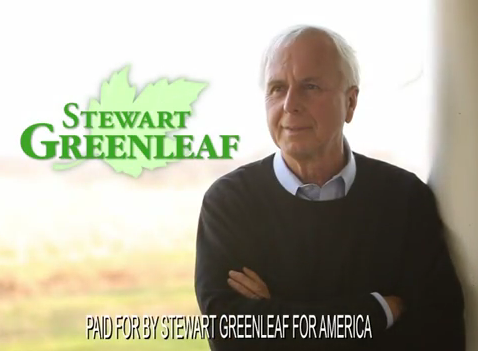
Now obviously, Senator Greenleaf has no expectation of propping his feet atop The Oval Office desk this January. No, his intent was to draw attention to the what he considers the Biggest Problems we face as a nation looking to remain economically free, strong, and a leader among the Community of Nations. His desire is to invigorate the discourse and creativity needed by offering up his own ideas and pushing them out into the American Public Square.
All Senator Greenleaf wanted was to open a discussion, perhaps getting one of the national Republican candidates – Mitt Romney now his primary target – to listen and consider these ideas for use in their own campaign, to stoke the National Debate.
One of his proposals is unique. It’s the one I have the hardest time wrapping my head around. This concept is to capitalize – or back – the “U.S. monopoly dollar” (my wording) with the estimated $127 trillion (Greenleaf’s figure) in federal holdings of lands, property, timber, mineral rights, etc. Greenleaf holds that doing so is infinitely better than holding a dollar backed essentially by NOTHING. He claims such a valuation would permit the U.S. Treasury to print enough fully backed, REAL money to wipe out our $15 trillion national debt!
Now I’m no economist, and a lot gets by me whenever a discussion swings around to the debt, the deficit, and the economy. But the idea of capitalizing the dollar in this way – at the very least – intrigues me. Is it a rational, practical solution to the national debt nightmare ? I have no idea; but I’d like to see it vetted in sight of the American taxpayer!
What I do know is that I really, really like the fact that SOMEONE is thinking “outside the box”; looking for solutions; unafraid of the catcalls and derision one side or the other always seems to enjoy raining down on someone who climbs out on the narrow limb; seeking consensus on solutions by simply trying to open the discussion!
When I think of the distinction between an elected Representative – be it at the State or Federal level – and a Senator, I see the Representative (Congressman federally) as the one who controls the way the Government runs and the way it is funded to provide the services expected of it. When I think of Senator on either level, I envision a Protector of the Interests of the People.
One Greenleaf quote from his website reads as follows:
“A debt-free USA is a truly free USA – no longer hostage to foreign creditors, no longer enslaving future generations to unconscionable indebtedness, no longer trapped in an economic paralysis. By restoring American solvency, we will restore American sovereignty and our greatness as an engine of enterprise and prosperity for all our citizens.” – Senator Stewart Greenleaf
In my utopian view of how Government representation should work, Stuart Greenleaf is doing exactly what we should expect of a State Senator. He is looking out for the Interests of the People!
For that reason I told Senator Greenleaf I admired the fact that he put himself out there, as a lonely State Senator with absolutely no concern for the cut of criticism or the apathy of those afraid to take a chance, to push us up that first step. He wasn’t doing it for himself or for ambition, certainly not to become the Most Powerful Man in the World. I told him I was proud because he did this in the interests of my children’s future.
Hopefully at some point, They might start listening and maybe – just maybe – start seriously talking about how best to fix things.
Another Pennsylvania primary, another very long, very quiet, very dull day …
The good news is that the battle lines have been formed for the General Election on November 6! Since the presidential slates are already determined, we will skip right to the contested primary battles that were decided yesterday.
On the Republican side businessman Tom Smith was the overwhelming favorite (39%) to face off against incumbent Senator Bob Casey. This was a direct rejection of Governor Tom Corbett’s attempt to strong-arm the PA GOP into backing Steve Welch (20.8%), an on-again, off-again Democrat … er … Republican. My dark horse pick and eventual Cranky Man vote getter, Sam Rohrer ran a surprising 2nd (22.4%), well behind Mr. Smith.
One has to wonder if Senator Casey will finally come out of his shell to face the Republican challenge and re-acquaint himself with the Pennsylvania electorate he represents. He has been laying low for quite some time. The only stand of note which Casey has taken lately was to condemn the Washington Nationals baseball team for their “Take back the ballpark”, anti-Phillies fan program. Maybe SEN Casey is a bit tentative in associating himself to closely with President Obama, who is unpopular in most areas of the state not called Philadelphia. Time will tell.
The only other Republican race of note – for nomination for Auditor General – was won by John Maher by an almost 2-1 margin over Frank Pinto.
On the Democrats side, the only real race of interest was a nasty head-to-head contest between local wunderkind, Patrick Murphy and Kathleen Kane, a former Lackawanna County prosecutor. This race was the nastiest. Nastier even than the Tom Smith-Steve Welch contest. In the end, Kane’s Pennsylvania judicial credentials won out over Murphy, who had none. Kane will face Cumberland County prosecutor David Freed, who ran unopposed.
Aside from local questions, unopposed incumbents and challengers, and the selection of National Convention delegates, that was that.
The real story – however – was the wealth of apathy expressed by local voters. Certainly there was a lack of big headline races with the concession of Rick Santorum in the presidential primary. But there were several other important and very interesting partisan races as described above. Yet turnout was extremely low on a beautiful April day.
I know, I was there … all day and evening long! Primary days are torture plain and simple.
Anyways, I have my theory as to why voters simply show no interest in selecting the candidates who will represent said voters’ purported civics and government philosophy in the General Election (GE).
1. Everyday voters simply do not care who picks the candidates that will represent them. For some reason, they are quite content for Party Leadership – be it Democrat or Republican – to do the picking for them. Yet as we saw yesterday, the Party Leadership does not always reflect the intent nor the best interests of the party voter. Party leaders do not always have their hand on the pulse of their constituents. Why most voters don’t seem to care, I have no answer.
2. The above of course assumes that voters are paying attention. You have to know there is a primary election to decide – or choose – to not care enough to vote. It’s hard to reconcile that thought with the fact that this is a Presidential Election Year! There is an overwhelming – even annoying – level of political news coverage during these campaigns. Certainly, Rick Santorum’s decision to pull the plug on his national campaign kept voters away, as did the fact that no Democrat challenged President Obama for The Oval Office nomination. But you have to wonder what keeps voters away from the polls when important local and regional nominations are being decided.
3. Voters simply do not identify closely with the Parties they list as representing their political philosophy. This is my personal choice to explain voter apathy in the primaries. In this scenario, voters make a clear distinction between the collective identification of being a Democrat or a Republican and the leadership that actually manages, organizes, and pulls the levers operating the party’s apparatus. The voter does not see themselves as Decision Makers, only perhaps endorsers of decisions already formulated for them. These decisions – made by the Party Leadership – are not defined simply by who appears on the officially endorsed party slate of candidates. It includes who gets the majority share of Party campaign funding, Party endorsement speakers, and Party-provided campaign logistics. Here the voter sees the decisions about who will run “for them” being made weeks or months before they even step into the booth. They are there just to rubber stamp the selections.
Either way you cut it, it’s a puzzling picture of political apathy.
Another primary day is upon us. But much of the excitement has been drained with the recent concession of Rick Santorum for the Republican presidential nod. This development removed whatever caché tomorrow’s vote held for most people, including me. Yet like any other primary day – boring though they tend to be – important decisions will be made with or without our participation.
The Presidential race really isn’t worth mentioning, unless you are looking to make a statement. Frankly, I was willing to cast my ballot for Santorum, based on his principles and despite the fact that his steadfast belief in those principles was what often made him unattractive to many voters. It matters not now; but I’ll still give Rick my vote … as a statement.
The most interesting Pennsylvania race involves Republican choices for a candidate to challenge U.S. Senator Bob Casey. The field is crowded with five potential candidates: Steve Welch, Tom Smith, Sam Rohrer, Marc Scaringi, and Dave Christian.
Steve Welch is being pushed by the Pennsylvania GOP as the party-endorsed candidate. But that endorsement was not a smooth ride with many local GOP committees pushing for local candidates or those with far better Republican records and conservative leanings. To understand my point here, try googling Steve Welch and note the entry “Steve Welch Democrat”. It’s interesting because just like Arlen Spector, Welch likes to go where victory is more likely. He was a Republican before he became a Democrat which preceded his decision to become a Republican … again! Then just as incredible as that story sounds, Governor Tom Corbett strong-arms the State Republican Committee to endorse Welch – barely – for what looks like to be a very good chance to unseat Bob Casey this November. Unfortunately, Welch looks no better than Casey when you consider Welch’s outspoken support for Barack Obama in the 2008 Presidential election and his support for Joe Sestak in 2006.
Is that REALLY the kind of “Republican” you want taking on Bob Casey???
If not, then you probably don’t want Tom Smith either. Smith was not only a Democrat but also a Democratic committeeman. He re-registered as a Democrat as late as 2005. So you have to wonder … Why does Welch and Smith seem so smitten with being Republicans now? Was it because they perceived a weak Republican Senatorial field and a path to a senatorial office easier than challenging an incumbent Democrat from within the Democratic Party? Who knows? I just know it smells kinda funny, so I’ll be voting for Sam Rohrer.
Rohrer was a Pennsylvania State Representative for nine terms (18 years). Fourteen of those years were spent on the Appropriations Committee. He has a solid record on Conservative economic issues. What’s best is he’s been a Republican and stayed one all along!
The biggest decision Horsham residents of the Pennsylvania 13th Congressional District will be made by Democrats, who have a choice even if that choice does not show up on the ballot. Incumbent Allyson Schwartz has a challenger who she chased off the ballot using the courts and the threat of financial retribution. As a result, Nate Kleinman is mounting a shot-in-the-dark write-in campaign to unseat Schwartz in the Democrat primary. It’s the kind of politics played by those with all the Power and all the Money. The kind of politics that does not like to take chances with the vagaries of voter preference and free choice. For that reason alone, I’d LOVE to see Nate Kleinman accomplish the almost impossible!
The winner will face Joe Rooney, a resident of Ardsley and the lone Republican who has filed to run in the November general election.
The only other truly juicy primary race involves – once again – the Democrat side of the primary ballot. Kathleen Kane and Patrick Murphy square off for the Democrat’s nod in the Pennsylvania Attorney General race. I have already said my piece on the qualifications of one of these candidates who has NEVER prosecuted a criminal case for the Commonwealth of Pennsylvania! Patrick Murphy walks and talks like a politician looking for a nice place to hang his hat until the Democratic National Committee comes calling once again.
The only other State primary contest is for the Republican nomination for Auditor General between Frank A. Pinto and John Maher. Maher has the State GOP endorsement; but as we saw above, that’s not always the most savory choice. I do not know enough about either of these men to make a recommendation.
Don’t forget to vote!
 Cranky Man's Lawn